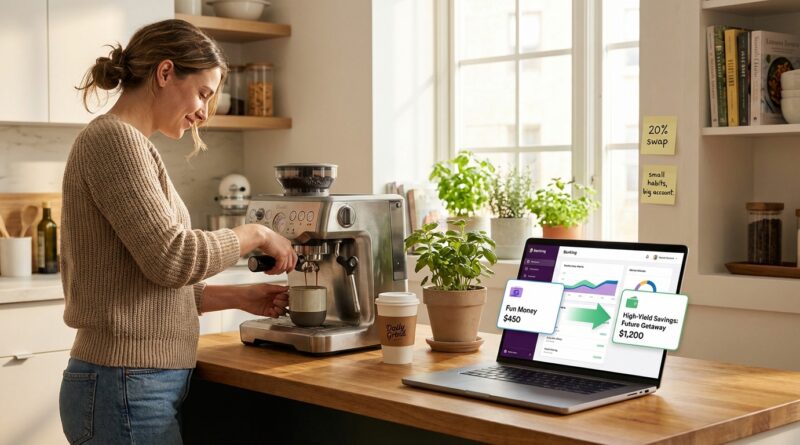
The 10-Minute ‘Underconsumption Swap’: How One Weekly Reset Can Feed Your High-Yield Savings Without Killing Your Fun
You are not failing at money just because you do not want to live like every small joy is a budget crime. That is the part a lot of advice skips. People are tired. Groceries are expensive. Coffee, takeout, streaming, little convenience buys, they are often the stuff keeping a hard week from feeling worse. So instead of cutting out everything fun, try a 10-minute underconsumption reset once a week. The idea is simple. Pick one or two lighter swaps, not total bans, and send the difference straight into a high-yield savings account. Not your checking account. Not “whatever is left at the end of the month,” because that money tends to disappear. A small swap like one homemade lunch, a cheaper grocery brand, or skipping one impulse app order can free up $10 to $40 a week. Put that into a high-yield bucket consistently, and suddenly your underconsumption savings habit starts to feel real, useful, and weirdly painless.
⚡ In a Hurry? Key Takeaways
- A weekly underconsumption swap works best when you trim one or two purchases, then move the savings straight into a high-yield savings account.
- Start with easy swaps like one fewer delivery order, one pantry meal, or delaying a non-urgent online purchase for 48 hours.
- The goal is not deprivation. It is building steady savings without making your life feel smaller.
Why this works better than a “no fun allowed” budget
Most people do not blow their finances on one dramatic mistake. It is usually a drip, drip, drip of convenience spending mixed with stress spending. That is normal. It is also why extreme frugality plans tend to backfire.
If you tell yourself, “No takeout. No treats. No shopping. No extras,” you might last a week. Maybe two. Then real life shows up. You are busy, tired, or just fed up, and the whole plan falls apart.
The better move is smaller. A swap, not a ban.
That is what makes an underconsumption savings habit stick. You are not removing joy. You are editing the expensive version of it.
What the 10-minute weekly reset looks like
Set aside 10 minutes on the same day each week. Sunday night works well for a lot of people. So does Friday afternoon, right before weekend spending kicks in.
Step 1: Look back at the last 7 days
Check your card app, banking app, or budgeting app. You are not doing a full audit. You are scanning for two things.
- One purchase you would gladly do cheaper next week
- One purchase you could delay, skip, or replace once
That is it. Keep it light.
Step 2: Pick one or two swaps for the coming week
Good swaps are specific and realistic. Bad swaps are vague and dramatic.
Good: “I will replace one $18 delivery lunch with leftovers.”
Good: “I will buy the store-brand snacks and move the $6 difference.”
Good: “I will wait 48 hours before buying anything from a social media ad.”
Bad: “I will stop wasting money forever.”
Bad: “No fun spending this month.”
Step 3: Name the money
This part matters more than people think. Do not save toward a vague “better future” if that phrase does nothing for you.
Name the bucket something you care about. Try:
- Summer trip fund
- Emergency cushion
- Vet bill backup
- Holiday gifts
- Move-out money
- New laptop fund
Money with a job is harder to steal back from yourself.
Step 4: Move the savings immediately
This is where the high-yield savings account comes in. If your money stays in checking, it will often get absorbed into regular spending. If it goes into a separate high-yield account, it starts earning more and feels a little less available for random impulse buys.
You do not need a huge transfer. If the swap saved $12, move $12. If it saved $27, move $27.
Easy underconsumption swaps that do not feel miserable
The best swaps are boring in a good way. They shave a little off your week without making you feel punished.
Food and drink swaps
- Keep the coffee run, but drop one add-on or one extra stop during the week
- Replace one delivery meal with a freezer meal or pantry dinner
- Do takeout Friday, but pick it up yourself instead of paying delivery fees and tip on top
- Buy one “treat” item at the grocery store so you are less likely to do a pricey convenience run
Shopping swaps
- Wait 48 hours before buying anything that was not on your list
- Choose refill packs, generic brands, or the version you already know works
- Use what you own before buying an “upgrade” you do not urgently need
- Skip one boredom scroll shopping session each week
Subscription and app swaps
- Pause one subscription for a month instead of canceling your whole entertainment life
- Downgrade one app or streaming plan you barely use
- Turn off one-click purchases in the apps that get you most often
How much can this actually add up to?
More than most people expect, especially when the bar is “small but repeatable.”
Here is a simple example:
- $15 saved from one less delivery order
- $8 saved by switching two grocery items to store brand
- $12 saved by skipping one random online purchase
That is $35 in one week.
Do that weekly and you are at about $140 a month. Keep it going for a year and you have contributed roughly $1,680, plus interest from your high-yield savings account.
No, interest alone will not make you rich. But when rates are much better than what traditional savings accounts usually pay, your small weekly wins get more help. That is the whole point. Small deposits matter more when they are consistent and parked in the right place.
How to make the habit stick
A good underconsumption savings habit should be easy enough to repeat when life gets messy. Here are the rules I would use.
Keep the number of swaps tiny
One or two swaps a week is enough. Once you start making ten rules, this becomes a punishment system.
Do not cut the thing that keeps you sane
If your Friday takeout is the one ritual that makes the week feel manageable, keep it. Cut around it. Maybe you pick up instead of getting delivery. Maybe you choose one less add-on. Protect the thing you actually value.
Use automation when possible
If your bank lets you create automatic transfers into a high-yield savings account, use them. You can set a small weekly amount, then top it up when your swaps save more.
Track wins, not perfection
You are building proof. Not chasing a gold star.
A simple note on your phone works:
- Swap: brought lunch Wednesday
- Saved: $14
- Moved to savings: $14
That kind of record helps because it turns “I should be better with money” into “I already did something useful.”
What to avoid
This part can save you from turning a smart habit into another annoying project.
Avoid making fake savings
If you “save” $20 by not ordering takeout, then spend $26 at Target because you feel deprived, that swap did not help. Be honest about the full picture.
Avoid hiding from your spending
The reset only takes 10 minutes because it is supposed to be simple. But it does require you to look at what happened. If you never check your transactions, you miss the easy fixes.
Avoid parking the money in a low-paying old account
If you are going to build this habit, put the money somewhere that does a little work for you. A high-yield savings account is not magic, but it is usually a much better home for short-term and medium-term goals than a sleepy old savings account earning next to nothing.
Who this works best for
This method is especially good for people who:
- hate strict budgeting
- feel burned out by guilt-based money advice
- want to save without cutting every enjoyable thing
- need a simple system they can do in under 10 minutes
It is not a replacement for bigger financial fixes if you have major debt or your bills are outpacing your income by a lot. But even then, it can still help you stop small leaks and create a little breathing room.
A simple weekly script you can copy
If you want, use this exact reset:
- Open your banking app.
- Look at the last 7 days.
- Circle one convenience buy and one impulse buy.
- Choose one lighter swap for next week.
- Name the savings goal.
- Transfer the amount as soon as the swap happens.
That is your system. No spreadsheet required. No self-lecture required.
At a Glance: Comparison
| Feature/Aspect | Details | Verdict |
|---|---|---|
| Weekly effort | About 10 minutes to review spending, choose one or two swaps, and move the money. | Very manageable for most people. |
| Impact on lifestyle | Focuses on lighter trims instead of banning every treat, upgrade, or convenience purchase. | Much easier to stick with long term. |
| Savings growth | Small weekly transfers add up, and a high-yield savings account helps those deposits earn more over time. | Best for steady progress, not overnight transformation. |
Conclusion
Right now, prices are still high, people are tired of extreme frugality, and a lot of savers are quietly rejecting advice that treats every pleasure like a mistake. That is why this works. A practical underconsumption swap does not ask you to quit everything fun. It asks you to make one or two smart edits each week, tie those edits to a real goal, and move the money into a high-yield savings account where it can actually grow. Over the next year, those small, steady deposits can do more than you think. Best of all, you get to see progress without feeling like your life is on pause. That is the sweet spot. Save a little more, keep the parts of your routine you love, and let consistency do the heavy lifting.