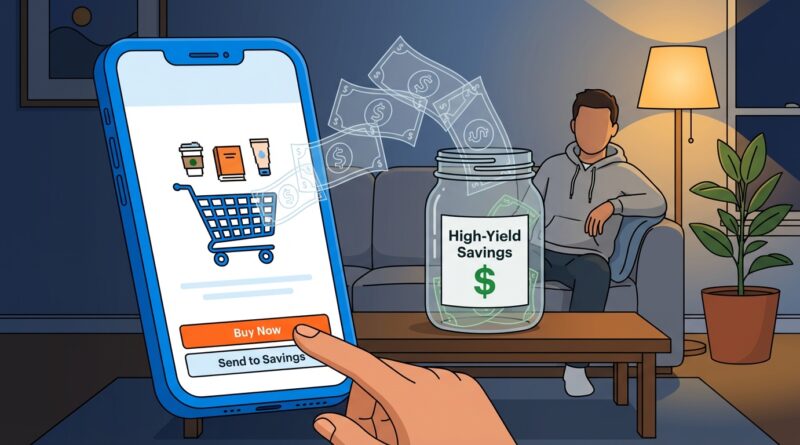
The 24-Hour ‘Cart Detox To HYSA’ Habit: Turn Impulse Clicks Into High-Yield Cash Instead
You open the app to “just look,” tap a few things you kind of like, and suddenly your cart is sitting at $120. That is not you being reckless. That is modern shopping doing exactly what it was built to do. Flash sales, countdown clocks, free shipping thresholds, and “only 2 left” warnings are designed to make small impulse buys feel harmless. The problem is those little purchases add up fast, and they often wipe out money that could have been earning real interest in a high-yield savings account. If your online shopping impulse spending has started to feel automatic, a 24-hour Cart Detox can help without turning your life into a miserable no-buy challenge. You still get to browse. You still get to want things. You just add one simple pause before checkout, then move that cart money somewhere smarter if the urge passes.
⚡ In a Hurry? Key Takeaways
- The 24-hour Cart Detox means you leave non-essential items in your cart for one full day before buying.
- If you still want it after 24 hours, review it. If not, transfer that cart total or part of it to your HYSA right away.
- This habit works best for wants, not urgent needs like medicine, school supplies, or true replacements.
Why this habit works so well right now
Online stores are very good at making you feel like waiting is risky. That is why the pressure usually shows up in the same ways. Limited-time discount. Low-stock alert. Free shipping if you add “just one more thing.”
None of that means you are bad with money. It means you are shopping in an environment built to speed you up.
The Cart Detox habit slows the moment down. That is the whole point. You are not banning shopping. You are putting a speed bump between desire and checkout.
And in 2026, that matters more because even small amounts of saved cash can still do useful work in a HYSA. Twenty dollars here, thirty-eight dollars there, seventy-two dollars from a late-night cart you forgot by morning. That is money you keep, and money that can earn interest instead of disappearing into a box on your porch two days later.
The 24-hour Cart Detox, in plain English
Here is the habit: when you want something that is not a real need, add it to your cart, then wait 24 hours before buying it.
That is it.
During that 24 hours, one of three things usually happens:
- You forget about the item completely.
- You realize you do not want it as much as you thought.
- You still want it, but now you can decide more calmly.
That is a win in all three cases. The goal is not to never spend. The goal is to stop spending on autopilot.
The 3-step Detox flow you can save to your phone
Step 1: Park it, do not purchase it
When you feel the urge to buy, put the item in your cart or save it to a wishlist. Do not check out yet.
If it is a real need, like replacing a broken charger you need for work tomorrow, buy it. This habit is for wants, upgrades, duplicates, trend buys, and “might as well” items.
Step 2: Set a 24-hour reminder
Use your phone. Keep it simple.
Name the reminder something like: “Cart Detox check. Do I still want this?”
This matters because memory is sneaky. If you rely on yourself to circle back later, you probably will not. Or you will return when the app pings you with another fake emergency.
Step 3: Redirect the money if the urge fades
If 24 hours passes and you no longer want the item, move the amount you would have spent into your HYSA. Do it right then. Under a minute. No debate.
This is the part that turns a paused purchase into a real savings habit.
Instead of saying, “Well, I guess I just did not buy it,” you say, “That $46 is mine now, and it has a job.”
Quick scripts that make this easier
You do not need a perfect budgeting system. You need short, repeatable phrases that interrupt the impulse.
Script for yourself
“If I still want it tomorrow, I can buy it tomorrow.”
Script for social pressure
“I am doing a 24-hour rule on non-essentials. If I still like it tomorrow, I will grab it.”
Script for redirecting money
“I skipped a $32 cart. Move $32 to HYSA now.”
These sound tiny, but tiny is good. Tiny habits are easier to keep.
How to know what counts as a Cart Detox item
Use this quick test. A purchase belongs in Cart Detox if it is:
- Not needed in the next 48 hours
- Something you already own a version of
- Under your mental “it is not a big deal” threshold
- Driven by a sale, timer, or mood rather than a plan
That last one is the big one. A lot of impulse shopping is emotional convenience. You are bored. Tired. Reward-seeking. Putting off a task. Looking for a little lift.
Again, that is normal. But it is expensive when it happens every week.
What this looks like in real life
Let us say your cart has:
- $18 skincare refill you do not need yet
- $24 water bottle because the color is nice
- $29 desk gadget that looked clever on social
- $14 add-on item to hit free shipping
Total: $85.
You wait 24 hours.
The next day, maybe you still want the refill. Fine. But the bottle and desk gadget suddenly look less exciting, and the free-shipping add-on now looks a little ridiculous. You buy the refill later if needed, and you move $67 to your HYSA.
That is how this habit starts changing your money without making you feel deprived.
Make the HYSA transfer automatic when possible
The easier you make the transfer, the more often you will do it.
If your bank allows quick internal transfers, set up a savings nickname like “Cart Detox Fund” or “Impulse Buffer.” A label helps more than people expect. It makes the action feel real.
You can also keep a preset transfer amount ready if you tend to abandon carts in the same range, like $20 or $50.
If the exact cart total feels annoying to move every time, use a rounded version. Cart was $43.27? Transfer $40. The habit matters more than perfect math.
When this habit works best, and when it does not
Best for
- Beauty, clothes, home extras, gadgets, decor, hobby buys
- Late-night browsing
- Sale-driven shopping
- Repeat “treat myself” spending
Not ideal for
- Urgent replacement items
- Time-sensitive travel needs
- Medical or family essentials
- Planned purchases already in your budget
This is not about creating guilt around every purchase. It is about catching the fuzzy middle. The stuff that slips through because it seems too small to matter.
Pair it with a simple no-spend system
If you like this idea, it fits naturally with The 7-Day ‘No-Spend Streak To HYSA’ Challenge: Turn Zero-Spend Days Into Automatic High-Yield Wins. The two habits work well together because they are realistic. One helps on days when you are tempted to browse. The other helps you build momentum on days when you spend nothing at all.
That is a lot more useful than trying to become a totally different person overnight.
Common mistakes that break the habit
Using the rule on everything
If you try to apply Cart Detox to groceries, real needs, and every planned expense, you will get tired of it fast. Save it for impulse territory.
Leaving payment info too easy
One-click checkout is great for convenience and terrible for self-control. If impulse spending is a real problem, remove saved payment details from your biggest shopping apps.
Not moving the money
This is the biggest miss. If you skip the transfer, you still did well by not buying. But you lose the emotional reward of seeing your choice become savings.
Thinking small purchases do not matter
Most people do not blow their budget on one dramatic purchase. They leak money through a dozen forgettable ones.
A simple weekly reset
Once a week, open your shopping apps and clean house.
- Delete stale cart items
- Screenshot anything you truly want to revisit later
- Total up what you did not buy
- Move some or all of that amount to your HYSA
This takes five minutes, maybe less. But it keeps abandoned carts from quietly becoming future impulse buys.
At a Glance: Comparison
| Feature/Aspect | Details | Verdict |
|---|---|---|
| Impulse checkout | Fast, emotional, and usually pushed by timers, sales, or convenience. | Easy in the moment, expensive over time. |
| 24-hour Cart Detox | Adds a one-day pause before buying non-essential items. | Best balance of freedom and control. |
| HYSA redirect habit | Moves skipped cart money into savings so it can earn interest. | Turns avoided spending into visible progress. |
Conclusion
Nonstop flash sales and “only 2 left” alerts are not going away, so the smart move is to build a habit that works with real life. The 24-hour Cart Detox does exactly that. It lets you browse, save things, and enjoy shopping without letting every passing urge turn into a charge on your card. And because high-yield rates are still solid, each little cart you walk away from has more value than people think. That rescued $20 is not just money you did not spend. It is money that can start earning for you instead. If you want a savings habit that feels natural, not punishing, this is one of the easiest places to start. One pause. One transfer. One less impulse. That is how online shopping impulse spending turns into a high yield savings habit that actually sticks.