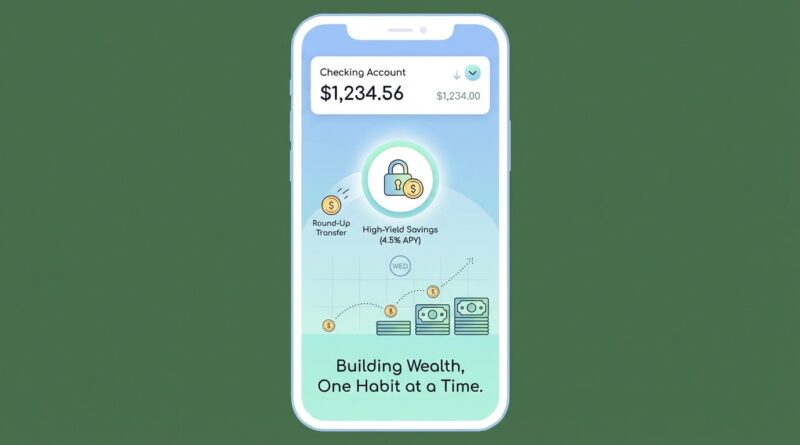
The 7‑Day ‘Payday Skim’ Habit: Turn Tiny Round‑Ups Into Serious High‑Yield Savings
Payday can feel weirdly disappointing. You see the deposit hit, breathe a little easier, and tell yourself this is the week you will finally move some money into savings. Then life happens. Groceries. A couple of subscriptions. Takeout because Tuesday got away from you. By the next time you look, the money is gone, and your high-yield savings account is still sitting there mostly empty.
That is exactly why a weekly high yield savings habit works so well. Instead of waiting for some perfect leftover amount that never appears, you skim small bits of money out on purpose during the first 7 days after payday. Think of it like sweeping loose change off the floor before it gets stepped on. Add simple round-ups, one small transfer, and a calendar reminder, and you can start building savings without a full budgeting overhaul. It is low drama, low effort, and surprisingly effective.
⚡ In a Hurry? Key Takeaways
- A weekly high yield savings habit moves small amounts into savings during the first 7 days after payday, before they disappear into everyday spending.
- Start with round-ups plus one fixed weekly skim, even if it is just $5 to $25.
- Keep a small checking cushion so you do not trigger overdrafts or have to pull money back out.
Why the first week after payday matters so much
The first few days after you get paid are when most money quietly drifts away. Not always on big, reckless spending either. It is usually the boring stuff. Bills, small errands, coffee, pharmacy runs, school fees, a streaming charge you forgot was due.
That is why “I’ll save whatever is left at the end” fails for so many people. It sounds responsible, but it depends on leftovers. Most households do not have many leftovers.
A weekly skim flips the order. You move a little money early, while your account still has some breathing room. Then your high-yield savings account gets a real job instead of being a storage bin for good intentions.
What the 7-day “payday skim” habit actually is
It is a simple routine you do in the week after each paycheck lands.
The basic version
Pick one day within 7 days of payday. Transfer a small amount from checking to your high-yield savings account. Then let round-ups or tiny add-on transfers keep feeding it through the week.
That is it.
A real-world example
Let’s say you get paid on Friday.
On Sunday, you transfer $20 to savings.
During the week, your debit card round-ups add another $6.40.
On Thursday, you move an extra $10 because your grocery trip came in under budget.
That is $36.40 saved from one pay cycle, without a complicated spreadsheet or a no-fun budget challenge.
Why this works better than “saving what is left”
Small money is easy to waste because it does not feel important. A few dollars here, a few dollars there. But small money is also easy to save for the same reason. You are not trying to move $500 in one painful chunk. You are catching the loose bills before they vanish.
There is also a mental benefit. A weekly high yield savings habit gives you a repeatable win. You stop asking, “Do I have enough to save?” and start asking, “What can I skim this week?” That is a much easier question to answer.
If you like the idea of making saving automatic before spending takes over, this pairs nicely with The 5-Minute ‘Pay Yourself First’ Reset: A Daily Habit That Quietly Turbocharges Your High-Yield Savings. The two habits work well together. One helps you save early. The other helps you keep doing it consistently.
How to set up your weekly high yield savings habit this week
1. Pick your skim amount
Start small enough that you will not resent it.
Good starter amounts:
- $5 per week if money is tight
- $10 to $25 per week for a realistic middle ground
- 1% to 2% of each paycheck if you want a flexible rule
The right number is the one you can repeat.
2. Add round-ups if your bank offers them
Round-ups take each purchase and bump it to the next dollar, then send the difference to savings. Buy something for $8.35, and $0.65 goes to savings.
It feels tiny because it is tiny. That is the point. Tiny is painless. Painless is sustainable.
3. Schedule one transfer within 7 days of payday
Do not leave this to memory. Put it on your calendar or automate it in your banking app. The sweet spot is usually 2 to 5 days after payday. That gives major bills time to clear while still grabbing money before casual spending eats it.
4. Keep a checking buffer
This matters. Leave a little cushion in checking so your skim does not bounce back and create stress. Even $50 to $100 as a buffer can help if your income and bills are tight.
5. Name the savings account something specific
“Savings” is easy to ignore. “Car Repair Cushion” or “No-Panic Fund” feels real. People are more likely to protect money that has a job.
Three easy versions of the habit
The ultra-simple version
Transfer $10 every week after payday. No math. No tracking. Just a recurring move.
The round-up version
Use only round-ups for the first month. This is good if you are nervous about cash flow and want to ease in.
The hybrid version
Transfer a fixed amount, like $15, and use round-ups on top. This is the best fit for most people because it gives you both consistency and a little extra lift.
Mistakes to avoid
Starting too aggressively
If you set the skim too high, you will end up transferring money back from savings, which feels discouraging. Better to start with $5 and build than quit after one overdraft scare.
Checking the balance too often
High-yield savings works best when you let it sit and grow. Looking at it every day can make you think the progress is too slow. Weekly or monthly is enough.
Using savings as the new checking account
The goal is to move money out of your spending lane. If you keep dipping into it for random purchases, the habit never gets traction.
How much can this really add up to?
More than people think.
- $10 a week is about $520 a year, before interest
- $20 a week is about $1,040 a year, before interest
- $15 a week plus $5 in average round-ups is about $1,040 a year, before interest
Then your high-yield savings account adds interest on top. No, interest alone will not make you rich. But when rates are decent, every dollar you move earlier has more time to earn.
Who this habit is best for
This works especially well if you:
- Get paid weekly, biweekly, or twice a month
- Struggle with detailed budgeting systems
- Usually mean to save, but forget
- Want to use your high-yield savings account more actively
- Need a low-stress way to build an emergency cushion
It is not fancy. That is the charm.
At a Glance: Comparison
| Feature/Aspect | Details | Verdict |
|---|---|---|
| Ease of setup | One scheduled transfer plus optional round-ups through your bank or app | Very beginner-friendly |
| Impact over time | Small weekly deposits can grow into hundreds or over $1,000 a year, plus interest | Stronger than it looks |
| Risk of backfiring | Can cause stress if your checking account runs too close to zero | Low risk if you keep a buffer and start small |
Conclusion
If budgeting systems make your eyes glaze over, this is the kind of habit worth trying. A weekly high yield savings habit is simple, light, and realistic. You are not rebuilding your whole financial life in one weekend. You are just skimming a little money during the one week it is most likely to disappear. That small move can turn “found money” into a steady savings pattern, help you actually use your high-yield account, and give your balance more time to compound. Set it up this week, keep it small, and let consistency do the heavy lifting.