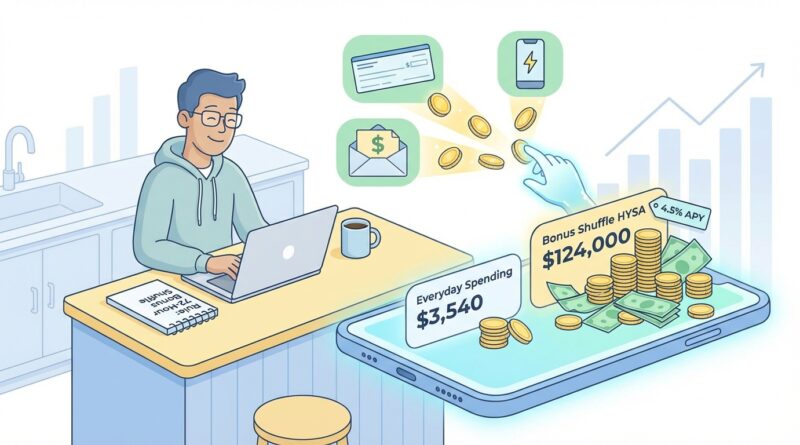
The 72‑Hour ‘Bonus Shuffle’: Turn Every Windfall Into High‑Yield Savings Before You Touch It
You know the script. A tax refund lands, a year-end bonus shows up, or a side-gig payment hits your account, and you tell yourself this one will be different. Then real life steps in. A couple of dinners out, one Target run, a few “small” online orders, and that extra money is gone without doing much for you. That is not a character flaw. It is usually a systems problem. When a windfall lands in checking, your brain treats it like everyday money.
The fix is simple. Give every windfall a 72-hour stopover in a high-yield savings account before you spend a dollar of it. Think of it as a speed bump between “I got paid” and “I guess I spent it.” With many high-yield savings accounts paying around 4 to 5 percent right now, this small move can help your extra cash start earning right away while you decide what it should do. That is the heart of a smart high yield savings windfall strategy. It protects you from impulse spending without making you feel like you are on a strict budget.
⚡ In a Hurry? Key Takeaways
- Move tax refunds, bonuses, and surprise cash into a high-yield savings account first, then decide what to do after 72 hours.
- Set up a separate savings account just for windfalls so the money does not feel mixed in with your normal checking balance.
- Keep enough in checking for bills, but let extra cash earn 4 to 5 percent while you avoid impulse spending and lifestyle creep.
Why windfalls disappear so fast
Windfalls feel different when you are waiting for them. They feel exciting, useful, full of possibility. Then they arrive and become just another number in your checking account.
That is the trap.
Checking accounts are built for spending. Debit cards, bill pay, online shopping, subscriptions, food delivery. The second extra money lands there, it gets pulled into the normal swirl of life.
So if you have ever wondered why your bonus vanished even though you had “good intentions,” the answer is probably not weak willpower. The money was simply parked in the wrong place.
What the 72-hour bonus shuffle actually is
The 72-hour bonus shuffle is a simple rule.
Step 1: Any windfall goes to high-yield savings first
That includes tax refunds, work bonuses, cash gifts, side-hustle payouts, rebates, insurance refunds, and even money from selling stuff around the house.
Step 2: Leave it there for 72 hours
Do not spend it right away. Do not shop “just a little.” Let the excitement cool off.
Step 3: Decide on purpose
After three days, split the money into buckets. Some might stay in savings. Some might go to debt. Some might be okay to spend. The key is that you are choosing, not reacting.
That pause is what makes the strategy work.
Why a high-yield savings account is the right landing spot
If your windfall is going to sit somewhere while you think, it should at least earn something.
Right now, many high-yield savings accounts are paying around 4 to 5 percent. That is a lot better than the tiny rates many standard bank savings accounts still offer. It will not make you rich overnight, of course, but it does mean your money is doing a little work while you make your plan.
More important, a separate high-yield savings account creates distance. Not a huge distance. Just enough. Usually that is all people need.
This is also a nice partner to The 20% Rule: The Quiet Savings Habit Most Millionaires Swear By. That habit helps with regular saving. The 72-hour shuffle helps with irregular money that tends to slip through the cracks.
How to set this up in about 15 minutes
Open a separate savings account for windfalls
If possible, do not use your main checking bank. A little separation helps. Choose an FDIC-insured or NCUA-insured account with a competitive rate, no monthly fee, and easy transfers.
Name the account something specific
Do not call it “Savings.” That is too vague. Call it “Bonus Buffer,” “Tax Refund Plan,” or “Do Not Touch Yet.” A silly name is fine if it helps. You want the account label itself to remind you that this money has a job.
Create one transfer rule
Write it down and keep it simple: “Any money I did not expect goes to this account within 24 hours.”
Decide your split ahead of time
This matters more than people think. If you already know where the money should go, you are less likely to nibble away at it.
A sample split could be:
- 50 percent to emergency savings
- 30 percent to debt payoff
- 20 percent to guilt-free spending
Your numbers can be different. The point is to make the choice before the money arrives, not after.
A real-world example
Say you get a $2,000 bonus from work.
If it lands in checking, it can disappear fast. A weekend trip. New shoes. A nicer grocery cart than usual. A few home items. Some app charges you forgot about. Suddenly you are left wondering where the rest went.
Now try the bonus shuffle.
The full $2,000 goes straight into your high-yield savings account. You wait 72 hours. Then you decide:
- $1,000 stays in savings
- $600 goes toward a credit card balance
- $400 becomes fun money
You still get to enjoy some of it. That matters. But the majority goes toward something that actually improves your financial life.
How to avoid the most common mistakes
Mistake 1: Letting the money hit checking first
If you can direct deposit part of a bonus or tax refund into savings, do it. If not, move it the same day it arrives.
Mistake 2: Being too strict
If you tell yourself you cannot spend any of it, you may rebel and spend more later. Build in a small “enjoy it” category on purpose.
Mistake 3: Using a low-rate savings account
Not all savings accounts are equal. If your bank is paying next to nothing, your money is not getting much benefit while it sits there.
Mistake 4: Having no plan after the 72 hours
The pause only works if it leads to a decision. Put a calendar reminder on your phone so the money does not just drift.
When this strategy works best
This high yield savings windfall strategy is especially useful if you:
- often get tax refunds
- receive annual or quarterly bonuses
- do freelance or side-gig work
- tend to spend extra money faster than regular paychecks
- are trying to build emergency savings without feeling deprived
It is also great for couples, because it lowers the pressure of making an instant decision together. Move the money first. Talk second.
What if you need the money soon?
That is fine. This is not about locking your money away forever.
If your refund is meant for a car repair, overdue bills, or a planned trip, the 72-hour pause can still help. You are simply giving yourself a short window to confirm the plan and stop random spending from grabbing pieces of it on the way.
Think of it less like a restriction and more like a holding area.
At a Glance: Comparison
| Feature/Aspect | Details | Verdict |
|---|---|---|
| Windfall goes to checking | Feels instantly available for meals out, shopping, and small impulse buys. | Convenient, but risky for disappearing money. |
| Windfall goes to high-yield savings first | Creates a pause, earns interest, and helps you decide with a cooler head. | Best option for protecting extra cash. |
| 72-hour waiting rule | Short enough to feel easy, long enough to stop emotional spending. | Simple habit with outsized payoff. |
Conclusion
Extra money does not show up every day, which is exactly why it deserves a better plan than “let me see what happens.” Right now high-yield savings accounts are paying around 4 to 5 percent, which means every extra dollar you can get in there is working harder than it has in years. At the same time, tax refunds, annual bonuses, and side-gig payouts are getting swallowed by lifestyle creep and higher prices before people even notice. The 72-hour bonus shuffle gives you a simple, repeatable habit for those rare windfall moments. Move it to savings first, wait, then decide. You still get flexibility. You just stop losing the money by accident.