The ‘Rainy-Day Auto-Refill’ Habit: One Simple Rule That Keeps Your Savings From Ever Draining To Zero
You finally build an emergency fund, then life gets to work on it. A tire blows out. The dog needs the vet. The dentist says, “We should take care of this now.” You use your high-yield savings account exactly the way you are supposed to. Then comes the part most people skip. They never fully refill it. That is how a healthy safety net slowly turns into a half-empty bucket that makes every new surprise feel stressful.
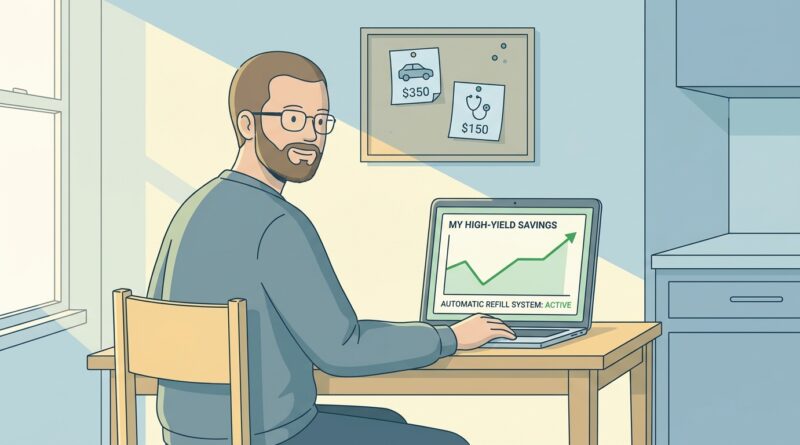
If you have been wondering how to rebuild emergency fund after using it, the fix does not need to be fancy. Use one simple rule: every time you take money out for a real emergency, start a temporary auto-refill transfer the very same week. Keep it running until that exact amount is replaced. Think of it like resetting the smoke alarm after it goes off. Small, automatic deposits take the drama out of rebuilding, and they help your savings account keep doing what it is meant to do, which is sit there, earn interest, and buy you peace of mind.
⚡ In a Hurry? Key Takeaways
- The best way to rebuild your emergency fund after using it is to set up a temporary automatic transfer immediately, for the exact amount you want to replace.
- Divide the amount you used by a realistic number of paychecks or months, then automate that refill so you do not have to remember it.
- This works best with a high-yield savings account because your money keeps earning while you rebuild, but only if the balance gets restored and stays there.
Why emergency funds quietly shrink over time
Most people do not drain their savings in one dramatic moment. It happens in little bites.
You pull out $600 for a car repair. A month later, $300 for urgent dental work. Then a few weeks after that, a surprise travel cost for a family issue. None of these are reckless choices. They are real life.
The problem is that withdrawals have a clear trigger, but refilling usually does not. There is no alert that says, “Good job handling that emergency. Now replace $73.50 a week until you are whole again.” So people mean to rebuild the account, but never turn that intention into a system.
The rainy-day auto-refill rule
Here is the rule.
Any time you use emergency savings, set up an automatic transfer within 7 days to replace that exact amount.
That is it.
Not “save a little more when things calm down.” Not “try to catch up later.” Set a refill plan right away, while the reason is still fresh and the amount is still clear.
How it works in real life
Let’s say you used $1,200 for a home repair.
You decide you want that money back in 6 months. Divide $1,200 by 6, and your temporary refill becomes $200 a month. If you get paid every two weeks, that is about $92 per paycheck for 13 pay periods, or round it to $100 and finish a little early.
The goal is not perfection. The goal is recovery on autopilot.
Why this habit works better than “I’ll just save more later”
Your brain loves vague plans because they feel comforting. Your bank account does not.
A temporary auto-refill works because it turns a wish into a due date. It also keeps the emergency from becoming your new normal. Without a refill rule, a lower savings balance starts to feel acceptable, even if it leaves you exposed the next time something goes wrong.
This is especially important if you keep your money in a high-yield savings account. Rates are still strong in many accounts right now, but a nice APY cannot do much if the balance keeps getting knocked down and never rebuilt.
How to rebuild emergency fund after using it, step by step
1. Write down the exact amount you used
Do not guess. Check the transfer or withdrawal and note the real number.
If you pulled from savings in two or three chunks for the same event, add them together. You want one clean refill target.
2. Pick a refill window that fits your budget
This is where people get tripped up. They make the refill too aggressive, then cancel it.
Choose a timeline you can actually stick with:
- Small emergency, under $500: 1 to 3 months
- Medium hit, $500 to $2,000: 3 to 9 months
- Bigger drawdown: 9 to 18 months, depending on income and other bills
Faster is nice. Realistic is better.
3. Automate the refill from checking to savings
Set a recurring transfer for payday, or the day after payday if that feels safer. Name it something obvious like “Emergency Fund Refill.”
If your bank lets you set an end date or savings target, use it. Then the transfer stops once the money is restored.
4. Treat the refill like a bill, not a bonus
This part matters. If the refill only happens when you have “extra” money, it will always lose to groceries, gas, school costs, and everything else that feels more urgent.
Put it in the same mental bucket as your electric bill. Temporary, necessary, non-negotiable.
5. Reduce the refill, do not delete it, if money gets tight
If your original plan was $200 a month and that starts to pinch, cut it to $125. Keep the habit alive.
Stopping completely is how temporary setbacks turn into permanent low balances.
Make the refill nearly invisible
The easier this is, the more likely it sticks.
That usually means keeping your emergency fund in a separate high-yield savings account, not mixed into your main checking account where it feels available for every random purchase. If you want help setting up that kind of distance, The ‘ATM-Proof’ Habit: How To Use A High-Yield Savings Account Without Getting Slapped With Fees is a smart next read.
When savings is one step removed, you are more likely to use it for true emergencies and more likely to notice when it needs rebuilding.
What counts as a real emergency?
This is worth sorting out, because the refill habit works best when the rules are clear.
A real emergency is usually:
- Urgent
- Necessary
- Hard to cover from your normal monthly cash flow
Examples include medical bills, car repairs, home repairs, emergency travel, and replacing something essential like a water heater or laptop you need for work.
A sale at your favorite store is not an emergency. Neither is holiday overspending. Your savings account should not have to clean up every budgeting mistake.
If you used a lot, split the rebuild into phases
Sometimes the hit is big enough that “replace it all quickly” is not realistic.
Use a two-phase plan:
Phase 1: Rebuild the minimum safety floor
If your emergency fund dropped from $8,000 to $3,500, your first target might be getting back to $5,000 as fast as possible. That gives you breathing room again.
Phase 2: Rebuild the rest at a slower pace
Once the floor is restored, keep a smaller auto-transfer running until you are back at your full target.
This keeps the plan from feeling impossible, which means you are more likely to finish it.
Small windfalls can speed things up
Your auto-refill is the engine. Windfalls are just a boost.
If you get a tax refund, bonus, cash-back reward, side gig payment, or gift money, you can throw part of it at the refill target and shorten the timeline. But do not depend on windfalls as the whole strategy. The steady transfer is what keeps this habit dependable.
A simple script for your budget
If you like rules, try this:
- Use emergency fund only for true emergencies.
- Within 7 days, create an automatic refill transfer.
- Replace at least 1 percent to 3 percent of the amount used each week, or a fixed monthly amount that fits your paycheck.
- Pause extra spending before pausing the refill.
- When fully rebuilt, redirect that transfer to another savings goal, or leave part of it running to grow the fund further.
That last point is sneaky in a good way. Once you are used to the transfer, you may not even miss it.
Common mistakes to avoid
Waiting too long to start
The longer you wait, the easier it is to forget, justify, or avoid.
Refilling with whatever is left over
Leftover money is great when it exists. It just usually does not show up consistently enough.
Using one account for everything
If your savings is too easy to dip into, rebuilding becomes much harder.
Setting an unrealistic refill amount
A transfer that bounces or gets canceled helps no one. Start with an amount you can live with.
At a Glance: Comparison
| Feature/Aspect | Details | Verdict |
|---|---|---|
| Manual rebuilding | You save “when you can” after an emergency, with no set schedule or target date. | Easy to postpone. Least reliable. |
| Rainy-day auto-refill | You automate a temporary transfer right after using the fund, based on the exact amount spent. | Best mix of simple, realistic, and consistent. |
| Relying on a high APY alone | The account earns interest, but the balance stays low because it never gets fully restored. | Helpful only if you rebuild and keep money in the account. |
Conclusion
A good emergency fund is not just about reaching a number once. It is about knowing how to recover every time life takes a bite out of it. That is why this habit matters. Rates on high yield savings accounts are strong right now, but a good APY only helps if your balance actually stays in the account long enough to grow. A lot of Savers readers are finally building real emergency funds, then watching them get chipped away by dental work, car repairs and random life chaos. The rainy-day auto-refill rule fixes that with a dead simple system. Use the fund when you need it, then automatically refill what you used. Over time, your savings starts trending up again instead of flatlining after the first surprise bill. That is not just better math. It is better sleep.