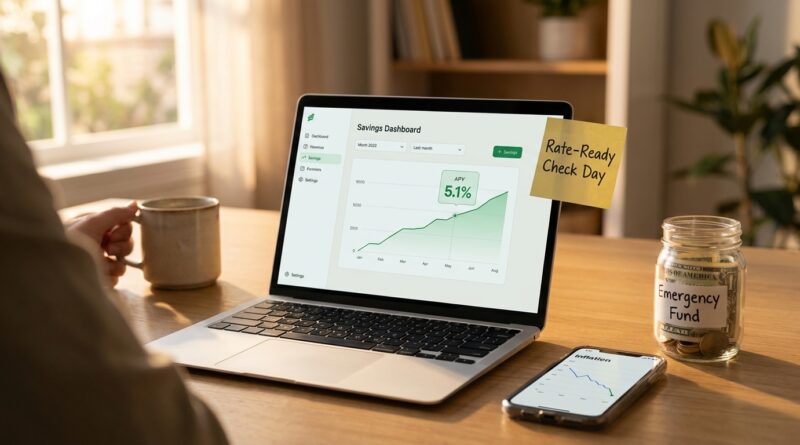
The ‘Rate-Ready’ HYSA Habit: One 10‑Minute Check That Keeps Your Savings Ahead Of The Fed
You are not imagining it. It is frustrating to hear constant talk about Fed rate moves and 4 percent savings accounts while your own emergency fund is parked at a bank paying next to nothing. You did the responsible thing. You saved the money. But if your rate has not kept up, that cash can quietly lose ground to inflation month after month. The good news is you do not need to become a rate chaser or move money every time the headlines get loud. If you have ever wondered how often should I check my high yield savings account rate, the answer is simpler than most people think. A quick 10-minute “Rate-Ready” check once a month, plus a deeper look after major Fed news, is usually enough. That small habit helps you stay competitive, keep your cash safe, and avoid the stress of guessing what banks will do next.
⚡ In a Hurry? Key Takeaways
- Check your HYSA rate once a month, and again after a big Fed announcement or if your bank emails you about account changes.
- If your rate falls well below top comparable HYSAs for more than a month or two, start comparing options before moving your emergency fund.
- Safety comes first. Stick with FDIC or NCUA-insured accounts, and do not give up easy access to emergency cash just to squeeze out a tiny extra rate.
The 10-Minute Habit That Keeps You Ahead
The biggest mistake savers make is not laziness. It is all-or-nothing thinking.
Some people never check their account at all. Others panic every time the Fed makes news and start moving money around like they are trading stocks. Neither approach is great for emergency savings.
A high yield savings account is supposed to make your life calmer, not more complicated.
That is where the “Rate-Ready” habit helps. Once a month, set a reminder on your phone or calendar. Spend 10 minutes checking whether your savings rate is still competitive and whether the account still fits your needs.
How Often Should I Check My High Yield Savings Account Rate?
For most people, once a month is the sweet spot.
That is frequent enough to catch a drop in your APY, notice if your bank has stopped being competitive, and stay aware of big changes in the savings market. But it is not so frequent that you turn your emergency fund into a weekly stress project.
There are a few times when it makes sense to check sooner:
- Right after a major Fed rate announcement
- If your bank sends a notice about account terms or rates
- If you hear your friends or the news mentioning much higher savings rates than yours
- If you are opening a new account or building your emergency fund for the first time
In other words, monthly is your normal routine. Big news is your bonus check-in.
What To Do During Your 10-Minute Rate-Ready Check
1. Look up your current APY
Log in and find your annual percentage yield, or APY. Do not assume it stayed the same as when you opened the account. Banks can and do change rates.
2. Compare it with 2 or 3 similar accounts
You do not need a huge spreadsheet. Just compare your account to a few well-known high yield savings accounts with similar features. Look for apples-to-apples comparisons.
For example, compare:
- Online savings accounts to other online savings accounts
- No-fee accounts to other no-fee accounts
- Accounts with easy transfers to other easy-access accounts
3. Check the gap, not just the headline
If your account pays 4.20 percent and top accounts pay 4.35 percent, that is not an emergency. If your account pays 2.10 percent and good options are paying 4.30 percent, that is a real gap.
The goal is not to always have the single top rate in America. The goal is to avoid being way behind.
4. Review fees, access, and transfer speed
A slightly better rate is not worth much if the account makes it hard to get your own money in an emergency. Check for:
- Monthly fees
- Minimum balance rules
- Transfer limits or delays
- Mobile app quality and customer support
5. Confirm your money is protected
Your emergency fund should be in an FDIC-insured bank or NCUA-insured credit union, within coverage limits. This is the boring part, but it matters. Higher yield should never come at the cost of basic safety.
When Should You Actually Switch Banks?
Not every rate difference deserves paperwork.
A good rule of thumb is to consider switching if your account stays clearly behind competitive HYSAs for more than a month or two, especially if the gap is large and there are no special perks making up for it.
Here is a simple way to think about it:
- Tiny gap: Probably stay put
- Moderate gap: Watch it for another month
- Big gap: Compare options and prepare to move
If switching feels like a hassle, remember that even a modest rate improvement can add up over time. It is similar to the idea in The ‘Invisible Raise’ HYSA Habit: Give Yourself A Pay Boost Without Earning A Dollar More. Small savings upgrades can quietly put more money in your pocket without changing your whole life.
Why The Fed News Makes People Freeze
The Federal Reserve does not set your savings account rate directly, but its moves influence what banks are willing to pay. That is why headlines about rate hikes or cuts can make savers feel like they should do something immediately.
Usually, you do not need to act that fast.
Banks often adjust savings rates over time, not in the exact same moment as the Fed. Some move quickly. Some drag their feet. Some raise rates eagerly and cut them just as eagerly later.
Your monthly check protects you from missing these shifts without forcing you into constant reaction mode.
What A Competitive HYSA Really Means
“Competitive” does not always mean “the highest number on a website.” It means the account is doing a solid job in the real world.
A competitive HYSA should give you:
- A rate that is reasonably close to leading accounts
- No sneaky monthly fees
- Easy access to your emergency cash
- Strong insurance protection
- A bank you trust enough to use when life gets messy
If your account checks those boxes, you are in good shape.
A Simple Rate-Ready Checklist
If you want this to stay easy, save this checklist in your notes app:
- What is my current APY?
- How does it compare with 2 or 3 similar HYSAs?
- Has my bank changed any fees or rules?
- Can I still get my money quickly if I need it?
- Is the gap big enough to justify switching?
That is it. No complex forecasting. No late-night doom scrolling about the Fed.
At a Glance: Comparison
| Feature/Aspect | Details | Verdict |
|---|---|---|
| Check frequency | Once a month is enough for most savers, with an extra check after major Fed news or bank notices. | Best balance of awareness and low stress |
| When to switch | Consider moving if your APY is meaningfully lower than comparable HYSAs for more than a month or two. | Worth it when the gap is real, not tiny |
| What matters most | Rate, FDIC or NCUA insurance, no fees, and fast access to emergency cash. | Safety and access come before chasing the top number |
Conclusion
Fed decisions and bank rate changes are all over the news right now, and that noise makes savers either freeze completely or panic-move their entire balance every few months. You do not need either extreme. A single, repeatable “Rate-Ready” check turns all that chaos into a calm habit. You keep your emergency fund safe, your interest rate competitive, and your inflation risk in check, without needing to predict what the Fed will do next. For the Savers community, this is the kind of low-stress, high-impact routine that can quietly add hundreds of dollars over a few years while still letting you focus on the life you actually want to live.