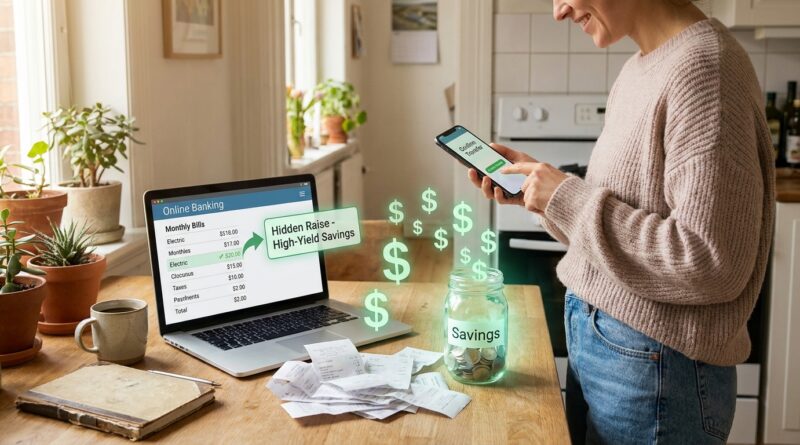
The ‘Hidden Raise’ Habit: Turn Every Bill Drop Into Automatic High‑Yield Savings
You finally get a bill down, feel smart for about five minutes, and then the money disappears. That is the frustrating part. A cheaper phone plan, a lower car insurance premium, a streaming promo, a student loan change. On paper, you just freed up cash. In real life, it gets absorbed by groceries, takeout, gas, and the hundred small things that show up every month.
The fix is simple. Treat every lower bill like a hidden raise. If your monthly bill drops by $18, $42, or $75, set up an automatic transfer for that exact amount into a high-yield savings account. Do it once, right when the bill changes, and let automation handle the rest. You are not forcing a painful budget cut. You are just rerouting money you were already used to living without. That is what makes this habit so realistic for tired, busy people who still want to make progress.
⚡ In a Hurry? Key Takeaways
- When a bill goes down, move the difference into a high-yield savings account automatically every month.
- Set the transfer for the same day your paycheck lands or the bill would have been paid, so you never “see” the extra cash.
- This works because it saves money without asking you to track every purchase or give up small comforts.
Why this habit works so well
If you want to know how to save money automatically when bills go down, the trick is to act fast. The best time to save the difference is the same day you learn your bill dropped.
Why? Because your brain adjusts quickly. A lower bill feels great at first, but loose money is slippery money. If it stays in checking, it gets mixed into normal spending and is gone before you notice.
But if that same amount starts moving automatically to a high-yield savings account, it becomes real progress. Quiet progress. The kind that does not rely on daily willpower.
The “hidden raise” method, step by step
1. Find the exact amount that dropped
Keep it simple. Old bill versus new bill.
Examples:
- Car insurance was $164, now it is $121. Save $43 a month.
- Cell plan was $70, now it is $50. Save $20 a month.
- Streaming bundle was $39, now it is $24 on promo. Save $15 a month.
You do not need a spreadsheet unless you like spreadsheets. A note on your phone is enough.
2. Open or pick a high-yield savings account
If the money stays in checking, it is too easy to spend. A separate high-yield savings account creates a little friction, which is good. It also lets your money earn more than a basic savings account at many big banks.
Look for:
- No monthly fees
- FDIC or NCUA insurance
- Easy automatic transfers
- A competitive APY
3. Set the transfer and forget it
This is the whole game. Set an automatic transfer for the exact amount of the bill drop.
Good timing options:
- The day after payday
- The day the old bill used to hit
- The first of the month, if you like one clean monthly sweep
If your bill dropped by $27, transfer $27. If it dropped by $61, transfer $61. Precision matters because it keeps the habit feeling fair and painless.
Real-world examples of hidden raises
This habit works best with changes you were not counting on to build wealth. That is why it feels so doable.
Insurance discounts
You shop around, raise a deductible a bit, or bundle policies. Suddenly your premium drops. Great. Turn that lower premium into an automatic savings transfer before lifestyle creep grabs it.
Cheaper phone plans
Many people are still overpaying for wireless service. If you switch carriers or move to a lower-cost plan, the difference is usually easy to automate because it is the same amount every month.
Student loan changes
If your payment gets reduced because of a new repayment calculation or a temporary pause, save at least part of the difference. Even $25 or $50 a month builds a cushion fast.
Subscription promos
This one is easy to overlook. A six-month promo on streaming, cloud storage, meal kits, or software can become automatic savings instead of “fun money” that vanishes.
What if the lower bill is temporary?
You can still use the habit. Just put a calendar reminder on your phone for the month the promo ends.
That way, you can either:
- Stop the transfer when the bill goes back up
- Keep the transfer if your budget feels fine without that money
That second option is where this gets powerful. A temporary discount can quietly turn into a permanent savings habit.
Why this feels easier than regular budgeting
Most people are tired of being told to cut coffee, stop eating out, or log every expense into an app they will quit using in ten days.
This is different. You are not cutting something you love. You are capturing money that was already leaving your life before the price dropped.
That is why the hidden raise habit feels lighter. It asks for one decision, not constant discipline.
If you like low-effort systems, it pairs nicely with The ‘Round-Up To HYSA’ Habit: Turn Every Purchase Into Automatic High-Yield Savings. One habit saves the “bill drop” money. The other sweeps up spare change from everyday spending.
How much can this actually add up to?
More than people think.
Let’s say you lower:
- Your phone bill by $20
- Your insurance by $35
- Your subscriptions by $18
That is $73 a month. Over a year, that is $876, before interest. In a high-yield savings account, you earn a bit more on top. Not life-changing overnight, but very real. That could cover a car repair, holiday spending, a medical bill, or the start of an emergency fund.
Common mistakes to avoid
Waiting too long to set it up
If you tell yourself you will do it later, the money usually gets absorbed into normal spending. Set the transfer the same day you confirm the lower bill.
Saving “whatever is left” instead of the exact amount
“Whatever is left” often ends up being nothing. Exact numbers work better.
Keeping the savings in checking
That is not saving. That is parking money in the path of future spending.
Forgetting promo end dates
If a bill reduction is temporary, add a reminder right away so you are not surprised later.
A good starter plan if you are overwhelmed
If life is busy and your brain is full, start with just one bill. Pick the easiest recent win.
- Find one bill that dropped in the last six months.
- Open or choose a HYSA.
- Set one automatic transfer for that amount.
- Check back in 30 days just to make sure it worked.
That is enough. You do not need a total financial makeover this weekend.
At a Glance: Comparison
| Feature/Aspect | Details | Verdict |
|---|---|---|
| Effort required | One-time setup after a bill drops, then automatic monthly transfers | Very easy to maintain |
| Impact on daily life | Does not require tracking every purchase or cutting favorite small treats | Low stress, high realism |
| Savings growth | Captures recurring bill reductions and lets them earn interest in a HYSA | Strong long-term habit |
Conclusion
When prices feel chaotic, small wins matter more than ever. A lower insurance premium, a cheaper phone plan, a student loan adjustment, or a subscription deal might not feel dramatic, but it is still money back in your pocket. The hidden raise habit makes sure it stays yours. Instead of letting those tiny victories vanish into everyday spending, you turn them into automatic high-yield savings that build month after month. That is the beauty of it. You do not need to cut every treat or track every latte. You just react once when a bill changes, set the transfer, and let automation do the heavy lifting.