The ‘High-5 Buckets’ Habit: A Simple 5-Account Setup That Makes Your High-Yield Savings Grow On Autopilot
You are not crazy if all the high-yield savings talk has started to feel useless. Every week, someone posts a new APY and tells you to “make your money work harder,” but almost nobody explains what to do after your paycheck lands. That is the part most people need help with. Not theory. A system. The good news is you do not need a giant spreadsheet, a finance degree, or ten different apps. You just need a simple setup that gives each dollar a job before you have a chance to spend it by accident. The high 5 banking savings habit does exactly that. Think of it as a five-bucket setup for your money: bills, spending, emergency savings, goals, and debt payoff if you need it. Once it is automated, your savings can grow in the background while you still have money set aside for real life, fun included.
⚡ In a Hurry? Key Takeaways
- The high 5 banking savings habit uses five simple accounts so your paycheck is split automatically into bills, spending, emergency savings, goals, and optional debt payoff.
- Start with percentages you can stick to, then automate transfers on payday so saving happens without weekly willpower.
- Keep your emergency and short-term goal money in a high-yield savings account so your cash stays accessible while earning more than a basic savings account.
What the “High-5 Buckets” habit actually is
This is not a gimmick. It is just a cleaner way to run your money.
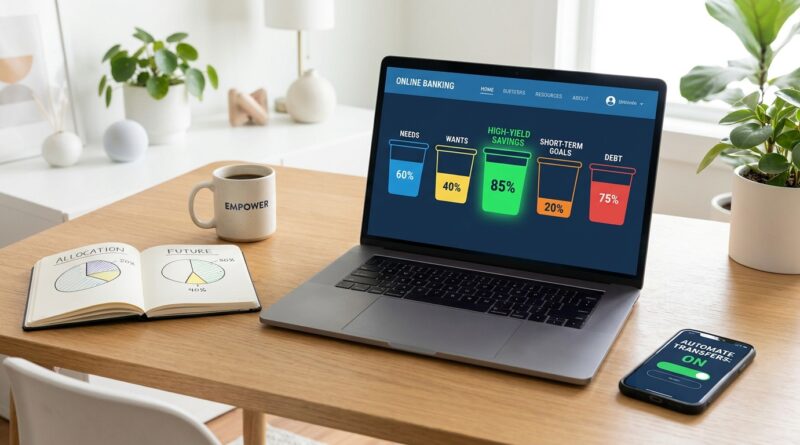
The idea is simple. Instead of one checking account and one random savings account, you create five clear buckets:
- Bucket 1: Bills checking. Rent, utilities, insurance, subscriptions, loan minimums.
- Bucket 2: Spending checking. Groceries, gas, takeout, coffee, fun money.
- Bucket 3: Emergency fund HYSA. Your buffer for job loss, car repairs, medical bills, and life being life.
- Bucket 4: Goals HYSA. Travel, holidays, annual insurance, gifts, home repair, next laptop.
- Bucket 5: Debt payoff account. Optional, but useful if you are paying down high-interest debt faster than the minimum.
That is the whole system. Five places. Five jobs. Much less guesswork.
Why this works better than “I’ll just save what’s left”
Most people do not fail at saving because they are lazy. They fail because their money has no route map.
When your paycheck drops into one account, every dollar looks available. That is how bill money becomes brunch money and emergency savings turns into a last-minute weekend trip.
The high 5 banking savings habit fixes that by making the decision once, up front. Your money gets sorted before you can accidentally mix it all together.
And yes, this setup works especially well when high-yield savings rates are decent. Instead of parking all your extra cash in checking earning next to nothing, you move your emergency and goals money into buckets that can actually grow.
The five accounts to open
1. Bills checking
This is your boring account. That is a compliment.
Use it only for fixed and planned monthly costs. Mortgage or rent, phone bill, internet, car payment, insurance, daycare, subscriptions, minimum debt payments. If it is predictable, it belongs here.
A separate bills account means you can look at your spending account without wondering whether that balance is truly yours to use.
2. Spending checking
This is your day-to-day life account. Debit card purchases come from here. Groceries. Gas. Restaurants. Haircuts. Streaming add-ons. Target runs that were supposed to be “just one thing.”
When this bucket gets low, that is your signal to slow down. No guilt trip needed. The system does the talking.
3. Emergency fund HYSA
This is where today’s high-yield setup matters most.
Your emergency fund should stay liquid, safe, and easy to reach. A solid HYSA gives you that while paying meaningfully more than a standard savings account at many big banks.
If you have trouble staying motivated, naming this account helps more than people expect. A label like “Job Loss Buffer” or “Keep Us Safe” can make the money feel real. That is the idea behind The ‘Name It To Grow It’ Habit: How Renaming Your HYSAs Quietly Supercharges Your Savings.
4. Goals HYSA
This is for shorter-term savings that are not emergencies.
Think travel, annual bills, Christmas, wedding guest season, car maintenance, a phone replacement, or a future move. Keeping this separate from your emergency fund matters. Otherwise every planned expense feels like an “emergency,” and you never really know how much safety cash you have.
5. Debt payoff account
This one is optional.
If you carry high-interest credit card debt or personal loan debt, this bucket can help you make extra payments without stealing from your bills or emergency money. Some people skip this and send extra debt money directly on payday. That works too. But if you like seeing a pile build before making an extra payment, this bucket can keep you focused.
How to split your paycheck
There is no perfect percentage that fits every person. But there are good starting points.
If you like the classic 50/30/20 rule, think of this setup as the practical version. Same spirit. More structure.
Option A: If money feels tight right now
- 55 to 65 percent: Bills checking
- 20 to 25 percent: Spending checking
- 5 to 10 percent: Emergency HYSA
- 5 percent: Goals HYSA
- 0 to 10 percent: Debt payoff
When cash is tight, the win is consistency. Even 5 percent into a HYSA is still a habit. Habits beat heroic one-month bursts.
Option B: If you are fairly stable and want balance
- 50 percent: Bills checking
- 20 percent: Spending checking
- 15 percent: Emergency HYSA
- 10 percent: Goals HYSA
- 5 percent: Debt payoff or extra investing later
This is a great middle-ground setup for many households.
Option C: If your income is strong and you want to build fast
- 45 percent: Bills checking
- 15 percent: Spending checking
- 20 percent: Emergency HYSA
- 10 to 15 percent: Goals HYSA
- 5 to 10 percent: Debt payoff
If your emergency fund is already full, you can shift that percentage to a goal bucket, retirement, or investments. But until you have that cash cushion, the HYSA bucket deserves real attention.
How much should be in the emergency bucket?
A good first goal is $1,000. After that, aim for one month of bare-bones expenses. Then three months. Some people want six.
You do not need to hit the final number all at once. The point is to build layers.
If your income is irregular, if you are self-employed, or if your job feels shaky, a bigger emergency bucket makes sense. If you have dual incomes and very stable expenses, you may feel fine with less.
How to automate it in under an hour
This is where the habit becomes real.
Step 1: Pick one main checking account for direct deposit
For most people, your paycheck will land in bills checking first. That is the easiest home base.
Step 2: Set automatic transfers for payday or the next morning
As soon as your paycheck arrives, have your bank automatically move money into:
- Spending checking
- Emergency HYSA
- Goals HYSA
- Debt payoff account, if using one
Many employers also let you split direct deposit across multiple accounts. If yours does, you can send percentages straight to each bucket and skip part of the transfer process.
Step 3: Put bills on autopay from the bills account
This reduces missed payments and makes your bills bucket earn its keep.
Step 4: Use only the spending account for daily purchases
This is the behavioral trick that makes the whole setup easier. Your card spending comes from one clear bucket. No mental math. No “Wait, was that money for rent?” panic.
Step 5: Review once a month, not every day
You do not need to babysit this system. Check in monthly. Adjust percentages if needed. That is enough.
What if five accounts sounds like too much?
That is fair. If five feels annoying, start with four.
Use:
- Bills checking
- Spending checking
- Emergency HYSA
- Goals HYSA
Then add the debt bucket later if you need it.
The point is not to create admin work. The point is to remove decision fatigue. If five buckets feels clean to you, great. If four is more realistic, start there.
Common mistakes people make with this setup
Making the percentages too ambitious
If your spending account empties in a week, your plan is too strict. Adjust it. A good system should stretch you a bit, not make you quit.
Keeping goals and emergencies in one savings pile
This is one of the biggest problems. If your “savings” has vacation money, car repair money, and emergency cash all mashed together, you cannot tell how safe you actually are.
Chasing rates and forgetting behavior
Yes, APY matters. But a slightly higher rate at a new bank will not change your life if your money flow is still messy. Structure first. Fine-tuning later.
Using the emergency fund for non-emergencies
Concert tickets are not emergencies. Neither is a sale on patio furniture. This is why separate goal buckets help so much.
Who this system is best for
The high 5 banking savings habit works especially well for:
- People who get paid regularly and want a simple plan
- Couples who keep asking, “How much can we actually spend?”
- Anyone with a history of dipping into savings too easily
- Savers who want to use a HYSA without overthinking every transfer
- People who are tired of budgeting apps but still need structure
If you love spreadsheets, this will still work. If you hate spreadsheets, this may work even better.
At a Glance: Comparison
| Feature/Aspect | Details | Verdict |
|---|---|---|
| Setup simplicity | Five clear buckets with one job each. Most people can open or assign them in under an hour. | Easy enough for beginners |
| Savings growth | Emergency and goal cash sits in a HYSA instead of a low-interest checking account. | Strong upgrade over “one account” banking |
| Day-to-day control | Separating bills from spending makes it much easier to know what is safe to use. | Excellent for reducing overspending stress |
Conclusion
The best part of the high 5 banking savings habit is that it turns good intentions into a repeatable system. It borrows the common-sense appeal of 50/30/20 and the “High 5” style of money buckets, but updates it for today by giving your high-yield savings account a real job and adding an optional debt bucket for people who need it. That means less guessing, less rate-chasing, and more steady progress. You can set this up in under an hour, choose percentages that fit your current income, and automate the whole thing so your savings grows whether you feel motivated or not. In a world full of financial noise, this kind of plug-and-play structure is refreshingly useful. Your paycheck comes in, your buckets fill up, and your future gets funded in the background. That is the kind of habit that sticks.