The ‘Quiet Split’ Habit: The 60‑Second Rule That Makes High‑Yield Savings Feel Effortless
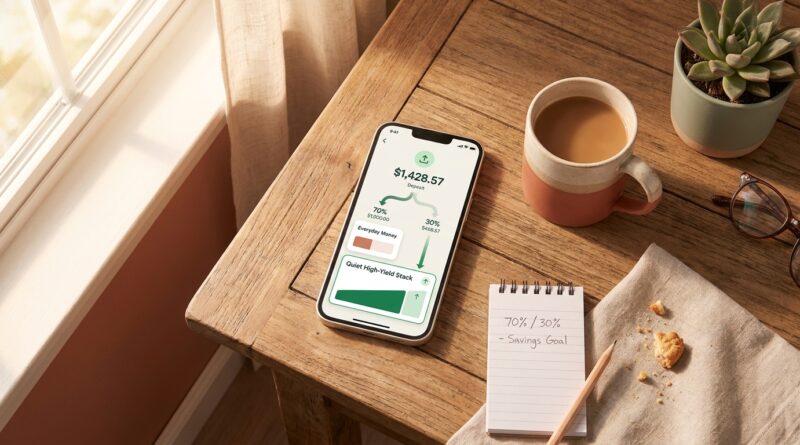
You are not lazy. Your money system is. That is the part a lot of people miss when they hear about a high yield savings habit. On paper, it sounds easy. Open a better savings account, move extra cash, earn more interest. In real life, though, most money lands in checking, sits there with your grocery budget, your rent, your streaming bills, and your late-night food orders. Then the month gets busy, you mean to move some over later, and later never happens. The fix is not more willpower. It is less friction. A simple “quiet split” rule means every time money comes in, you take 60 seconds and send a set piece of it straight to your high-yield savings account before your brain can spend it. No spreadsheets. No guilt. Just a tiny repeatable move that makes saving feel almost automatic.
⚡ In a Hurry? Key Takeaways
- The 60-second quiet split means moving a fixed percentage or dollar amount to a high-yield savings account every time money hits checking.
- Start small, like 5 percent of each paycheck or $25 from every deposit, so the habit sticks without wrecking your budget.
- This works best when your HYSA is FDIC- or NCUA-insured and slightly separate from daily spending, so the money is safe and less tempting to touch.
What the “Quiet Split” Habit Actually Is
The idea is wonderfully boring. And that is why it works.
Any time money comes in, your paycheck, tax refund, Venmo repayment, cash from a side gig, you split it right away. One part stays in checking for life. One part goes to your high-yield savings account.
That is it.
You do it immediately, ideally in under 60 seconds. Before you start mentally spending it. Before it blends into the rest of your account. Before “I’ll do it tonight” turns into next month.
A simple example
Let’s say your paycheck is $1,200 after taxes. Your quiet split rule might be:
- 10 percent to HYSA
- 90 percent stays in checking
So within a minute, $120 moves to savings.
If you get $200 from a freelance job, maybe your rule is 20 percent to savings. That sends $40 away before it disappears into random spending.
Why This High Yield Savings Habit Feels So Much Easier
Most people do not fail at saving because they hate saving. They fail because they are asking themselves to make the “good choice” over and over from one big mixed pile of money.
That pile creates confusion.
If your checking account shows $2,400, your brain tends to read that as available money, even if part of it should really be future-you money. The quiet split fixes that by shrinking the tempting pile early.
It also helps because it removes the drama. You are not making a giant monthly sacrifice. You are making lots of tiny decisions that barely sting.
That is how habits survive real life.
How to Set Up Your Rule
You do not need the perfect formula. You need one you will actually use.
Option 1: Use a percentage
This is great if your income changes.
- 5 percent if money is tight
- 10 percent if you want a stronger push
- 15 to 20 percent for side-gig or “extra” money
A percentage keeps the rule simple. More money in means more saved. Less money in means less pressure.
Option 2: Use a flat dollar amount
This is great if you love consistency.
- $25 from every paycheck
- $50 every Friday
- $100 from any bonus or refund
Flat amounts feel easy to remember and easy to repeat.
Option 3: Use a hybrid rule
This works well for people with a regular paycheck plus irregular extras.
- $75 from each paycheck
- 25 percent of side income
That way your baseline savings keeps moving, and extra cash gets partly captured too.
The Best Way to Make It Nearly Automatic
If your employer lets you split direct deposit between accounts, use that first. It is the cleanest version of this habit because the money never fully lands in checking.
If that is not available, no problem. Set a recurring transfer for payday, or do the transfer manually the moment the deposit hits.
Manual is fine, especially at the start. A lot of habits stick better when you physically do the action a few times and see the win.
Make the savings account a little inconvenient
You want your HYSA easy to fund, not easy to drain.
That usually means:
- Keeping it at a separate bank from checking
- Not attaching its debit card to your wallet apps
- Naming it something specific like “Emergency Buffer” or “Next Rent Jump”
Just enough distance helps. Not a giant wall. Just a speed bump between you and impulse spending.
Where People Get Tripped Up
They start too aggressively
If you move too much too fast, you will resent the system and undo it. Start with an amount that feels almost too easy.
Really. Easy wins are underrated.
They wait for “extra money”
Extra money is a myth for most households. If you only save what is left over, there often will not be much left over.
The quiet split works because it saves first, in small bites.
They keep checking and savings too blended
If both accounts sit side by side and you treat them as one big pot, the habit loses some power. The account should still be accessible, but not visually mixed with everyday spending if you can help it.
What Kind of Money Should Go Into the Split?
Almost any incoming money can use the rule.
- Paychecks
- Freelance or gig income
- Cash gifts
- Tax refunds
- Reimbursements
- Refunds from returned purchases
You do not need to split every dollar exactly the same way. Some people use one rule for paychecks and a more aggressive one for surprise money.
For example:
- 5 percent of regular income
- 30 percent of any windfall
That keeps the system realistic without losing momentum.
How This Builds Wealth Quietly
The big attraction of a high-yield savings account is not excitement. It is quiet progress.
Your money earns more than it would in a sleepy checking account. Then the habit keeps feeding that account over and over. You are stacking two helpful things at once:
- More money getting moved into savings
- Better interest on the money once it gets there
No single transfer changes your life. That is not the point.
The point is that small transfers repeated consistently become a balance you did not have before. And because the process is low-friction, you are much more likely to keep going.
Once you have the habit running, pair it with a quick maintenance check every so often. Our guide to The ‘3‑Month HYSA Snapshot’ Habit: One 10‑Minute Check That Quietly Adds Hundreds In Interest is a good next step for making sure your account is still paying a competitive rate.
A 5-Minute Setup Plan
Step 1: Pick your HYSA
Make sure it is FDIC-insured if it is a bank, or NCUA-insured if it is a credit union.
Step 2: Choose one simple split rule
Examples:
- Move 10 percent of every paycheck
- Move $50 every payday
- Move 25 percent of side income
Step 3: Create the transfer
Use direct deposit splitting, scheduled transfers, or a same-day manual move.
Step 4: Name the goal
People save better when the money has a job. “Savings” is vague. “Emergency Fund” or “Travel in October” feels real.
Step 5: Ignore perfection
If one week you cannot do your usual amount, do a smaller one. Keep the habit alive.
At a Glance: Comparison
| Feature/Aspect | Details | Verdict |
|---|---|---|
| Speed | Takes about 60 seconds per deposit, or zero effort if direct deposit is split automatically. | Excellent for busy people |
| Difficulty | No budget overhaul required. Just one fixed rule for incoming money. | Easy to start and easier to keep |
| Long-term value | Builds savings steadily while earning better interest than most checking accounts. | Strong low-effort payoff |
Conclusion
If saving has felt weirdly hard, that does not mean you need a more intense system. You probably need a gentler one. That is what makes this high yield savings habit so useful. It avoids the two traps a lot of people are stuck between right now: leaving cash in low-interest accounts where inflation slowly chews it up, or chasing complicated tricks they will never keep up with. A dead-simple split rule gives you a realistic middle path. Each deposit becomes a tiny savings moment. Tiny is good. Tiny repeats. Tiny compounds. And in a year when rent, groceries, and just about everything else feel heavier, a low-friction win like that is worth a lot.