The ‘Rate‑Check Reminder’ HYSA Habit: Build A 5%+ Pay Raise Into Your Calendar
You did the hard part. You moved your cash into a high-yield savings account, felt good about finally earning real interest, and then life got busy. That is where a lot of people get stuck. Banks know most savers are not checking rates every month, so the flashy number that got your attention can quietly slide down while your money sits there. It feels small, but over a year that drop can cost you real money. If you have ever wondered how often should I check my high yield savings account rate, the sweet spot is usually every 3 months, plus anytime the Federal Reserve is making big moves. That simple reminder habit can act like a built-in pay raise for your savings. Not because you need to chase every last decimal point, but because you should not accept a silent cut in what your money earns.
⚡ In a Hurry? Key Takeaways
- Check your HYSA rate every 3 months, and also after major rate news, to avoid missing better offers.
- Set a repeating calendar reminder with a simple rule: if your rate falls well below top competitors, review whether it is worth switching.
- Do not move money for tiny differences. Focus on meaningful gaps, FDIC or NCUA insurance, and ease of access for your emergency fund.
The problem with “set it and forget it”
“Set it and forget it” works great for some money habits. It is less great when the product itself keeps changing.
A high-yield savings account is not like a fixed-rate CD. The bank can raise or lower the annual percentage yield, often without much fanfare. So the account that looked amazing six months ago may now be average, or worse.
That does not mean you need to turn into a rate-obsessed spreadsheet person. It just means your savings deserves a light check-in now and then.
So, how often should I check my high yield savings account rate?
For most people, the best answer is every 3 months.
Quarterly is frequent enough to catch meaningful drops, but not so frequent that it becomes annoying. It is the same logic as changing your air filter or reviewing a subscription bill. Put it on the calendar, do a quick look, and move on.
A good rule of thumb
Use this simple schedule:
- Check every 3 months
- Check again after major Federal Reserve announcements or obvious rate swings
- Check before moving a large chunk of cash into or out of savings
That is it. You do not need a daily habit. You need a reliable one.
What counts as “worth checking”?
Not every rate change matters.
If your bank drops from 4.95% to 4.85%, that is probably not worth an emergency account transfer. But if your account is paying 4.10% and similar insured accounts are paying 4.90% or 5.00%, that gap deserves attention.
Use the “meaningful gap” test
Ask yourself three questions:
- Is my rate at least 0.50% lower than strong competitor rates?
- Is my balance large enough that the difference adds up?
- Would moving be easy, safe, and not disrupt my access to emergency cash?
If the answer is yes to all three, it is time to review your options.
Why this habit matters more than people think
When rates move fast, even a decent account can become a laggard.
Let’s say you keep $15,000 in your emergency fund. A 0.75% difference in APY is about $112.50 a year before taxes. That may not sound life-changing, but it is real money for doing almost nothing except checking your rate and making one decision.
And if your cash savings are higher, the missed interest gets bigger fast.
Build the “rate-check reminder” into your calendar
This is the part that turns good advice into an actual habit.
What to put on your calendar
Create a recurring reminder every 3 months with a note like this:
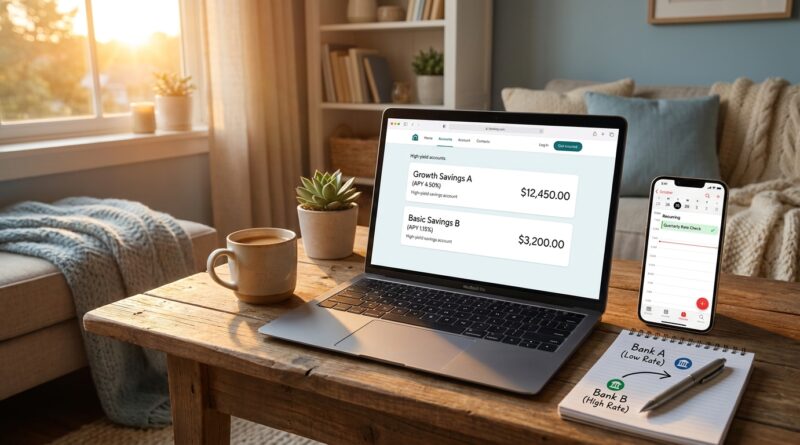
Check HYSA rate. Compare with 2 to 3 top accounts. If my rate is 0.50% or more lower, decide whether to switch.
That sentence does two helpful things. First, it tells you exactly what to do. Second, it keeps you from overthinking tiny differences.
Best times to schedule it
Pick dates you will remember, like:
- January 5
- April 5
- July 5
- October 5
Or tie it to another money habit, like your quarterly budget check or credit report review.
If you are trying to make more of your savings decisions visible and intentional, you might also like The ‘Loud Budget’ HYSA Habit: Use One Simple Script To Save More Without Losing Friends. It is another good example of how a small script can make money choices easier to stick with.
Where to compare rates without getting overwhelmed
You do not need to check 40 banks.
Pick a short list of trustworthy places to compare rates, then use the same ones each time. You are looking for a quick market snapshot, not a research project.
Focus on these basics
- APY
- FDIC or NCUA insurance
- Minimum balance requirements
- Monthly fees
- Transfer speed and account usability
Sometimes the top rate comes with extra friction. A slightly lower rate at a smoother bank can still be the smarter choice.
When not to switch
This is important. Chasing every tiny increase can waste your time.
You probably do not need to move your money if:
- The difference is only 0.10% to 0.25%
- Your balance is small enough that the gain would be minimal
- The new bank has annoying limits, long transfer delays, or poor service
- You are using the account for quick emergency access and trust matters more than squeezing out a few extra dollars
The goal is not perfection. The goal is avoiding lazy losses.
A simple decision framework
Stay put if:
- Your rate is still competitive
- Your bank is easy to use
- You value convenience and fast access
Consider switching if:
- Your rate has clearly drifted below the market
- You would earn enough extra interest to matter
- The new account is insured and easy to manage
At a Glance: Comparison
| Feature/Aspect | Details | Verdict |
|---|---|---|
| Check frequency | Every 3 months, plus after major Fed or market rate changes | Best balance of effort and payoff |
| When to switch | Usually when your APY trails strong competitors by about 0.50% or more | Worth a closer look |
| What matters besides rate | Insurance, fees, transfer speed, ease of use, and reliable access | Do not ignore these for a tiny bump |
Conclusion
Your HYSA should not quietly turn into a low-yield parking spot just because you got busy. A simple quarterly reminder can protect your earnings without turning your life into a rate-chasing hobby. That is why this helps the Savers community right now. HYSA rates are moving faster than many people realize, and plenty of “set it and forget it” savers are missing out on hundreds of dollars a year in interest. The rate-check reminder habit gives you a calm, repeatable system. It protects your time, protects your yield, and helps your emergency fund and short-term goals keep up with the best offers that are actually worth your attention.