The ‘Round-Up & Park’ HYSA Habit: Turn Spare Change Into Real Savings Without Feeling It
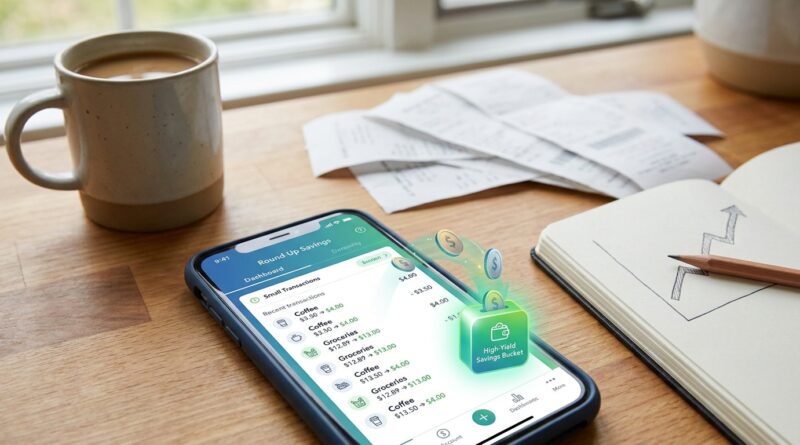
You know the feeling. You check your bank app, see that you meant to save more this month, and somehow the money is just. Gone. Not on anything dramatic, either. A coffee here, a grocery run there, one delivery order because the day got away from you. On paper, you are trying. In real life, manual transfers are easy to skip, and once cash stays in checking, it tends to get spent. That is why the round up savings high yield account habit works so well. It is small enough that you barely notice it, but steady enough to build real momentum over time. The trick is simple. Let your debit card or spending app round purchases up to the next dollar, then sweep that pile into a high-yield savings account once a week. You are not relying on willpower. You are setting up a system that quietly does the job for you.
⚡ In a Hurry? Key Takeaways
- A round-up plus weekly transfer to a high-yield savings account can help you save consistently without changing your daily routine much.
- Start with purchase round-ups and an automatic weekly sweep, then review once a month to make sure the amount still feels comfortable.
- Keep this money in an FDIC- or NCUA-insured high-yield account so your emergency fund earns more while staying easy to reach.
Why this habit works when manual saving does not
Most people do not fail at saving because they are lazy. They fail because the timing is bad.
You plan to move money later. Later turns into dinner, errands, bills, a weird charge you need to check, and then the week is over. The extra cash you meant to save blends into your regular spending.
The round-up habit fixes that by shrinking the decision. Instead of asking, “Can I spare $200 right now?” you are letting tiny amounts stack up in the background. Fifty cents. Eighty-three cents. A dollar and twelve cents. Small enough to ignore. Big enough to add up.
Then the second part matters just as much. You park that money in a high-yield savings account, not your basic bank savings account paying next to nothing. That is where the “real savings” part kicks in.
What “Round-Up & Park” actually means
This is a two-step system.
Step 1: Round up your spending
When you spend $4.40, your bank or budgeting app rounds it to $5.00. The extra 60 cents goes into a small holding bucket, or straight into savings, depending on the tool you use.
Step 2: Park it in a HYSA
Once a week, that round-up total gets transferred to your high-yield savings account. HYSA stands for high-yield savings account. It is just a savings account that pays a much better rate than the sleepy default account many people opened years ago and forgot about.
The habit works best when the transfer happens automatically every week, so the money leaves checking before you casually spend it.
Why this is a smart fit for 2026
Spending has changed. A lot of people barely touch cash now. It is tap to pay, stored cards, quick subscriptions, and little purchases that do not feel like much in the moment. That makes “save whatever is left at the end of the month” a pretty weak plan.
Round-ups match the way people already spend. You do not need a full budget overhaul. You do not need to give up every treat. You just put a soft savings layer underneath your normal life.
And rates still matter. If your spare cash is sitting in checking or a low-rate savings account, it is not doing much for you. A HYSA at least gives those dollars a chance to earn something while they wait for real life to happen.
How much can this really add up to?
More than people expect, though it will not turn pennies into a vacation home.
Say you make 30 card purchases a week and your average round-up is 55 cents. That is about $16.50 a week, or roughly $66 a month. Add a small automatic weekly transfer of $10 on top of that, and now you are closer to $106 a month.
After a year, that is more than $1,200 before interest. In a high-yield account, you earn a little extra just for leaving it there.
That may not sound glamorous. It does sound like a starter emergency fund, a car repair cushion, or a way to stop putting every surprise expense on a credit card.
How to set it up without making your life harder
Pick one spending account
Use the checking account or debit card you rely on most. If you spread spending across five cards and apps, the system gets messy fast.
Turn on round-ups
Many banks and fintech apps have a built-in round-up feature. If yours does not, some money apps can mimic the same behavior.
Open a separate HYSA
Ideally, use a savings account that is separate from your daily checking. “Out of sight” helps. If it is at the same bank, that is fine. If it is at a different bank, even better for some people because the slight friction can reduce impulse transfers back.
Schedule the weekly sweep
Weekly is the sweet spot for most people. Daily is overkill. Monthly is often too slow, and the money has more time to disappear.
Start small
If your checking balance runs tight, begin with round-ups only. After a month, see how it feels. Then add a fixed transfer like $5 or $10 a week if you can handle it.
One mistake to avoid
Do not set the system so aggressively that it causes overdrafts or stress.
This habit is supposed to help you, not punish you. If your income is irregular or your account balance gets close to zero before payday, keep a buffer in checking. You can also pause the weekly transfer and leave only the round-ups on during tight months.
The best savings habit is the one you can keep doing.
Who gets the most value from this approach
This works especially well for:
- People who struggle to remember manual transfers
- Anyone living close to the edge who still wants to build a small emergency fund
- Tap-to-pay spenders who make lots of small purchases
- Folks who get discouraged because big savings goals feel impossible
If you already log in to your bank app often, you can pair this habit with The ‘One-Login’ HYSA Habit: Turn Every Bank Check-In Into Extra Interest. That combo works well because one system saves automatically, and the other turns your quick account check-ins into a prompt to nudge a little more money toward savings.
What to look for in a good HYSA
Do not overcomplicate this part. A few basics matter most.
Solid rate
You want a competitive annual percentage yield, or APY. Rates change, so compare current offers, not last year’s headlines.
No monthly fee
A fee can wipe out the benefit of saving tiny amounts. Skip accounts that charge you just to keep money there.
Easy transfers
You should be able to move money in and out without a headache, especially if this is part of your emergency fund.
Deposit insurance
Look for FDIC insurance at banks or NCUA insurance at credit unions. That is a basic safety check.
When this habit is not enough on its own
Round-ups are great for building momentum, but they are not magic.
If you are carrying high-interest credit card debt, missing bills, or constantly overdrafting, this should be a helper habit, not your entire plan. You may need to trim a few recurring costs, adjust bill timing, or set up a separate bill-pay buffer first.
Still, even in a messy money season, tiny automatic saving can be a morale boost. Seeing any balance grow at all can make you feel less stuck.
At a Glance: Comparison
| Feature/Aspect | Details | Verdict |
|---|---|---|
| Effort required | Once set up, round-ups and weekly transfers run in the background with little hands-on work. | Excellent for people who forget manual saving. |
| Savings growth | Small amounts add up steadily, and a HYSA helps the balance earn more than a standard low-rate account. | Best for building an emergency cushion, not for overnight big gains. |
| Risk and flexibility | Low risk if the account is FDIC- or NCUA-insured, but you need to avoid setting transfers too high for your cash flow. | Safe and useful, as long as it fits your real checking balance. |
Conclusion
If your savings keeps stalling, it does not mean you are bad with money. It usually means your system is asking you to remember, decide, and be disciplined at the exact moment life is busiest. The round up savings high yield account habit is a smarter fix. It is boring, automatic, and surprisingly effective. That is exactly why it works. Right now, the big money lesson is that steady habits often beat flashy one-time moves, especially when your cash is sitting in a high-yield account instead of a low-rate default. For 2026, this setup makes a lot of sense. It fits tap-to-pay life, helps build an emergency buffer a little at a time, and puts today’s better savings rates to work without asking you to change your whole lifestyle overnight. Start small. Let it run. Then give it time to do what dramatic money plans often do not, which is actually stick.