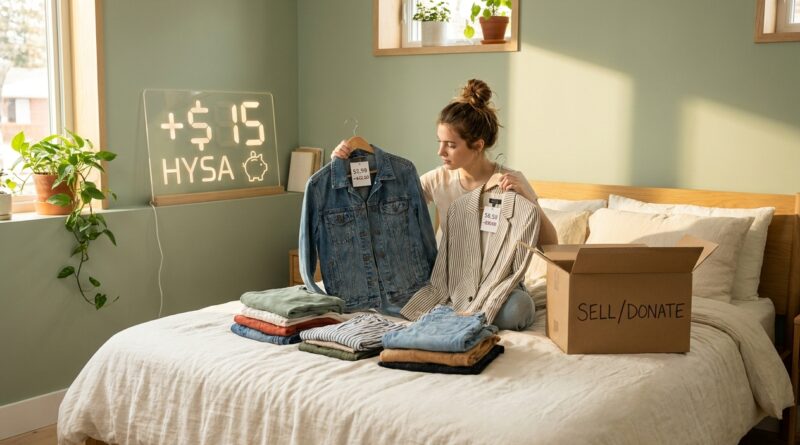
The ‘Thrift‑To‑HYSA’ Flip: Turn Secondhand Finds Into A High‑Yield Savings Machine
You find a great thrift deal, feel proud for five minutes, then somehow the “money you saved” vanishes into coffee runs, takeout, or one more cute thing in your cart. That is frustrating, especially when everyone online seems to be turning secondhand shopping into a full-on money move while your high-yield savings account keeps limping back to zero. The good news is the problem usually is not your thrift habit. It is the lack of a system. If you want to start thrifting to save money in a high yield savings account, the trick is simple. Treat every discount and every resale profit like real income, then move it out of reach fast. Done right, your weekend thrift hunts can fund a growing cash buffer instead of a cycle of random spending. You still get the fun of the hunt. You just finally keep the financial upside too.
⚡ In a Hurry? Key Takeaways
- Use a simple rule: every thrift discount or resale profit gets transferred to your high-yield savings account within 24 hours.
- Track two numbers only, money saved by buying secondhand and money earned by reselling, then automate both into savings.
- Do not count “savings” from things you would not have bought anyway. That keeps your system honest and actually useful.
Why thrift wins often do not turn into real savings
Here is the trap. You buy a jacket secondhand for $18 instead of $60 and tell yourself you “saved” $42. That feels smart, and it is smarter than paying full price. But if that $42 stays in checking, it usually gets absorbed by normal life.
That is why your bank balance does not reflect how careful you have been. The money was never separated. It was just mentally assigned a job, then quietly reassigned.
The fix is not to stop thrifting. It is to stop letting thrift wins stay in your spending account.
The ‘Thrift-To-HYSA’ flip
The idea is easy. Every time you create value through secondhand shopping, you send part or all of that value to a high-yield savings account.
There are two ways this works
1. Discount capture. If you buy something you truly needed for less than retail, move the difference to savings.
2. Resale capture. If you flip an item for profit, move the profit to savings before you spend any of it.
This turns thrifting from a fun habit into a little savings machine. And because the money lands in a high-yield account, it starts earning interest too.
First, set one rule so you do not overthink it
Pick one clear rule and stick to it for 30 days. Here are three good options.
Option A: Save 100% of true thrift savings
If you needed new jeans, found them secondhand for $20, and the pair you would have bought new cost $50, transfer $30 to your HYSA.
Option B: Save 50% of thrift savings
If full transfers feel too strict, split the win. Put half in savings, leave half in checking.
Option C: Save 100% of resale profit
If you buy low and sell higher, every dollar of profit goes to the HYSA. Your original buying cost stays available to fund future flips.
For most people, Option C is the easiest to maintain because the profit feels separate from your regular paycheck.
Be honest about what counts as “saved” money
This part matters. If you buy something just because it was cheap, you did not save money. You spent money.
A thrift purchase counts toward this system only if it meets one of these tests:
- You already planned to buy it
- You would have paid a higher price for a similar item
- You bought it specifically to resell at a realistic profit
Everything else is just shopping with better PR.
How to set up the system in 15 minutes
1. Open or choose your high-yield savings account
If you already have one, great. If not, choose an FDIC-insured bank or NCUA-insured credit union with a competitive rate, no monthly fee, and easy transfers.
2. Create one nickname for the account
Name it something specific like “Thrift Wins” or “Flip Fund.” Vague savings goals are easy to ignore. Specific ones feel real.
3. Keep a note on your phone
Use a simple format:
- Item bought
- Retail price you would have paid
- Actual thrift price
- Difference to transfer
For resale:
- Item bought
- Cost
- Sale price
- Fees and shipping
- Profit to transfer
4. Transfer the money the same day
This is the whole game. Do not wait until the end of the month if you know you tend to spend what is sitting there.
5. Automate a weekly sweep if needed
If same-day transfers feel annoying, do one scheduled move every Sunday night based on your note app totals.
A real-world example
Say in one month you:
- Buy a lamp for $12 instead of $35. Savings: $23
- Find a winter coat for $30 instead of $90. Savings: $60
- Flip a vintage bag. Cost: $15. Sale price after fees: $44. Profit: $29
Total value created: $112.
Transfer that $112 into a high-yield savings account instead of leaving it in checking. Do that every month, and you have moved more than $1,300 in a year, not counting interest.
That may not sound life-changing on influencer TikTok. In real life, it is a tire repair, a copay, a travel fund start, or the first layer of an emergency cushion.
How to thrift without letting it become a spending hobby
Thrifting is fun. That is also the risk. A hobby that feels cheap can still drain cash fast.
Set a buy list before you go
Examples:
- Black work pants
- Small bookshelf
- Kids’ jackets
- Resellable denim brands only
If it is not on the list, pause before buying.
Use a cash cap
Bring or budget a fixed amount for the trip. Once it is gone, the hunt is over.
Track net gain, not item count
Ten “great finds” mean nothing if you spent $94 and saved none of it.
Do not let profits roll straight back into more inventory forever
If you resell, it is easy to tell yourself every dollar needs to go back into sourcing. That can turn a side hustle into a closet full of unpaid homework. Decide how much stays in the business and how much goes to savings.
A simple split that works for resale
If you like flipping secondhand finds, try this formula:
- 50% of profit to your HYSA
- 30% kept for future inventory
- 20% for fun spending or treating yourself
This keeps the hustle going without letting all the money disappear into more buying.
Why a high-yield savings account helps so much
A regular checking account is too convenient. That is the problem. Money sitting there looks available for lunch, rideshares, and impulse taps.
A high-yield savings account adds just enough friction to protect your progress. It also pays interest, which means your thrift wins keep working after the hunt is over.
You are not going to get rich from one thrifted blazer. But stacking small wins in the right place is how cash reserves actually grow.
Common mistakes to avoid
Counting fake savings
If you bought it only because it was cheap, skip the “I saved $70” story.
Ignoring fees when reselling
Platform fees, shipping supplies, and your time matter. Profit is what is left after costs.
Waiting too long to transfer the money
The longer it sits in checking, the more likely it becomes dinner, subscriptions, or random online extras.
Keeping the goal too abstract
“Save more” is forgettable. “Build a $1,000 emergency buffer from thrift flips” is much easier to stick with.
Who this works best for
This habit is especially useful if you:
- Already thrift for clothes, furniture, books, or kids’ items
- Love secondhand apps and local resale spots
- Need a low-pressure way to build savings
- Struggle to keep extra cash from being spent
It is also good for people who hate strict budgeting but enjoy small games and visible progress.
At a Glance: Comparison
| Feature/Aspect | Details | Verdict |
|---|---|---|
| Discount capture | Transfer the difference between what you would have paid and the thrift price for true planned purchases. | Best for everyday savers who already shop secondhand. |
| Resale profit capture | Transfer profit after fees and costs from flipped items into your HYSA. | Best for side hustlers who want clear, measurable gains. |
| Keeping money in checking | Savings and profits stay mixed with daily spending money. | Weak choice if your goal is actual progress, because the money tends to disappear. |
Conclusion
Right now, Gen Z is proving that secondhand shopping can do more than cut costs. It can create real savings and even extra income. The problem is that a lot of that money gets recycled into more impulse buys before it ever builds security. The fix is not to stop having fun or give up weekend thrift hunts. It is to give every thrift win a job. If you start thrifting to save money in a high yield savings account, even small discounts and modest flip profits can turn into automatic, compounding cash. That is what makes this habit so useful while inflation still hurts. You keep the style, the thrill of the find, and the side hustle potential. But this time, your bank balance finally starts showing it.