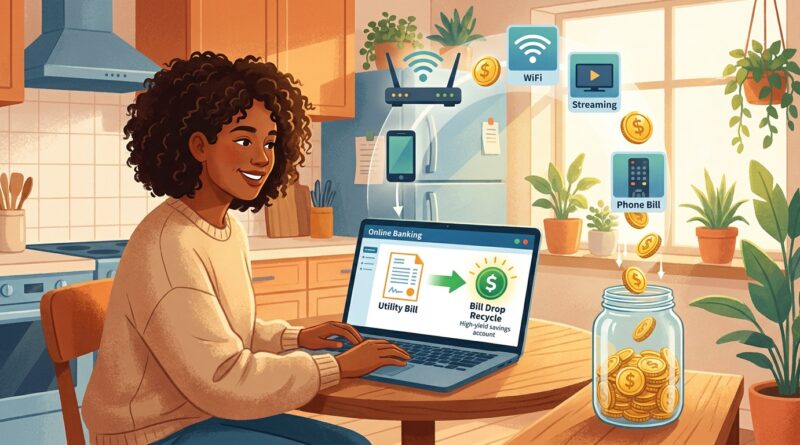
The ‘Bill Drop Recycle’ Habit: Turn Every Lowered Bill Into Permanent High-Yield Savings
You finally do the annoying part. You call the internet company, cancel the barely-used app, or switch to a cheaper phone plan. You save $18 here, $27 there, maybe $60 a month in total. Then life happens. A couple takeout nights. A sale on Amazon. One “why not” upgrade. Suddenly that hard-won money is gone, and you cannot point to a single useful thing it did for you. That is frustrating, and it is incredibly common.
The fix is simple. Every time a bill goes down, set up an automatic transfer for that exact amount into a high-yield savings account. If your cable bill drops by $35, move $35 a month into savings starting right away. That is the whole habit. It turns a temporary money win into a permanent savings rule, and it works because you do not have to keep making the decision every month.
⚡ In a Hurry? Key Takeaways
- To answer how to turn lower bills into automatic high yield savings, match each bill reduction with an equal monthly transfer into a high-yield savings account.
- Set the transfer on the same day the old bill used to hit, so you never get used to “extra” money sitting in checking.
- Start small and keep a buffer in checking, so automation helps you save without causing overdrafts or stress.
Why lowered bills do not automatically become savings
Most people think saving money on bills creates savings. It does not. It creates room.
And empty room gets filled fast.
If your monthly expenses drop from $2,000 to $1,940, your brain does not throw a party and label that $60 for the future. It just sees a little more breathing room in checking. That money blends in with groceries, gas, coffee, and all the other normal spending that happens without much thought.
That is why so many “I cut my bills” wins feel good in the moment but do not change your bank balance six months later.
The Bill Drop Recycle habit
The idea is easy. When a recurring bill drops, you recycle the difference into savings.
How it works
Let’s say your internet bill goes from $85 to $60. Your monthly savings is $25.
Now set up a recurring automatic transfer of $25 from checking to your high-yield savings account every month.
That is it.
You are still living on the same spending level you had before. The only difference is that the “freed” money now has a job.
Why this works better than “I’ll just remember to save it”
Because remembering is unreliable.
Automation is boring, and boring is great for money. Once the transfer is set, the habit keeps going even when you are busy, tired, or tempted to spend a little more because the checking account looks healthy.
How to turn lower bills into automatic high yield savings
If you want a practical system, use these steps.
1. Write down the exact amount you saved
Do not guess. Check the old bill and the new bill.
Examples:
- Phone plan dropped from $72 to $54. Save $18.
- Streaming subscriptions cut by $31 total. Save $31.
- Car insurance renewal fell by $22 a month. Save $22.
If the savings is annual or every six months, convert it to a monthly number. A $120 yearly drop is $10 a month.
2. Open or pick a high-yield savings account
This habit works best when the money goes somewhere slightly out of the way, not mixed into your everyday checking account.
A high-yield savings account is useful here because it keeps the cash accessible but still earning more than a typical low-interest account. That gives your lowered bills a second job. They save money once, then keep earning a bit more while they sit there.
3. Schedule the transfer right away
Do it on the same day you lower the bill, or at least before the next billing cycle.
Best timing options:
- The same day the bill used to be paid
- The day after your paycheck lands
- The first of the month, if you like a clean calendar system
The timing matters less than consistency. The key is to set it before your spending expands to absorb the difference.
4. Name the savings account something specific
Generic savings is easy to ignore. A named goal is easier to protect.
Try names like:
- Emergency Fund
- Home Repair Buffer
- Travel Fund
- Next Car Fund
- Freedom Buffer
This tiny step helps because people are less likely to raid money that already has a purpose.
5. Keep repeating the rule
Every lowered bill gets the same treatment.
Lowered your internet bill by $20. Add $20.
Canceled a subscription for $14. Add $14.
Switched insurance and saved $38. Add $38.
Over time, these little transfers stack into a meaningful monthly savings flow.
A real-world example
Imagine you make these changes over four months:
- Negotiate internet down by $25
- Cancel two unused subscriptions and save $19
- Switch phone plans and save $16
- Lower car insurance by $30
That is $90 a month.
If you simply “spend less,” you may never notice the difference.
If you recycle each bill drop into automatic high-yield savings, you are now putting away $1,080 a year, plus interest. No big budget overhaul. No dramatic no-spend challenge. Just capturing money that was already leaving your life before.
Why this habit feels easier than starting from scratch
Saving from current spending can feel painful because it asks you to give something up.
This method feels lighter because the money was already being spent before. You are not cutting from today’s lifestyle. You are preserving a win you already earned.
That is a big mental difference.
It also pairs nicely with habits like the one in The ‘Freedom Fund Auto-Boost’ Habit: Turn Every Tiny Bill Drop Into High-Yield Savings Without Feeling It, which builds on the same idea of turning tiny monthly savings into something that actually sticks.
Common mistakes to avoid
Waiting too long to set up the transfer
This is the biggest one. If you wait a month or two, the savings disappears into normal life. Set the transfer immediately.
Moving too much if the bill change is not stable
If your utility bill fluctuates, do not automate based on one unusually low month. Use this habit mainly for steady recurring reductions, like subscriptions, insurance, phone plans, and negotiated rates.
Forgetting annual renewals can jump back up
A promotional rate may expire. Put a calendar reminder a month before renewals, especially for internet, mobile, and insurance. If the bill rises again, adjust the transfer.
Sending money to savings without a checking buffer
Automation should make life easier, not trigger overdrafts. Keep a little cushion in checking, especially at the start.
Best bills to use for this habit
Not every bill is perfect for this, but many are.
Great candidates
- Internet service
- Phone plans
- Streaming subscriptions
- Gym memberships you cancel or downgrade
- Insurance premiums
- Software subscriptions
- Storage plans and app upgrades
Less ideal candidates
- Seasonal utilities
- Irregular credit card bills
- One-time discounts that will not last
The more predictable the savings, the easier it is to automate safely.
What this habit can build over time
This is where it gets interesting.
The point is not just to save a few dollars. The point is to convert one-time money chores into an ongoing cash flow upgrade.
Maybe your first few cuts only create $40 a month. Fine. That is still real money.
Then another $15. Then $22. Then $30.
A year later, you may have a few hundred or a few thousand dollars in a high-yield savings account that came mostly from smarter bills, not harder budgeting. That can become your emergency fund starter, holiday fund, moving fund, or repair fund.
If you hate spreadsheets, use this simple tracking method
You do not need a fancy budget app.
Just keep a note on your phone called “Bill Drops.”
List each change like this:
- Internet: -$25, transfer added 6/12
- Netflix canceled: -$15, transfer added 6/12
- Phone plan: -$18, transfer added 7/01
This gives you a quick record of why your savings transfer totals what they do.
At a Glance: Comparison
| Feature/Aspect | Details | Verdict |
|---|---|---|
| Main idea | Match every lowered recurring bill with an equal automatic transfer to a high-yield savings account. | Simple and effective |
| Best use case | Stable bill reductions like internet, phone, insurance, and canceled subscriptions. | Best for predictable monthly savings |
| Biggest risk | Setting transfers too high or forgetting a promo rate may expire, which can squeeze checking. | Easy to manage with reminders and a buffer |
Conclusion
Cutting bills is useful, but it is only half the job. The missing step is capture. If you want to know how to turn lower bills into automatic high yield savings, the answer is to immediately match each reduced bill with a scheduled transfer for the same amount. That simple rule keeps your savings wins from getting eaten by everyday spending, and it does it without asking for constant willpower. Right now, a lot of money advice focuses on finding cheaper plans, switching providers, and trimming subscriptions. That is good advice. But this habit makes those wins stick. It turns a one-time rate drop into a permanent monthly boost for your emergency fund or next big goal, and it can keep growing quietly in the background month after month.