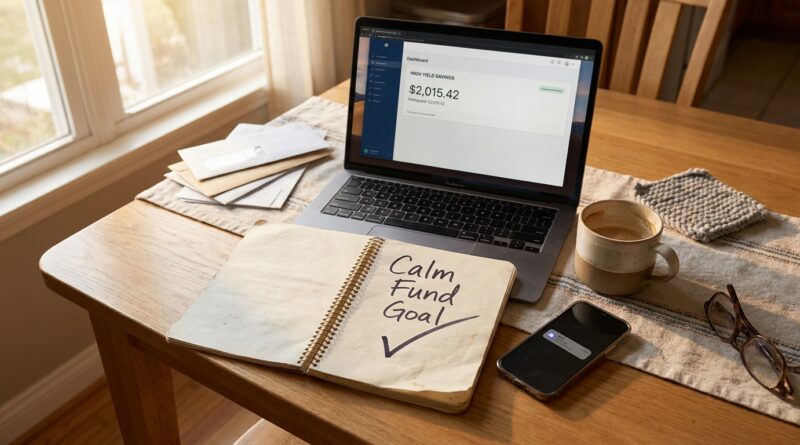
The ‘First $2K Calm Fund’ Habit: One Tiny Milestone That Makes Every Other Money Move Easier
If you have been bouncing between “I need to invest” and “I really should build an emergency fund first,” you are not behind. You are just stuck in a very common money traffic jam. A lot of people are asking how much to keep in high yield savings before investing, and the honest answer is that the giant “three to six months” rule can feel so big that it shuts people down. So nothing happens. Money sits in checking. A random savings account pays almost nothing. Every surprise car repair feels personal. A much smaller target can fix that. For many households, the first smart move is a calm fund of $2,000 in a high yield savings account. It is not your full emergency fund. It is your first layer of financial shock absorption. And once that layer is in place, almost every other money choice gets easier, from investing to paying down debt to simply sleeping better at night.
⚡ In a Hurry? Key Takeaways
- A good first answer to how much to keep in high yield savings before investing is often $2,000, not your full long-term emergency goal all at once.
- Put that money in a high yield savings account, automate small transfers, and treat it as “do not touch unless life happens” cash.
- This small buffer will not make you rich, but it can stop small emergencies from turning into debt, stress, or selling investments at the wrong time.
Why $2,000 works better than a giant goal
The usual advice is not wrong. Having three to six months of expenses saved is still a solid long-term target. The problem is that it can feel miles away, especially if rent is high, groceries are up, and you are also trying to catch up on retirement.
A $2,000 calm fund is different. It is close enough to feel real. It covers a lot of the bills that usually knock people off track, like a tire, a deductible, a last-minute flight, a vet visit, or a broken appliance.
That matters more than people think. Most money stress is not caused by one giant disaster. It is caused by a steady drip of smaller hits. A first $2,000 buffer gives those hits somewhere to land.
So, how much to keep in high yield savings before investing?
If you want a direct answer, here it is: keep at least a starter emergency buffer in high yield savings before you push hard on investing. For many people, that starter amount is $2,000.
Not $200. Not every spare dollar in checking. A real, separate, visible cash cushion.
After that, your next steps depend on your situation. If your job is stable, your debt is manageable, and you already have that first $2,000 set aside, you can often split new money between building a bigger emergency fund and investing. If your income is unpredictable, your housing costs are high, or one bad month would knock you flat, it makes sense to keep building cash first.
A simple rule of thumb
Think in layers.
Layer one is your calm fund. That is the first $2,000 in a high yield savings account.
Layer two is your full emergency fund. That might be one month of expenses, then two, then more.
Layer three is your growth money. That is where investing starts to take a bigger role.
This layered approach helps because it stops the all-or-nothing thinking. You do not have to choose one forever. You just need to choose what comes first.
Why a high yield savings account is the right home for this money
Your calm fund has one job. Be there when life gets weird.
That means it should not be in the stock market, where it can be down the exact week you need it. It should not be mixed into your checking account, where it gets spent by accident. And it should not be in a savings account paying next to nothing if better options are available.
A high yield savings account works because it is:
- Easy to access when you need cash fast
- Safer than investing for short-term needs
- Still earning something while it waits
At current rates, 4 percent plus is not life-changing wealth. But it is a nice bonus for money that needs to stay steady and available.
What this habit really buys you
Yes, it buys you liquidity. But more than that, it buys you breathing room.
Once you have a separate $2,000 buffer, a lot of everyday money decisions stop feeling so dramatic. You are less likely to reach for a credit card when a bill pops up. You are less tempted to pull money out of investments at a bad time. You are less likely to feel that low hum of panic every time your phone buzzes with a bank alert.
That is why this milestone matters. It is not only about math. It is about reducing friction.
How to get to $2,000 without turning your life upside down
You do not need a punishing budget overhaul to make this work. Small automatic moves are often enough.
Start with a separate account
Open a high yield savings account that is not your everyday bank if possible. The slight distance helps. You can still access the money, but you are less likely to raid it for takeout or impulse spending.
Use a boring automatic transfer
Pick a number you can live with. Maybe it is $25 a week. Maybe it is $100 each payday. The point is consistency, not heroics.
If you want a low-drama way to make this happen, the idea in The ‘Paycheck Skim’ Habit: How To Build A Hidden High‑Yield Safety Net Without Touching Your Lifestyle fits perfectly here. The whole trick is moving a little money before you have time to miss it.
Use windfalls to speed it up
Tax refunds, cash gifts, a side gig payout, or selling stuff you do not use can all go toward the calm fund. That can get you to the finish line much faster.
Do not wait for the “perfect” month
This is where people stall. They tell themselves they will start after the holiday season, after vacation, after the next raise, after the credit card is lower. Start now, even if the number is small.
When $2,000 may not be enough
It is a starter milestone, not a magic shield.
If you own a home, support kids, work freelance, have an older car, or deal with variable income, you may need to build beyond $2,000 pretty quickly. The point is not that $2,000 covers every emergency. The point is that it covers enough of them to change your financial posture.
Once you hit it, reassess. Ask yourself:
- How many months of core bills do I actually need?
- How stable is my income?
- What big costs tend to pop up in my life?
That is a much calmer conversation to have after you already have the first layer saved.
Common mistakes to avoid
Keeping the money in checking
If it sits next to your spending money, it will slowly turn into spending money.
Investing emergency cash too soon
If the market drops right before you need the money, your “emergency fund” stops being dependable.
Waiting until you can save a huge amount
A finished $2,000 fund is more useful than an imaginary future plan for $10,000.
Thinking earning 4 percent means this should replace investing forever
It should not. High yield savings is for safety and access. Investing is for long-term growth. The calm fund simply helps you do both in the right order.
At a Glance: Comparison
| Feature/Aspect | Details | Verdict |
|---|---|---|
| First savings target | $2,000 in a high yield savings account gives you a practical starter cushion for common surprises. | Best first move for many savers |
| High yield savings vs investing | Savings protects short-term money. Investing is better for long-term growth but can drop when you need cash. | Use savings first, then invest with more confidence |
| Stress reduction | A separate buffer reduces the need for credit cards, panic transfers, and second-guessing every bill. | High value, even before the balance grows larger |
Conclusion
If money advice has felt noisy lately, you are not imagining it. Everyone seems to be shouting at once. Open the high yield savings account. Invest now. Build three to six months. Do all of it immediately. No wonder people freeze. The better move is to shrink the decision. If you are wondering how much to keep in high yield savings before investing, a first $2,000 calm fund is a smart place to start. It is doable. It is useful. And it creates a clean line between safe cash and growth money. That one small win can lower the stress around unexpected bills, help you avoid costly mistakes, and make every next step feel lighter instead of heavier.