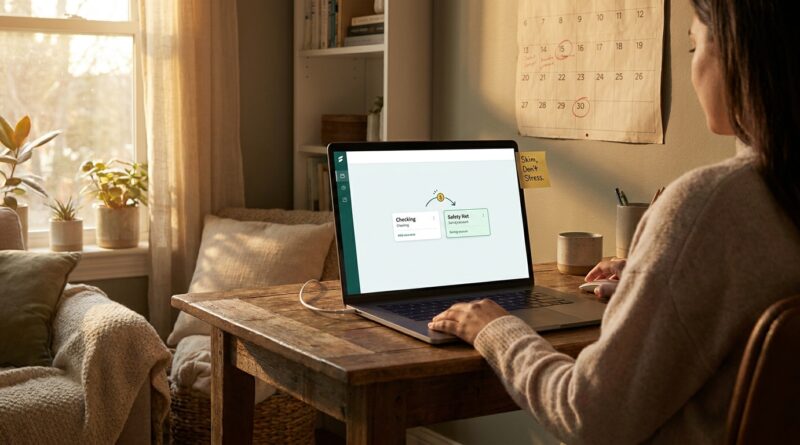
The ‘Paycheck Skim’ Habit: How To Build A Hidden High‑Yield Safety Net Without Touching Your Lifestyle
You do not need a perfect budget or a no-fun month to start saving. That is the part many people get stuck on. They think building an emergency fund means cutting every small joy, then the plan falls apart by week two. If that sounds familiar, you are in very good company. For a lot of people, the real problem is not knowing saving matters. It is making it happen before the money gets used for everything else.
That is where the paycheck skim habit can help. Instead of trying to save whatever is left at the end of the month, you move a small amount from each paycheck straight into a high-yield savings account. Quietly. Automatically. Ideally, into an account that is separate enough that you do not see it every day, but close enough that you can reach it when life throws you a tire bill, vet visit, or surprise travel cost.
⚡ In a Hurry? Key Takeaways
- A paycheck savings habit with a high yield savings account works best when the transfer happens automatically right after payday.
- Start small, even $10 to $50 per paycheck, then raise it later only if your checking account stays comfortable.
- Keep this money easy to access for emergencies, but separate enough that you are not tempted to spend it on random extras.
Why this habit works better than “I’ll save what’s left”
Saving what is left over sounds reasonable. In real life, it often means nothing gets saved.
Money expands to fill the space you give it. Dinner out. A birthday gift. A streaming charge you forgot about. Gas that suddenly costs more. By the end of the month, your good intentions are gone.
A paycheck savings habit high yield savings account setup flips that pattern around. You pay your future self first, in a small way that does not wreck your normal routine. Because the money moves early, you adjust around what stays in checking. Most people barely notice the difference after a couple of pay cycles.
What “paycheck skim” actually means
It is not a complicated finance trick. It just means skimming off a small slice of every paycheck and sending it to savings before you can spend it.
Two easy ways to do it
Option 1: Split direct deposit. Many employers let you send part of your paycheck to one account and the rest to another. This is the cleanest setup if your payroll system offers it.
Option 2: Automatic bank transfer. If split deposit is not available, set an automatic transfer from checking to your high-yield savings account on payday or the day after.
The key is that you should not have to remember it. If you must manually move the money every time, life will eventually interrupt the plan.
Why use a high-yield savings account for this
A regular savings account can work, but many of them pay almost nothing. A high-yield savings account gives your emergency fund a little extra lift while it sits there waiting for real life to happen.
This is not about getting rich on interest. It is about making your cash work harder while staying accessible. That matters when this money is supposed to be your first line of defense, not a long-term investment you cannot touch without stress.
Look for an account with:
- No monthly maintenance fee
- No minimum balance you cannot comfortably meet
- Easy online transfers
- FDIC or NCUA protection, depending on the institution
How much should you skim from each paycheck?
Less than you think at first.
The best amount is the one you can keep doing. For many people, that is:
- $10 to $25 per paycheck if money is tight
- $50 per paycheck if you have a little breathing room
- 1 percent to 3 percent of take-home pay if you like percentage-based rules
If you get paid twice a month, even $25 each paycheck becomes $600 a year. At $50 each paycheck, you are at $1,200 before counting any interest. That is not a full emergency fund for most households, but it is a real buffer. And a real buffer is often the difference between a manageable week and a credit card balance that hangs around for months.
Make it hidden enough to help
There is a reason this works better when the account is a bit out of sight. If your emergency savings sits next to your checking account in the same app screen, it can start to feel available for concert tickets, a sale, or “I deserve it” shopping.
That does not mean lock it away. It means create a little friction.
Good friction looks like this
- A separate savings account nickname like “Car repairs only” or “Safety Net”
- No debit card attached to the account
- Transfers that take a day or two instead of instant spending access
- Notifications turned on so you can watch it grow without treating it like spending money
What counts as a real emergency?
This part matters. If every inconvenience becomes an emergency, the habit never gets traction.
Your paycheck skim fund is for access-first safety. Think:
- Car repairs
- Medical bills
- Vet emergencies
- Last-minute travel for family needs
- Urgent home fixes
- A temporary income gap
It is usually not for impulse buys, holiday shopping, or upgrades that can wait.
If you want, keep a second sinking fund for fun spending goals. That helps protect your emergency money from getting nibbled away.
How to set this up in under 15 minutes
Step 1: Open the right savings account
Choose a high-yield savings account with no monthly fees and solid transfer options. Read the basics. Make sure it is insured and easy to use.
Step 2: Pick your skim amount
Start with a number that feels almost boring. That is usually the right number. You can always raise it later.
Step 3: Automate it
Set up split direct deposit through payroll, or schedule an automatic transfer from checking on payday.
Step 4: Name the account
Giving it a job helps. “Emergency fund” is fine. “Keep me off credit cards” is even better.
Step 5: Leave it alone for one month
Do not keep tinkering. Let the habit run. Then check whether your checking account still feels stable.
How to grow it without feeling the squeeze
Once the base habit is working, add to it in painless ways.
One smart move is to recycle savings from bills you lowered. If you recently cut a subscription, switched insurance, or negotiated a monthly expense, route that difference straight into your safety net. That is exactly the idea behind The ‘Bill Drop Recycle’ Habit: Turn Every Lowered Bill Into Permanent High-Yield Savings. It is a great companion to the paycheck skim approach because the money was already leaving your life anyway.
You can also add:
- A slice of tax refunds
- Work bonuses
- Cash gifts
- One-time side hustle income
Those boosts can help you reach your first goal faster, whether that is $500, $1,000, or one month of essential expenses.
Common mistakes to avoid
Starting too big
If the transfer amount makes you dip into overdraft territory, the habit will feel punishing. Scale it down.
Keeping it in checking
If it sits beside your spending money, it is too easy to blur the line.
Chasing perfect timing
You do not need to wait until next month, next raise, or after the holidays. Small and now beats perfect and later.
Using investing apps for emergency cash
This money needs stability and access. Emergency savings is not the place for market swings.
When to raise the amount
After two or three months, take a quick look at your checking balance pattern. If you are consistently ending the pay period with room to spare, increase the skim by a small amount. Try another $10 or $20 per paycheck.
That is the quiet beauty of this habit. It does not need to be dramatic to work. It just needs to stay in motion.
At a Glance: Comparison
| Feature/Aspect | Details | Verdict |
|---|---|---|
| Savings method | Automatic skim from each paycheck into a separate high-yield savings account | Best for building steady savings without changing daily habits much |
| Lifestyle impact | Starts small so you can keep takeout, travel, and small fun spending in moderation | More sustainable than aggressive budget cuts for most people |
| Emergency access | Cash stays available for real-life surprises and can earn interest while it waits | Strong choice for an access-first safety net |
Conclusion
If saving has felt like a fight between being responsible and still enjoying your life, this is the middle path worth trying. Right now a huge share of millennials and younger savers have less than one month of expenses on hand, even if they are doing some retirement investing. That means one bad week can send everything onto a high-interest credit card. A simple paycheck skim into a high-yield account turns thin margins into a growing access-first safety net that earns real interest today, reduces stress around surprise bills, and gives the Savers community a concrete move they can finish setting up in under 15 minutes.