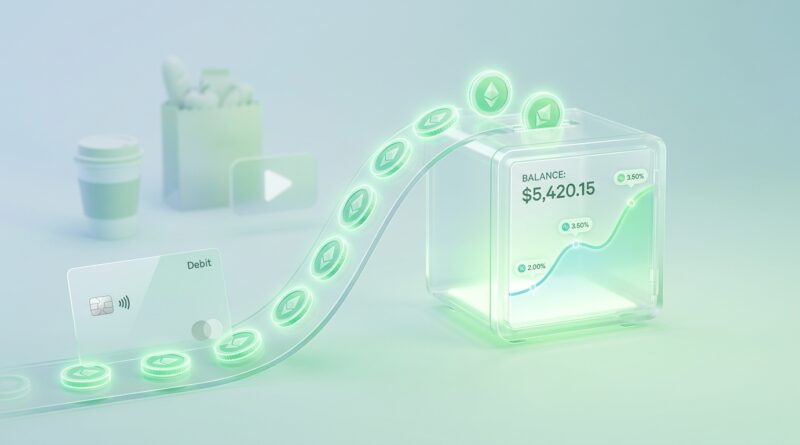
The ‘Round‑Up Auto-Boost’ Habit: Turn Every Card Swipe Into High‑Yield Savings Without Thinking About It
You are not lazy if your savings account never seems to grow. Life is expensive, and “I’ll transfer money at the end of the month” sounds smart right up until the end of the month actually shows up. Then rent, groceries, gas and a couple of sneaky app charges eat the plan alive. That is why the high-yield savings round up transfers habit works so well. It does not ask you to find a big pile of extra cash. It quietly pulls small amounts from spending you were already going to do, then drops them into a high-yield savings account where they can start earning more. Think of it like putting your spare change on autopilot, except now that spare change can earn real interest. If you have struggled to save because every manual transfer feels optional, this is one of the easiest ways to start moving money without having to think about it every week.
⚡ In a Hurry? Key Takeaways
- A round-up habit sends the spare change from your card purchases into savings automatically, which helps you save without making big manual transfers.
- Start with debit card round-ups and add a small weekly auto-boost, like $5 or $10, so your balance grows faster.
- Use an FDIC- or NCUA-insured high-yield savings account and keep enough in checking to avoid overdrafts or transfer stress.
Why this habit works when “save what’s left” does not
Most people do not fail at saving because they do not care. They fail because the system depends on willpower.
If your plan is to save “whatever is left over,” you are putting savings at the back of the line. Bills come first. Food comes first. Random life stuff comes first. Savings gets the leftovers, and some months there are no leftovers.
The high-yield savings round up transfers habit flips that around in a gentle way. Every time you buy something, the amount gets rounded up to the next dollar, and the difference moves into savings. Buy coffee for $4.35, and 65 cents gets set aside. Spend $22.10 at the store, and 90 cents goes over.
It is small enough that you usually do not feel it. But it is consistent, and consistency is what most savings plans are missing.
What “round-up auto-boost” actually means
There are really two parts to this habit.
1. Round up each purchase
Your bank or budgeting app tracks eligible card purchases and rounds each one to the nearest dollar. The spare change gets collected and transferred to savings, sometimes instantly, sometimes in a daily or weekly batch.
2. Add a small auto-boost
This is the part that makes the habit stronger. Along with round-ups, you add a fixed automatic transfer, maybe $5, $10, or $20 a week, into that same high-yield savings account.
The round-ups build momentum. The auto-boost gives the balance a steady push.
Together, they create a savings flow that does not depend on you remembering to do anything.
Why a high-yield savings account makes this more worth doing
A few years ago, earning next to nothing on savings made small deposits feel pointless. That has changed.
Top high-yield savings accounts are paying rates that are roughly ten times the national average. That means even modest deposits can do more work for you than they used to. No, your round-ups alone will not make you rich. But they can help you build an emergency cushion, a holiday fund, a travel fund, or just a little breathing room.
And once the balance starts growing, people tend to protect it. That is a quiet psychological win.
How to set it up in about 15 minutes
Pick the right account
Look for a high-yield savings account with no monthly fee, no minimum balance you cannot comfortably meet, and easy transfers from your checking account. Make sure it is FDIC-insured if it is a bank, or NCUA-insured if it is a credit union.
Check whether your bank already offers round-ups
Some banks build round-ups right into checking. Others let you do it through a linked app or savings feature. If your main bank does not offer it, you can still create a similar system with a budgeting app or by setting a recurring transfer that mimics your average round-up amount.
Start small
If money is tight, that is fine. Set round-ups on all debit card purchases, then add a weekly transfer of just $5. That is enough to get the habit going without setting off panic every time you check your balance.
Name the savings account
This sounds minor, but it helps. “Emergency Buffer” works better than “Savings 2.” A clear name gives the money a job, and money with a job is less likely to get pulled back out for takeout.
Who this works best for
This habit is especially good for people who:
- struggle to make manual transfers consistently
- use a debit card often
- want to save without feeling squeezed by a strict budget
- need a simple way to build an emergency fund
- get discouraged by trying to save large chunks at once
It works whether your income is modest or high. If you earn $35,000, this can help you save without a painful monthly target. If you earn $150,000 and still somehow never get around to moving money, this creates a system that catches spending as it happens.
What to watch out for
Do not drain checking by accident
Round-ups are small, but they still add up. If your checking account regularly gets close to zero before payday, start slowly. You might prefer a tiny weekly transfer first, then add round-ups later once you know your cushion.
Credit card round-ups can get messy
If your round-up program works off credit card spending, make sure you are paying that card in full every month. Saving spare change while carrying high-interest card debt is like filling a bucket with a hole in the bottom.
Do not use a low-interest account out of habit
If the money is going to move automatically, point it somewhere useful. A high-yield savings account helps those small deposits earn more while they sit there.
How much could this actually add up to?
Let’s keep it realistic.
If your round-ups average $12 a week and you add a $10 weekly auto-boost, that is about $22 a week going into savings. Over a year, that is roughly $1,144 before interest. Add a solid high-yield rate, and you are doing better than the old “I’ll save later” plan, which usually saves nothing.
Even at half that amount, you are still building a real cushion.
Make it stronger with one more habit
Once you like how this feels, pair it with another automatic savings move. A great next step is sending any lowered monthly bill straight into savings instead of absorbing it into everyday spending. That is exactly the idea behind The ‘Bill Drop Recycle’ Habit: Turn Every Lowered Bill Into Permanent High-Yield Savings.
That combo works beautifully. Round-ups catch the small daily leaks. Bill-drop recycling captures the bigger monthly wins.
Best practices for keeping the habit alive
Check the account once a week, not ten times a day. The goal is to notice progress, not obsess over every transfer.
If your income changes, adjust the weekly auto-boost. A habit that survives is better than an ambitious setup that gets turned off after one rough month.
And if you get a tax refund, bonus, or cash gift, consider dropping a little extra into the same account. The growing balance creates motivation, which makes the habit easier to keep.
At a Glance: Comparison
| Feature/Aspect | Details | Verdict |
|---|---|---|
| Effort required | Once set up, round-ups and small weekly transfers happen automatically. | Excellent for people who forget to save manually. |
| Savings impact | Round-ups alone help, but adding a weekly auto-boost makes balances grow much faster. | Best when you combine both parts of the habit. |
| Risk and safety | Low risk if you use an insured high-yield account and keep a checking cushion. | Safe and practical, as long as you avoid overdrafts and high-interest debt. |
Conclusion
You do not need a perfect budget month to finally make progress. That is the whole point. Rates on top high-yield savings accounts are hovering around ten times the national average right now, which means every extra dollar you feed into them works much harder than it did a few years ago. The problem is not the rate. It is getting money in there consistently without feeling like you are on a strict budget. A round-up auto-boost habit solves that by using behavior you already have, daily spending, to create new savings inflows. It works whether you are earning $35,000 or $150,000 a year. For the Savers community, this is one of those rare money moves that is both simple and useful. Set it up once, keep it small, and let the balance start climbing in the background week after week.