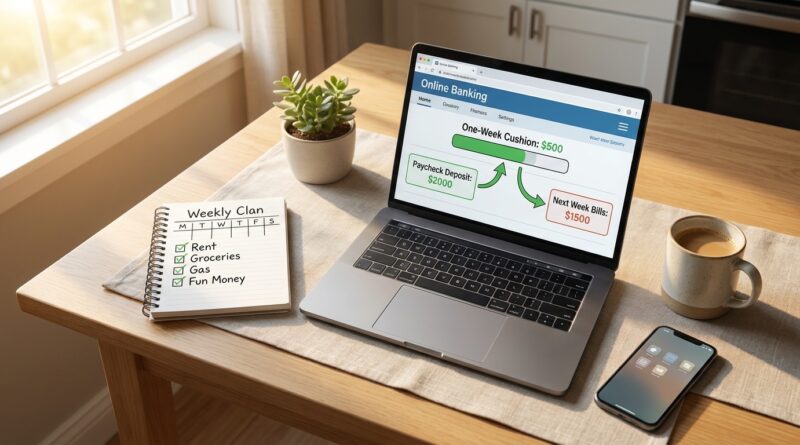
The ‘One-Week Cash Cushion’ HYSA Habit: Earn Interest On Next Week’s Life Before It Starts
Your paycheck hits, and before you even enjoy seeing the number, it is already gone on rent, groceries, cards, gas, daycare, subscriptions, and that one bill you forgot was due. That is why a lot of people hear about high-yield savings accounts and think, “Nice idea, but with what money?” Fair. If every dollar already has a job, the usual savings advice can feel like homework you do not have time for.
Here is the good news. You do not need extra money to start a one week high yield savings habit. You just need to let next week’s spending sit in a high-yield savings account for a few extra days before it heads out into real life. That one-week cash cushion can earn interest on money you were going to spend anyway. It also makes your cash flow calmer and puts a tiny speed bump in front of impulse spending. Simple beats fancy here, and this is simple enough to set up tonight.
⚡ In a Hurry? Key Takeaways
- A one-week HYSA cushion means keeping about seven days of normal spending in a high-yield savings account, then moving money to checking only as needed.
- Start by building just one week of core expenses, then automate transfers on payday so the habit runs quietly in the background.
- This is not investing or risky timing. It is simply parking short-term cash where it can earn more interest while staying accessible.
What the one-week habit actually is
Think of it like this. Your checking account is for this week. Your high-yield savings account, or HYSA, is for next week.
Instead of leaving all spendable money sitting in checking from the moment you get paid, you keep a one-week buffer in your HYSA. As bills and everyday spending approach, you transfer only what checking needs to cover the next few days.
That means your money gets a little more time to earn interest. Not forever. Just one week. But that is the point. This is a habit built for normal people, not spreadsheet hobbyists.
Why this works better than “just save more”
“Save more” is technically good advice. It is also not very helpful when your budget already feels squeezed.
The one-week cushion works because it does not begin with sacrifice. It begins with timing.
You earn on money you were already going to spend
This is the biggest mental shift. The goal is not to find extra cash under the couch cushions. The goal is to stop giving up easy interest by letting all your money sit in checking until the last second.
It smooths out the month
When everything lives in checking, one weird week can throw you off fast. A car repair, a school fee, a larger grocery run, any of it can make the account feel chaotic. A one-week cushion gives you a little breathing room.
It adds a pause before spending
If every dollar has to spend a few days in the HYSA before leaving your world, random purchases feel less automatic. That extra step sounds tiny, but tiny is often enough to stop “sure, why not” spending.
How much should your one-week cushion be?
Do not overthink it. Add up one average week of essentials and regular life spending.
- Housing
- Groceries
- Gas or transit
- Utilities
- Minimum debt payments
- Childcare
- Basic personal spending
If your monthly core spending is $4,000, one week is roughly $1,000. If it is $2,800, one week is about $700.
Not perfect math. Good enough math.
If building that amount all at once sounds impossible, start with half a week. Even three or four days of cushion is better than zero.
How to set up the one week high yield savings habit
Step 1: Open or pick a HYSA with easy transfers
Look for a high-yield savings account with a competitive rate, no monthly fee, and straightforward transfers to and from your checking account. You are not trying to chase every last decimal point. You want solid interest and low hassle.
Step 2: Decide what checking is for
Give checking one job. Cover the next few days of bills and spending. That is it.
Everything else that is meant for next week can wait in the HYSA.
Step 3: Build the first cushion
This is the only part that may take a little effort up front. You need enough in the HYSA to stay one week ahead.
You can build it by:
- Using part of your next paycheck
- Moving a tax refund chunk
- Sending over small amounts for a month or two
- Using money from a low-interest savings account you already have
Step 4: Automate payday transfers
Once the cushion exists, make the system boring. Boring is good.
When your paycheck lands, send the amount meant for next week into the HYSA. Then, later in the week, transfer only what checking needs for upcoming bills and spending.
If your due dates are all over the place, pairing this with The ‘Bill-Sync HYSA’ Habit: Match Your Due Dates And Grow Savings On Autopilot can make the flow even easier. That approach helps line up your timing so your money sits in the right place for longer without causing payment stress.
A real-life example
Say Maya gets paid every other Friday.
Before this habit, her paycheck lands in checking and stays there. Bills and card charges hit over the next two weeks. She earns little or nothing while the money waits to leave.
After setting up a one-week cushion, Maya keeps about $900 in her HYSA, which covers one average week of life. On payday, she sends money that is not needed immediately to the HYSA. Midweek, she moves over just what checking needs for the next stretch of bills and spending.
Result? Her cash sits in a better-paying account longer. She does not feel broke the day after payday. And random purchases are less likely because checking is no longer a giant pile of “available” money.
Will this make you rich?
No. Let’s keep it honest.
This is not a magic trick. A one-week cushion will not replace an emergency fund or erase debt overnight. But it does three useful things at once.
- It earns more than traditional savings or idle checking
- It makes monthly cash flow less jumpy
- It creates a repeatable habit with almost no lifestyle pain
That is why this works so well. It is small enough to stick.
Common mistakes to avoid
Keeping too much in checking “just in case”
If too much cash sits in checking, the habit breaks. Leave enough to avoid overdrafts and cover near-term spending, but do not let checking become your lazy holding tank.
Choosing a HYSA with slow transfers
Some banks are smoother than others. Test a transfer before you fully rely on the setup.
Using the cushion like an emergency fund
This cushion is for normal life spending. Keep your true emergency savings separate if you can. Different jobs, different buckets.
Obsessing over the exact interest amount
You might earn a modest amount at first. That is fine. The habit matters more than the first month’s dollars. Once the system clicks, the benefits stack quietly.
Who this habit is best for
This works especially well if:
- You get paid regularly
- You often feel like your paycheck disappears on arrival
- You want more interest without investing short-term cash
- You need a simple system, not a complicated budget overhaul
If your income is very irregular, you can still use the idea, but you may want to build a slightly larger buffer before relying on it.
At a Glance: Comparison
| Feature/Aspect | Details | Verdict |
|---|---|---|
| Effort to start | Needs one setup session, a HYSA, and enough cash to get about one week ahead. | Low friction once the first cushion is built. |
| Financial upside | Earns extra interest on short-term money that would otherwise sit in checking doing very little. | Worth it for easy gains and better cash timing. |
| Day-to-day usability | Adds a small transfer step, but also reduces impulse spending and makes cash flow feel calmer. | Best for people who want simple guardrails, not a strict budget. |
Conclusion
If you have been hearing about better savings rates and feeling like they are for other people, this is your reminder that they are not. You do not need to slash your social life or become a market nerd to make them useful. A one-week HYSA cash cushion is a practical middle ground. It lets money earn more before it goes out the door, helps steady your checking account, and puts a helpful pause between “I got paid” and “I spent it all.” Top high-yield savings accounts are still paying several times more interest than old school savings, yet most people leave money in checking until the very last minute or spray it out of debit and credit cards the same day it lands. This habit turns time into free money on dollars you were already going to use. Set it up once, keep it simple, and you can feel the difference by your very next paycheck.