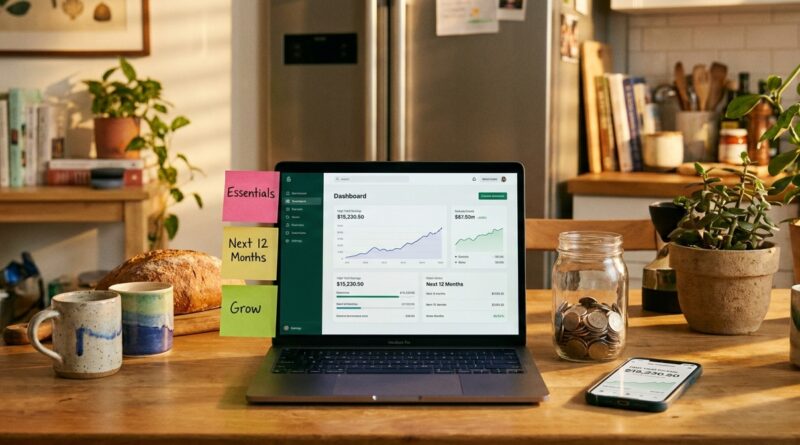
The ‘Right-Size HYSA’ Habit: Never Guess How Much Cash To Keep Again
You are not wrong for feeling stuck here. One headline says you need a giant cash pile. Another says every extra dollar should be invested yesterday. So your high-yield savings account slowly turns into a holding pen for money you are afraid to move, or worse, it stays too thin and leaves you one surprise bill away from panic. That is why so many people keep asking the same question: how much should I keep in a high yield savings account? The honest answer is not one magic number. It is a simple system. If you split your cash into three buckets, core emergency money, near-term spending, and true extra cash, the decision gets a lot easier. You stop guessing. You stop checking rates every five minutes. And you finally get a clear picture of what stays in savings, what sits in checking, and what can go off to do a better job elsewhere.
⚡ In a Hurry? Key Takeaways
- Most people should keep enough in a HYSA for emergency savings plus any planned spending in the next 12 months, not every spare dollar forever.
- Use a three-layer habit: emergency months, upcoming expenses, then move true surplus cash toward investing or other goals.
- A HYSA is great for safety and easy access, but keeping too much there can quietly slow your long-term wealth growth.
The real problem is not math. It is uncertainty.
People usually do one of two things.
They keep way too much cash in savings because it feels safe. Or they keep too little because they do not want to miss out on market growth. Both choices can make you feel uneasy.
The good news is that you do not need a perfect forecast of the economy, interest rates, or your future. You just need a repeatable habit. Think of it like cleaning out a junk drawer once a month. You are not redesigning your whole house. You are just putting things where they belong.
So, how much should I keep in a high yield savings account?
Here is the simple answer.
Keep enough in your HYSA to cover:
- Your core emergency fund
- Your known expenses coming in the next 12 months
- A small buffer so your checking account does not run too lean
Anything above that is a candidate for another job, like investing, paying off expensive debt, or funding another goal.
For many households, that ends up being somewhere between 3 and 9 months of essential expenses, plus near-term planned spending. The wide range is normal. A dual-income household with stable jobs may need less. A freelancer, single-income family, or someone in a shaky industry may want more.
The Right-Size HYSA habit
This is the Sunday afternoon ritual. It should take about 20 minutes once you have your numbers.
Layer 1: Your core emergency months
Start with the money that protects you if life gets weird.
Add up your essential monthly expenses:
- Housing
- Utilities
- Groceries
- Insurance
- Minimum debt payments
- Transportation
- Basic child or pet care
Do not include nice-to-have spending like vacations, impulse shopping, or every streaming service under the sun.
Then multiply that number by the number of months that fits your life:
- 3 months if your income is very stable and you have strong backup options
- 6 months if you want the classic middle-ground cushion
- 9 to 12 months if your income is irregular or your job feels less secure
This is your core HYSA amount. This money is not lazy. It is doing the boring but very important job of keeping your life steady.
Layer 2: Near-term spending
Now add the expenses you know are coming in the next year.
This is the part many people forget, which is why they keep raiding their emergency fund for things that were never emergencies in the first place.
Examples:
- Insurance premiums
- Holiday spending
- Property taxes
- Car repairs or tires
- Travel already planned
- Medical deductibles you are likely to hit
- Home maintenance
If you know your car needs brakes in six months, that money belongs in cash. If you are attending a wedding next spring, that money belongs in cash too. The market is great for long timelines. It is not a good parking spot for next season’s plane ticket.
Layer 3: Your checking buffer
Keep a small amount in checking so you are not playing transfer ping-pong every week.
For many people, this means one to two pay cycles of breathing room, or a flat buffer like $500 to $2,000 depending on your bills. The exact number matters less than the purpose. You want to avoid overdrafts, stress, and the bad habit of leaving everything in checking earning little or nothing.
Layer 4: The true extra
Now comes the useful part.
If your HYSA balance is above your emergency fund, near-term spending, and checking buffer, that extra money is probably not emergency cash anymore. It is surplus.
That does not automatically mean, “invest every penny today.” But it does mean you can make a calmer, smarter choice. Maybe some goes to retirement. Maybe some goes to a brokerage account. Maybe some knocks out high-interest debt. The key is that it now has a job.
A quick example
Let’s say your essential monthly expenses are $3,500.
You decide 6 months is the right emergency cushion.
Your core emergency fund is $21,000.
Then you add near-term expenses for the next 12 months:
- Car insurance deductible and repairs: $1,500
- Holiday spending: $1,000
- Planned travel: $2,000
- Home maintenance: $1,500
Total near-term spending: $6,000.
You also want a $1,000 checking buffer.
Your right-size cash setup looks like this:
- HYSA core emergency fund: $21,000
- HYSA near-term spending: $6,000
- Checking buffer: $1,000
Total cash target: $28,000.
If you are sitting on $38,000 in your HYSA and checking combined, you may have about $10,000 in true extra cash. That does not mean you made a mistake. It just means you now know what “enough” looks like.
When it makes sense to keep more in a HYSA
There are perfectly good reasons to hold a larger cash cushion.
- Your income changes month to month
- You own a home and big repair costs can pop up
- You are expecting a job transition
- You are self-employed
- You sleep better with a larger margin
Peace of mind matters. Personal finance is personal. If a slightly larger HYSA balance helps you avoid panic-selling investments or taking on debt when life gets messy, that has value.
Just make sure the extra cash is a deliberate choice, not a foggy default.
When too much cash becomes a quiet problem
Cash is safe in the short term. But over long stretches, too much of it can work against you.
Why? Because inflation keeps nibbling at buying power. And while a HYSA rate can look pretty good today, cash usually will not outgrow long-term investing over many years.
This is where people get stuck. They keep saying they are “waiting for the right moment” to invest. Then one year turns into three.
If that sounds familiar, pair this habit with The ‘Hidden-Raise Auto‑Split’ Habit: Give Your HYSA A Pay Bump Every Time Your Income Jumps. It is a smart way to grow your safety net when income rises, without letting every extra dollar vanish into daily spending.
How to run the ritual on a Sunday afternoon
Here is the simple version you can actually stick with.
Step 1: Write down your essential monthly number
Use real numbers from the last few months. Round up a little if needed.
Step 2: Pick your emergency month target
Choose 3, 6, 9, or 12 months based on your job stability, family needs, and comfort level.
Step 3: List known expenses for the next year
Scan your calendar, renewal dates, and irregular bills.
Step 4: Set a checking buffer
Enough to keep your day-to-day account from running on fumes.
Step 5: Add it all up
This gives you your right-size cash target.
Step 6: Compare that target to what you actually have
If you are below it, build toward it. If you are above it, decide where the surplus should go.
Step 7: Repeat once a month or once a quarter
You do not need to obsess over it. Just revisit it when life changes.
Common mistakes to avoid
Counting wants as emergency needs
Your emergency fund is for keeping the lights on and the rent paid. Be honest about what is essential.
Ignoring irregular expenses
Annual bills are not surprises if they happen every year.
Keeping everything in checking
If your checking balance is huge, some of that money is probably missing interest it could be earning in your HYSA.
Investing money you will need soon
If you need it in the next year, keep it in cash. Short timelines and stock market swings are a stressful mix.
Using one number forever
Your right-size amount should change when your rent changes, your family grows, or your income gets more stable.
At a Glance: Comparison
| Feature/Aspect | Details | Verdict |
|---|---|---|
| Core emergency fund | Usually 3 to 9 months of essential expenses, more if income is uneven or job security is low | Best kept in a HYSA for safety and quick access |
| Near-term planned spending | Money for expenses coming within 12 months, like travel, repairs, or insurance | Also belongs in cash, not long-term investments |
| Extra cash above your target | Surplus after emergency savings, near-term needs, and checking buffer are covered | Review for investing, debt payoff, or other goals |
Conclusion
The point is not to win an internet debate about the perfect cash number. The point is to stop guessing. Today’s headlines are all arguing about how much cash you should actually keep in a high-yield savings account, but they rarely translate that into a tiny habit you can run on a Sunday afternoon. This approach does. Layer your money into core emergency months, near-term spending, and extra cash that is safe to move toward bigger goals. Once you do that, your HYSA stops feeling like a mystery drawer full of financial guilt. It becomes a tool. For the Savers community, that means less anxiety, fewer zero-interest checking balances, and more confidence shifting surplus cash toward real wealth building instead of letting it drift.