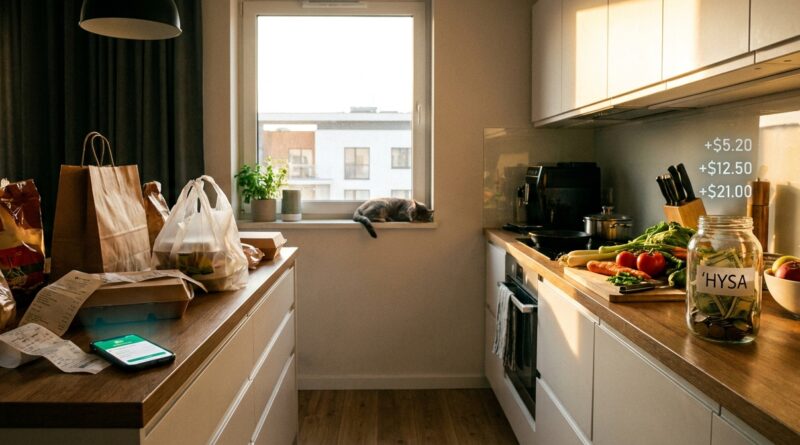
The ‘Skip-One-Meal-Out’ HYSA Habit: Turn A Single Weekly Trade-Off Into $3,000+ In Quiet Savings
You know this feeling. You swear you are not eating out that much, then your card statement says otherwise. A lunch here, a Friday takeout order there, one tired Tuesday on Uber Eats, and suddenly a big chunk of your month is gone. That is what makes food spending so sneaky. It rarely feels like a huge purchase in the moment, but it adds up fast. The good news is you do not need a joyless budget or a full no-spend month to fix it. A much easier move is to skip just one restaurant or takeout meal each week and send that exact amount to a high-yield savings account. One small trade-off. Same day every week. No drama. If your usual meal out costs $25 to $60, that single habit can grow into roughly $1,300 to $3,100 a year before you even count interest. Quiet savings is still real savings.
⚡ In a Hurry? Key Takeaways
- Skipping one restaurant or takeout meal a week and moving that money to a HYSA can realistically build $3,000 or more over time with almost no lifestyle pain.
- Pick one predictable meal to swap each week, automate the transfer the same day, and treat it like a standing appointment with your future self.
- This works best because it is simple and repeatable. You are not banning fun. You are plugging one budget leak and letting interest do a little extra work.
Why this tiny habit works better than a big food budget reset
Most people do not fail at saving because they are lazy. They fail because the plan asks too much. “Stop eating out” is vague, annoying, and hard to follow after a long workday.
“Skip one meal out a week” is different. It is specific. It feels doable. And it avoids that all-or-nothing trap where one splurge makes you feel like the whole month is ruined.
That is the real trick here. You are not trying to become a different person. You are making one repeatable swap.
The budget leak you barely notice
Food away from home is one of the easiest categories to underestimate because the purchases are scattered. A breakfast sandwich. A drive-thru coffee and snack. A quick lunch. Delivery fees and tips. None of it screams “financial emergency,” but together they can crowd out real progress.
Even one extra meal a week matters:
- $25 per week = $1,300 per year
- $40 per week = $2,080 per year
- $60 per week = $3,120 per year
And if that money sits in a high-yield savings account instead of disappearing into takeout containers, it can earn interest while you sleep.
What the “skip-one-meal-out” HYSA habit actually looks like
This habit is almost boring. That is why it works.
- Pick one meal each week you often buy out.
- Replace it with a home option that is easy, not heroic.
- Transfer the money you would have spent into your HYSA that same day.
That is it.
If Friday lunch is your weak spot, make Friday the default swap day. If Sunday delivery always happens because nobody wants to cook, make Sunday your savings day. Tie the habit to a real pattern you already have.
Do not choose the hardest meal
This is where people mess it up. They pick the meal with the most emotions attached to it. Date night. The one social dinner all week. The Saturday family outing.
Skip that.
Choose the meal with the least friction. Maybe it is a solo work lunch. Maybe it is the random midweek delivery order that happens because the fridge looks sad. You want the easiest win first.
How to get to $3,000+ without feeling deprived
If you want this habit to feel almost painless, aim at meals that are expensive but not especially meaningful.
Here are a few common examples:
- One $18 lunch that becomes $24 after drink, tax, and tip
- One $30 takeout order that becomes $42 after fees and delivery
- One “quick” family fast-food stop that quietly lands near $50
Now the math starts getting interesting.
Skipping a $50 weekly order saves about $2,600 a year. Add HYSA interest, and you are above that. If your usual skipped meal is closer to $60, you are around $3,120 before interest.
That is the point. You do not need a perfect budget. You need one repeated choice that catches a costly pattern.
A simple savings example
Let’s say your skipped meal saves $55 a week.
- Weekly transfer: $55
- Annual deposits: $2,860
- HYSA interest: extra earnings on top, depending on your rate and timing
You probably will not retire on this one habit. But you might fund holiday travel, build your emergency buffer faster, cover a surprise car repair, or finally stop feeling like all your “trying to be better” never shows up in your balance.
Why a high-yield savings account makes this habit visible
A high-yield savings account matters here for one reason more than any other. It gives the habit a home.
If you just spend less and leave the money in checking, it tends to get absorbed by everything else. Bills, subscriptions, random Amazon purchases. The money disappears because it was never claimed.
A HYSA creates separation. It tells your brain, “That skipped meal turned into this.” You can see the total grow. That feedback makes it easier to keep going.
What to look for in the account
You do not need anything fancy. Just look for:
- A competitive APY
- No monthly maintenance fee
- Easy transfers from checking
- FDIC or NCUA insurance, depending on the institution
- A clean mobile app, because if it is annoying, you will avoid it
The goal is not to chase every tiny rate change. The goal is to make saving frictionless.
Make the replacement meal embarrassingly easy
This part matters more than people think. If your backup plan requires chopping six vegetables after a 10-hour day, you are going to order noodles again.
Your replacement meal should be simple enough that tired-you can still do it.
Good swap ideas
- Frozen pizza plus bagged salad
- Rotisserie chicken with microwave rice
- Breakfast-for-dinner like eggs and toast
- Pasta with jarred sauce and prewashed greens
- Soup and sandwiches
This is not the week to become a food blogger. Cheap and easy wins.
Set it up so you do not have to think about it
The best version of this habit is semi-automatic.
Try this:
- Choose your skip day, like Wednesday lunch or Sunday dinner
- Name your HYSA something specific, like “Quiet Savings” or “Skip One Meal Fund”
- Set an automatic weekly transfer for your usual spend amount
- Keep one low-effort meal at home for that exact day
If you spend different amounts each time, pick a realistic average. You can always adjust later.
If you still want some flexibility
Do not overcomplicate it, but you can use a range. For example:
- Typical lunch out: transfer $20 weekly
- Typical delivery night: transfer $35 weekly
- Family takeout night: transfer $50 weekly
Even the smaller number works if you stay consistent.
How to avoid the “I saved on dinner, then spent it elsewhere” problem
This is the classic budget trap. You skip takeout, feel virtuous, then buy three small extras somewhere else. Net result: not much changes.
To stop that, move the money fast. Same day is best. If the skipped meal happens on Thursday, the transfer should happen on Thursday. The shorter the gap, the less likely the money gets recycled into something forgettable.
You can also make the goal visible. Put a note on the fridge. Use your bank’s savings tracker. Tell your partner what the habit is for. Specific goals help. “Emergency fund” is good. “December travel cash” is even better.
This is a habit, not a punishment
That distinction is important.
You are still allowed to eat out. You are still allowed to enjoy restaurants. You are not grounded from fun because your budget needs help.
The whole idea is to take one part of your routine that is expensive and not that meaningful, then turn it into savings without making yourself miserable. That is why this works better than shame-based budgeting.
What if you miss a week?
Nothing dramatic happens. You start again the next week.
Do not turn one missed swap into a story about your lack of discipline. This habit wins because it is gentle enough to survive real life.
Who this works best for
This habit is especially useful if:
- You order takeout when you are tired or busy
- You keep saying you will “cut back” but never define what that means
- You want to save more without feeling deprived
- You like simple rules more than detailed budgeting spreadsheets
- Your HYSA balance feels lower than the effort you think you are making
If that sounds familiar, this may be one of the rare money habits that feels almost too small to matter, right up until you see the yearly total.
At a Glance: Comparison
| Feature/Aspect | Details | Verdict |
|---|---|---|
| Effort required | One predictable meal swap per week, plus a matching HYSA transfer | Low effort and easy to repeat |
| Savings potential | About $1,300 to $3,120 per year from skipped meals, with HYSA interest on top | Surprisingly strong for such a small habit |
| Lifestyle impact | Does not ban restaurants, just trims one expensive default choice | Feels realistic, not punishing |
Conclusion
Food away from home is one of the fastest-growing, easiest-to-ignore spending categories, which is exactly why one extra takeout order a week can quietly cost thousands a year. The fix does not need to be dramatic. Skip one restaurant or takeout meal each week, move that money into a high-yield savings account, and let consistency do the heavy lifting. It is a small, predictable trade-off, not a lifestyle overhaul. That makes it easier to start today and easier to stick with next month. Over time, the balance finally starts to reflect the effort you have been trying to make. Quiet savings counts. In many budgets, it is the difference between feeling stuck and seeing real progress.