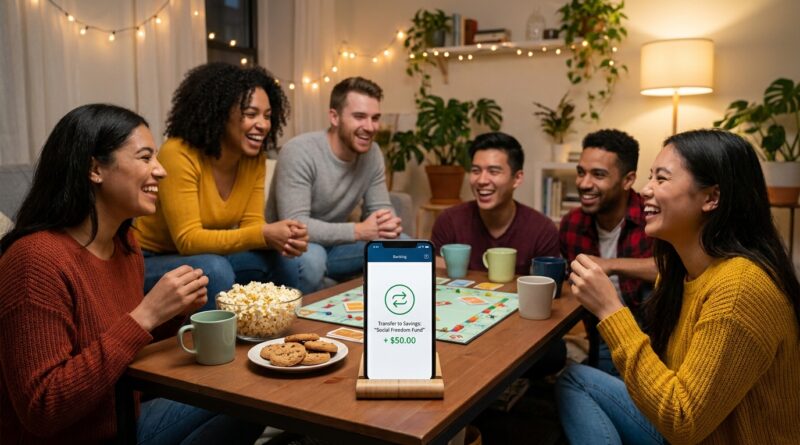
The ‘Social Swap’ Habit: Cut Going‑Out Costs Without Cutting Your Social Life
You do not have a “discipline problem” if your savings keep shrinking every time someone texts, “Want to grab dinner?” This is where budgets often fall apart. Not on rent day. On random Thursdays, birthday drinks, brunches that somehow become all-day events, and weekend plans you did not want to miss. Saying no to everything feels lonely. Saying yes to everything feels expensive. The good news is you do not have to pick one. If you are wondering how to save money on social outings without missing out, the answer is not becoming a hermit. It is building a social swap habit. That means keeping the people, keeping the fun, and swapping the pricey version for a cheaper one. Then, and this part matters, you move the difference straight into a high-yield savings account. That turns one small choice into a system. Over a few months, those little swaps can add up to real money.
⚡ In a Hurry? Key Takeaways
- Keep your social life, but swap expensive plans for lower-cost versions and save the difference.
- Use one simple rule: before you go out, pick a cheaper option like drinks at home first, splitting an appetizer, or choosing a free activity.
- The real win is automation. Transfer what you did not spend into a high-yield savings account within 24 hours so it does not vanish elsewhere.
The Social Swap Habit, in Plain English
The idea is simple. Do not cancel your social life. Downgrade the cost of it.
Instead of a $70 dinner, do tacos and a walk. Instead of three cocktails at the bar, have one drink out after pre-gaming at home. Instead of a full weekend trip, do a day trip. Instead of front-row concert tickets, go to the free outdoor event in your city.
The habit works because it is realistic. You are not trying to become a different person. You are just making the cheaper version your default.
Why this works better than “just spend less”
“Spend less” is too vague. People need a script.
A social swap gives you one. When plans come up, you ask: what is the lower-cost version of this same hangout?
That one question keeps you from making the tired, hungry, impulsive decision that usually costs more.
How to Save Money on Social Outings Without Missing Out
Missing out usually is not about the activity. It is about the people. Once you see that, your options open up.
Try the “same friends, cheaper format” rule
Keep the group. Change the setup.
- Dinner out becomes a potluck night.
- Bar hopping becomes one home hang plus one final stop out.
- Bottomless brunch becomes coffee and a park walk.
- Movie theater night becomes a streaming night with snacks from the grocery store.
- Weekend away becomes a local day trip or beach day.
This is the heart of saving money on social outings without missing out. You are protecting the part you actually care about.
Use “anchor events”
If your friend group likes doing big-ticket plans, do not try to cut everything. That often backfires.
Pick one or two bigger social events each month that matter most. A birthday dinner. A concert. A wedding weekend. Those are your anchor events.
Then make the rest of the month low-cost by default. This keeps you from feeling deprived while still giving your savings room to grow.
Suggest the cheaper plan first
People are often relieved when someone else says it out loud.
Try messages like:
- “Want to do happy hour instead of full dinner?”
- “I am trying to save this month. Want to come over and we can make pasta?”
- “Let’s do a walk and coffee instead.”
- “I’m in, but I’m keeping it low-key. One drink for me.”
You do not need a dramatic speech. Just offer a good alternative.
The Best Social Swaps That Actually Save Money
Pre-game at home
This one is popular for a reason. One cocktail out can cost the same as ingredients for several drinks at home.
If you still want the bar experience, meet later. Have your first drink at home, then head out for one round instead of three.
Pick one food splurge, not all of them
Restaurant bills get wild because of stacking. Entree, appetizer, cocktails, dessert, tip, rideshare.
Choose one treat. Maybe you get the entree but skip drinks. Or split apps and get dessert somewhere cheaper after. You still get the night out without the full financial hit.
Trade rideshares for planning
Last-minute rides are budget killers.
Use public transit when it is practical. Carpool. Meet somewhere walkable. Even moving the meetup spot closer to everyone can trim the total cost of the night.
Use free events as your default
Many cities have free concerts, community festivals, museum nights, book events, trivia, hiking groups, and outdoor movies.
The trick is not waiting until Saturday night to figure it out. Make a short list ahead of time in your notes app. Then when someone says, “What should we do?” you already have answers.
Turn the Savings Into Real Money
This is where most people stop. They spend less one night, feel proud, and then the money just gets absorbed into other spending.
Do not let that happen.
Calculate the difference
Say your usual night out costs about $85.
This week, you do a social swap and spend $32. The difference is $53. That $53 should not stay in checking.
Move it fast
Transfer that $53 to your high-yield savings account within 24 hours. Immediately is even better.
If your bank allows it, nickname the account something specific like “Future Apartment,” “Emergency Fund,” or “Trip Fund.” It is easier to protect money that has a job.
Automate a backup amount
Some weeks you will forget to calculate the exact difference. That is normal.
Set a small automatic transfer anyway, maybe $25 every Friday or $100 twice a month. Think of the exact “swap savings” as bonus money on top.
This gives you consistency, which matters more than perfection.
A 30-Day Social Swap Plan
Week 1: Notice your expensive patterns
Do not judge them. Just write them down.
Maybe your weak spot is brunch. Maybe it is spontaneous drinks. Maybe it is saying yes to every weekend plan because you are tired of being home.
Week 2: Pick three default swaps
Choose easy replacements you will actually use.
- Bar night becomes one drink max after pre-gaming.
- Dinner out becomes lunch out.
- Weekend plan becomes free event plus coffee.
Week 3: Start the transfer habit
Each time you use a swap, move the difference to savings. Even if it is only $12. The point is to build the reflex.
Week 4: Review what felt painless
Keep the swaps that still felt fun. Drop the ones that felt like punishment.
You are building a routine, not winning a suffering contest.
What to Say When Friends Push for Pricier Plans
This part can feel awkward, but it usually gets easier fast.
You can be honest without sounding dramatic.
- “I’m saving pretty hard right now, but I still want to hang. Want to do something cheaper?”
- “I can come, but I’m doing food at home first.”
- “That sounds fun, but it is not in my budget this week. I’m free for coffee or a walk though.”
- “I’m down for the plan, just not the full spend.”
Good friends usually get it. Some are probably waiting for someone else to suggest the lower-cost option first.
Common Mistakes That Make the Habit Fail
Saving “whatever is left” at the end of the month
There is usually nothing left. Move the money as you go.
Trying to cut every social expense at once
That gets miserable quickly. Keep a few fun priorities and swap the rest.
Choosing swaps you secretly hate
If you hate hosting, do not force weekly apartment hangouts. If you dislike big groups, suggest one-on-one coffee instead. The habit has to fit your real life.
Thinking small swaps do not matter
They do. Saving $20 here and $35 there might not feel life-changing on one weekend. Over 6 to 12 months, especially in a high-yield account, it becomes a real cushion.
At a Glance: Comparison
| Feature/Aspect | Details | Verdict |
|---|---|---|
| Traditional night out | Dinner, drinks, rideshare, and extras can stack fast, often without you noticing until the bill lands. | Fun, but expensive if it becomes the default. |
| Social swap version | Same people, lower-cost setup like pre-gaming, free events, lunch instead of dinner, or hanging out at home first. | Best balance for people who want savings without feeling cut off. |
| Automatic savings step | Transfer the amount you did not spend into a high-yield savings account right after the outing. | This is what turns a good intention into actual progress. |
Conclusion
Right now, the cost of living shows up in the smallest choices. A casual dinner. A few drinks. A “quick” weekend plan. That is why the social swap habit works. It meets real life where it actually happens. Gen Z and younger millennials are already proving that you do not need to give up your social life to protect your wallet. You can swap to free or lower-cost plans, choose cheaper menu options, pre-game at home, and still stay connected. The smart part is making that repeatable. When you funnel the difference into a high-yield savings account, those everyday choices start building something. Over the next 6 to 12 months, that can turn into a real savings boost instead of vanishing into random spending. You do not need to become boring. You just need a better default.