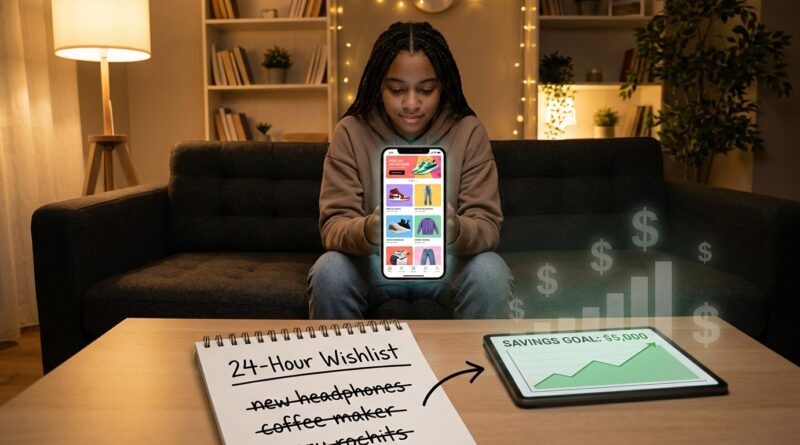
The ‘24‑Hour Wishlist’ Habit: How To Turn Impulse Scrolls Into High‑Yield Savings Wins
You are not imagining it. Social apps really do make it absurdly easy to go from “just looking” to “why is there a confirmation email in my inbox?” If your cart keeps growing while your savings account stays quiet, that is not a character flaw. It is a design feature of the apps, the ads, and the checkout buttons sitting one thumb tap away. The good news is you do not need superhero self-control to fight back. A simple 24 hour rule high yield savings habit can interrupt the impulse without turning life into a no-fun spending freeze. Instead of buying the thing right away, you drop it onto a wishlist, wait 24 hours, and move that same amount, or part of it, into your high-yield savings account. Sometimes you will still buy it later. Often, you will not. Either way, your money stops disappearing on autopilot and starts working for you.
⚡ In a Hurry? Key Takeaways
- The 24-hour wishlist habit helps you pause impulse buys and send that money toward high-yield savings instead.
- When something grabs you on Instagram or TikTok, save it to a wishlist, set a 24-hour reminder, and transfer the amount you almost spent.
- This is not about never buying fun stuff. It is about creating a speed bump so algorithms do not make every spending decision for you.
Why impulse scrolling gets expensive fast
Scroll-based shopping hits you when you are tired, bored, or trying to relax. That matters. You are not sitting down with a list and a budget. You are catching a product in a polished video with perfect lighting, a discount code, and a countdown timer.
That is a rough setup for good decisions.
Social shopping works because it creates urgency. “Only a few left.” “Sale ends tonight.” “Everyone is obsessed.” It makes a want feel like a need. Then one-click checkout removes the tiny pause that used to protect your bank account.
If this keeps happening, the fix is not to become a different person. The fix is to add a little friction back into the process.
What the 24-hour wishlist habit actually is
The habit is simple.
Step 1: Do not buy it on the spot
When you see something you want, add it to a wishlist, notes app, bookmarks folder, or even a text thread with yourself. The only rule is that it cannot go straight to checkout.
Step 2: Wait 24 hours
Give your brain one full day to cool off. Most impulse shopping loses its magic once the video is gone and the urgency wears off.
Step 3: Move the money
Transfer the amount you almost spent, or a smaller amount if that feels easier, into your high-yield savings account. If the item cost $42, move $42. If that feels too aggressive, move $10 or $20. The point is to capture the spending impulse and redirect it.
Step 4: Revisit later
After 24 hours, ask one question: “Do I still want this enough to buy it with a clear head?” If yes, go ahead if it fits your budget. If no, leave the money in savings.
That is the whole system. Low drama. Very little effort. Much better odds.
Why this works better than trying to “be stronger”
Willpower is unreliable, especially at night. Habits are better. Systems are better.
The 24-hour rule high yield savings habit works because it does three useful things at once:
- It slows down the purchase.
- It separates the product from the emotional moment that sold it.
- It gives your money a new default destination.
That last part matters most. If you simply do not buy the item, the money often gets spent somewhere else later. But if you move it right away, you turn “I almost bought this” into a real savings win.
If you like this kind of low-effort money move, The ‘24‑Hour Cart Skim’ Habit: Turn Impulse Browsing Into High‑Yield Savings In One Tap is a smart companion idea. It tackles the same problem from the cart side instead of the wishlist side.
How to set it up in five minutes
You do not need a new app or a complicated budget spreadsheet.
Pick one wishlist spot
Choose the easiest place you will actually use. Good options include:
- Your Notes app
- A private Pinterest board
- A browser bookmarks folder called “24 Hours”
- A shopping app wishlist
Use a separate high-yield savings account if possible
If your savings is mixed in with everything else, the progress can feel fuzzy. A separate high-yield savings bucket for “impulse saves” makes the habit more visible and more satisfying.
Turn on fast transfers
Link your checking account to your high-yield savings account so sending money takes less than a minute. The easier it is, the more often you will do it.
Set one reminder
When you save an item, set a simple reminder for the next day. “Still want the $38 skin tool?” is enough. Your future self can decide without the pressure of the original ad.
What to do when the item is genuinely useful
Not every social-media purchase is silly. Sometimes you find something you truly need. The 24-hour pause still helps.
Here is a quick filter:
- Would I buy this if I saw it in a plain search result instead of a slick video?
- Do I already own something that does this?
- Will I still care about this next week?
- Can I afford it without dipping into bills, credit, or emergency savings?
If the item passes the test, great. Buy it without guilt. This habit is not about banning purchases. It is about making sure your spending is your choice, not the algorithm’s.
Small examples that add up quickly
Let’s say this happens in one month:
- $18 phone stand you forgot about by morning
- $29 wellness drink mix that suddenly seemed less magical the next day
- $46 pair of leggings you already had something similar to
- $22 kitchen gadget that looked better in the video than in real life
That is $115 redirected into high-yield savings in one month.
Keep that up, and the habit starts doing real work. Add interest on top, and the “almost bought it” pile becomes a useful cushion for holidays, travel, repairs, or your emergency fund.
Common mistakes that make the habit fail
Making the system too strict
If you tell yourself you can never buy anything fun again, you will probably quit. Leave room for planned treats.
Not moving any money
The transfer is the magic part. Without it, the pause is nice, but the savings win is weaker.
Keeping too many wishlists
One list is enough. If your saved items are scattered across apps, they vanish into clutter.
Thinking small transfers do not count
They do. A $7 transfer still beats a $7 impulse buy. This habit gets stronger through repetition, not perfection.
At a Glance: Comparison
| Feature/Aspect | Details | Verdict |
|---|---|---|
| Impulse buy | Fast, emotional, and shaped by urgency tactics like limited-time offers and one-click checkout. | Usually the worst choice for your budget. |
| 24-hour wishlist habit | Saves the item for later, adds a cooling-off period, and redirects the money into high-yield savings. | Best balance of realism, flexibility, and savings growth. |
| No-spend rule | Cuts off extra spending completely for a period of time. | Can work short term, but often feels too rigid for everyday life. |
Conclusion
Social feeds are pushing harder than ever on one-click buys and “limited time” offers, and most people are tired of trying to out-discipline a system built to catch them when they are distracted. That is why the 24-hour wishlist habit is so useful. It is simple, low-friction, and surprisingly effective. You do not have to stop liking fun things. You just give yourself one day, then give your money a better place to go. Over time, those near-miss purchases can turn into real progress in a high-yield savings account. Small habit, big payoff. That is the kind of money win that sticks.