The ‘Fed-Hike HYSA Shuffle’ Habit: Give Yourself An Instant Raise Without Earning A Dollar More
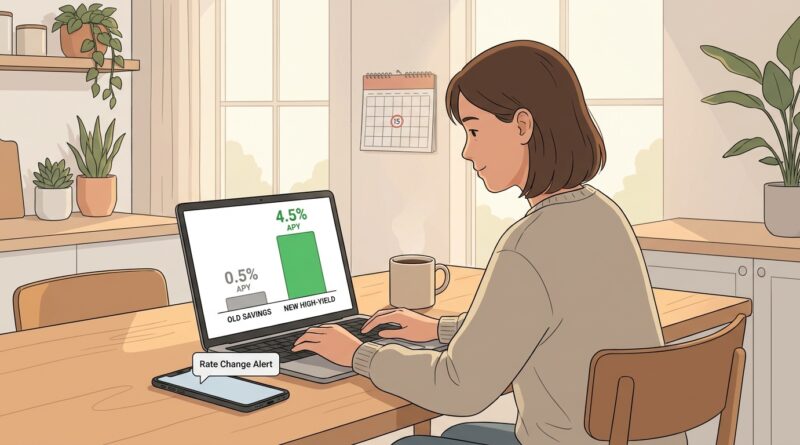
You see the headlines. The Fed raises rates. High-yield savings accounts jump to 4 percent, 4.5 percent, sometimes more. Then you check your own bank and find your money still earning next to nothing. That is frustrating, and honestly, a little insulting. A lot of people think they are being responsible by keeping cash in savings, but loyalty to a sleepy old bank can quietly cost you real money every single month. The fix is not complicated. You do not need to become a rate-chasing maniac or open five new accounts a year. You just need one simple habit. When the Fed hikes and your bank does not, move your savings to a better high-yield account. Think of it as giving yourself a raise without asking your boss, working overtime, or changing your budget at all. It is your money. It should be working harder than this.
⚡ In a Hurry? Key Takeaways
- After a Fed rate hike, moving cash from a low-paying bank to a competitive HYSA can raise your interest almost right away.
- Use a simple repeatable habit: check your savings rate after Fed news, compare it, and switch only when the gap is big enough to matter.
- Stick with FDIC- or NCUA-insured accounts and read transfer timing, limits, and any promo fine print before you move money.
The real problem is not the Fed. It is inertia.
Most people do not lose out because they made a terrible money decision. They lose out because they did nothing. Their paycheck still lands in the same bank. Their emergency fund sits in the same savings account. And that bank, especially if it is a giant brick-and-mortar name, may be paying a tiny fraction of what online high-yield accounts are paying.
That gap gets expensive fast. If one account pays 0.10 percent and another pays 4.50 percent, the difference on a decent emergency fund is not pocket change. It can mean tens or hundreds of dollars a month depending on your balance.
This is why the habit matters more than the headline. Fed hikes do not help you automatically. You have to respond.
What the “Fed-Hike HYSA Shuffle” actually means
The habit is simple. After a Fed rate hike, or even after strong hints that savings rates are moving, you check your current APY. Then you compare it with top high-yield savings accounts. If your bank is way behind, you move the cash you do not need for daily spending.
That is the shuffle. Not constant account hopping. Not chasing every flashy teaser rate. Just making sure your savings is not stuck in a dead zone.
What money should you move?
Usually, this habit works best for:
- Emergency funds
- Sinking funds for car repairs, travel, or taxes
- Cash you are holding for a home project or near-term goal
- Idle money sitting in a basic savings account
It is not about moving your checking account bill money every week. Keep your everyday spending where it is convenient. Move the cash that is meant to sit.
How to move savings to a higher yield after fed rate hike
If you are wondering how to move savings to a higher yield after fed rate hike, the cleanest approach is this:
1. Check your current APY
Log in to your bank and look for the annual percentage yield, or APY. Do not guess. Do not rely on old memory. Find the number.
2. Compare it with competitive HYSAs
Look at a few well-known online banks or credit unions. Focus on standard ongoing APYs, not just short promo rates that vanish in six weeks.
3. Decide if the gap is worth acting on
A tiny difference is not worth major hassle. A big difference is. If your current bank is paying 0.25 percent and good HYSAs are near 4 percent or above, that is not a rounding error. That is a pay cut you are accepting for no reason.
4. Open the new account before moving money
Choose an FDIC-insured bank or NCUA-insured credit union. Fill out the application, link your existing bank account, and verify any small test deposits if needed.
5. Move money in stages if it helps you feel safer
You do not have to move every dollar on day one. Start with part of your savings, confirm the transfer worked, then move the rest.
6. Update your savings routine
If you send money to savings each payday, redirect that automatic transfer to the better account. That way, the higher yield keeps helping without more work from you.
Do not chase every shiny promo
This is where people get tripped up. The goal is not to become obsessed with squeezing out one extra tenth of a percent every month. The goal is to avoid being wildly underpaid on your cash.
A good rule of thumb is to act when the gap is big and ignore tiny noise. If your account is competitive, great. Stay put. If it falls far behind after a Fed hike, that is your cue.
If you want a simple trigger for when to check, read The ‘Fed Day Check’ HYSA Habit: One Tiny Rate Peek That Can Add Thousands In Extra Interest. It is a smart companion habit because it keeps you from either forgetting completely or checking obsessively.
How much money are we really talking about?
Let’s make this real.
If you have $15,000 in savings:
- At 0.10 percent APY, you earn about $15 a year.
- At 4.50 percent APY, you earn about $675 a year.
That is a difference of about $660 a year, before taxes. You did not work extra hours for it. You just stopped letting your bank keep the benefit.
Even with smaller balances, the habit matters because it is repeatable. The sooner you start, the sooner compounding starts doing some of the heavy lifting.
What to watch out for before you move
Most HYSA moves are pretty painless, but a few details matter.
Transfer timing
ACH transfers can take a few business days. Do not move money the night before rent is due and expect magic.
Withdrawal limits or policies
Many accounts no longer have the old federal six-withdrawal limit, but banks can still set their own policies. Check them.
Minimum balance rules
Some accounts need a certain balance to earn the top APY. Others do not. Read the fine print.
Intro rates
A high promo can be fine, but know when it ends. A steady, competitive account is often better than a flashy short-term offer that later drops hard.
Insurance coverage
FDIC insurance for banks and NCUA insurance for credit unions are the basic safety checks. If your balance is large, make sure you understand coverage limits.
When staying put makes sense
Not everyone needs to switch right now.
You may stay where you are if:
- Your current rate is already competitive
- You need branch access and convenience matters more than the yield gap
- Your savings balance is tiny for now, and you are focused first on building the habit of saving
But if your bank is paying crumbs while the market pays real interest, staying put should be a conscious choice, not an accident.
At a Glance: Comparison
| Feature/Aspect | Details | Verdict |
|---|---|---|
| Low-yield bank savings | Easy to ignore, often very convenient, but may pay almost nothing even after Fed hikes. | Bad place for idle cash if the APY is far below market. |
| Competitive HYSA | Usually online, often pays several percentage points more, with simple ACH transfers and federal insurance. | Best choice for emergency funds and parked cash. |
| Promo chasing | Can squeeze out a little more, but takes more time and attention, and rates may fall after the promo ends. | Use sparingly. A simple repeatable routine usually wins for real life. |
Conclusion
The big opportunity right now is simple. There is a wide gap between what top high-yield savings accounts pay and what many traditional banks quietly pay on idle cash after a Fed rate hike. You do not need a whole new financial personality to fix that. Just build one repeatable habit. Check your rate after Fed news, compare it, and move your savings when your bank falls badly behind. That small shuffle can feel like an instant raise this month, because in a way, it is. You are keeping more of what your money can already earn, with almost no lifestyle change required.