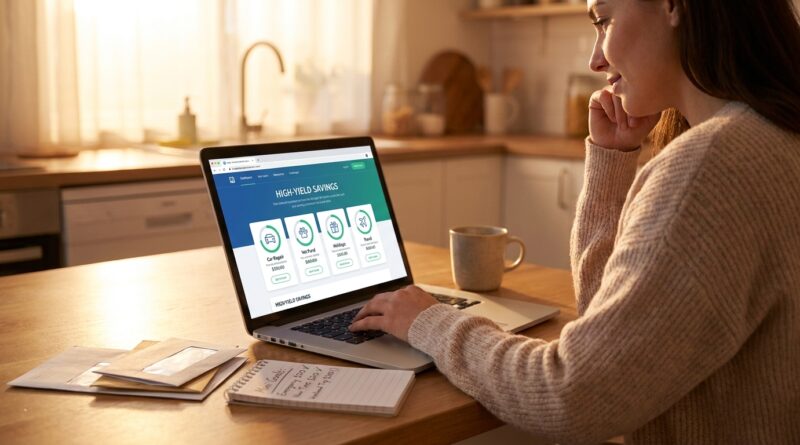
The ‘Happy Bill Buffer’ Habit: Use Tiny Sinking Funds To Supercharge Your High‑Yield Savings
You know the feeling. You finally build up your high-yield savings account, feel proud for about six minutes, then a vet bill, car registration, school fee, or birthday gift wipes out half the balance. Suddenly it looks like you are bad at saving, when really your money is doing too many jobs at once. That is where the happy bill buffer comes in. It is just a simple sinking funds high yield savings habit. You create tiny buckets inside your savings for the bills you know are coming, even if the exact date is fuzzy. Now your emergency fund stops getting tackled by non-emergencies. Your savings balance also stops bouncing up and down like a yo-yo. The goal is not to make budgeting fancy. It is to make your account calmer, more honest, and much easier to trust when life sends another invoice. Small buckets. Less panic. More progress.
⚡ In a Hurry? Key Takeaways
- Use small, named sinking funds inside your high-yield savings so routine surprise bills do not drain your emergency money.
- Start with just three buckets, then add a small automatic transfer each payday for things like car costs, pets, and holidays.
- This habit can help you avoid credit card spikes, keep your true emergency fund intact, and make your savings feel steady instead of chaotic.
Why your high-yield savings keeps feeling broken
Your account probably is not the problem. The setup is.
A lot of people move cash into a HYSA and call it “savings.” That sounds neat, but it creates one big pile for everything. Emergencies. Annual bills. Holiday spending. Back-to-school costs. Car repairs. Pet care. Home stuff.
So when a predictable bill hits, it feels random. You pull money out, your balance drops, and it seems like you have gone backward.
You did not fail. You just mixed short-term bill money with long-term safety money.
What the happy bill buffer habit actually is
The happy bill buffer is a simple sinking funds high yield savings habit. You set aside tiny amounts for expenses you know will happen eventually.
Think of it like pre-deciding where your money lives before the bill arrives.
Common sinking funds include:
- Car tags and registration
- Vet visits and pet meds
- School fees and activities
- Holiday gifts
- Home maintenance
- Travel
- Annual subscriptions or insurance deductibles
These are not emergencies. They are future bills in slow motion.
Why tiny buckets work better than one giant savings pile
They protect your emergency fund
If your dog needs a checkup or your kid needs money for a school trip, that should not force you to raid the money meant for job loss, a major repair, or a true crisis.
They reduce the “I just can’t get ahead” feeling
When your balance drops for expected expenses, it can feel discouraging. Named sinking funds change the story. You are not losing money. You are using money for the exact job you gave it.
They make high-yield savings more useful
A HYSA is great for money that needs to stay safe and earn something while it waits. Sinking funds fit that job well. The money is not invested. It is not sitting idle in checking either.
How to start without making this complicated
Do not open twelve categories on day one. Start small.
Step 1: Pick three repeat offenders
Choose the bills that keep “surprising” you even though they show up every year or every few months.
A good starter list might be:
- Car
- Pets
- Holidays and gifts
Step 2: Estimate the yearly total
Keep it rough. You do not need spreadsheet-level perfection.
Example:
- Car tags, oil changes, tires buffer: $600 a year
- Vet and pet costs: $480 a year
- Holiday gifts: $600 a year
Step 3: Divide by 12 or by number of paychecks
That turns big, annoying bills into small monthly or biweekly deposits.
Using the example above:
- Car: $50 a month
- Pets: $40 a month
- Holidays: $50 a month
That is $140 a month total. A lot easier to handle than getting slammed with a $300 or $500 bill out of nowhere.
Step 4: Name the buckets clearly
If your bank allows sub-accounts or savings buckets, use them. If it does not, keep a simple note in your phone or a basic spreadsheet showing how much of the total belongs to each category.
Step 5: Automate it
This is where the habit becomes real. Send the money automatically right after payday.
If you want a routine around it, the weekly reset idea in The Sunday Stack To HYSA Habit: A 90-Minute Weekly Reset That Quietly Boosts Your High-Yield Savings is a smart companion to this system. It helps you keep the buckets funded even when life gets noisy.
What counts as a sinking fund, and what does not
This part matters.
A sinking fund is for a known or likely expense.
An emergency fund is for a true unknown or urgent event.
Usually a sinking fund
- Annual fees
- Car maintenance
- Gift spending
- Routine medical copays
- Back-to-school costs
- Pet checkups
Usually an emergency fund
- Job loss
- Major medical event
- Urgent home repair that cannot wait
- Unexpected travel for a family crisis
You do not need to argue with yourself about every expense. Just ask, “Could I reasonably see this coming?” If yes, it probably belongs in a sinking fund.
The best part: your balance starts telling the truth
This is the quiet magic of the habit.
When all your savings sits in one bucket, the number can look bigger than it really is. Some of that money is already spoken for. You just have not labeled it yet.
Once you split it into mini funds, your balance becomes more honest. Your emergency fund is what is actually left after future bills have their share.
That honesty feels good. It is less exciting than pretending the whole pile is free money, but it is much less stressful.
If your bank does not offer buckets, do this instead
You do not need fancy tools.
Use one HYSA and track the categories yourself with:
- A notes app
- A basic spreadsheet
- A budgeting app with savings goals
- A simple pen-and-paper list
Example:
- Total HYSA balance: $2,400
- Car fund: $350
- Pet fund: $180
- Holiday fund: $420
- Emergency fund: $1,450
Same money. Clearer jobs.
Common mistakes to avoid
Starting with too many categories
If you create fifteen buckets at once, you may quit. Start with the bills that hit hardest or most often.
Using estimates that are way too low
Be honest with yourself. If you spent $700 on gifts last year, do not fund $200 and call it done.
Raiding the buckets for random spending
If the holiday fund turns into “things I wanted on a rough Tuesday,” the system stops working. Keep the names specific.
Thinking small contributions do not matter
$10, $20, or $35 at a time can feel pointless. Then six months later, you have a real buffer. Tiny and steady beats ambitious and abandoned.
At a Glance: Comparison
| Feature/Aspect | Details | Verdict |
|---|---|---|
| One big HYSA balance | Easy to open, but routine bills and emergency money get mixed together. | Simple, but stressful. |
| Small named sinking funds | Sets aside money for known expenses like pets, car costs, and holidays. | Best for keeping bills from ambushing you. |
| Emergency fund protection | Sinking funds absorb predictable costs so true emergencies do not compete with annual bills. | Strong value, especially if you are trying to avoid debt. |
Conclusion
If your high-yield savings keeps getting knocked back to zero, the fix may not be “save harder.” It may be giving your savings a better job list. Right now, more people are finally moving cash into high-yield accounts, but they are still treating them like a catch-all piggy bank that gets smashed every time a bill pops up. Small, named sinking funds turn that account into a calm, forward-looking bill shield instead of a panic button. That helps you keep your emergency money intact, avoid credit-card spikes when renewals hit, and actually feel progress as those mini buckets grow quietly in the background. Start with three. Keep it tiny. Let the calm build from there.