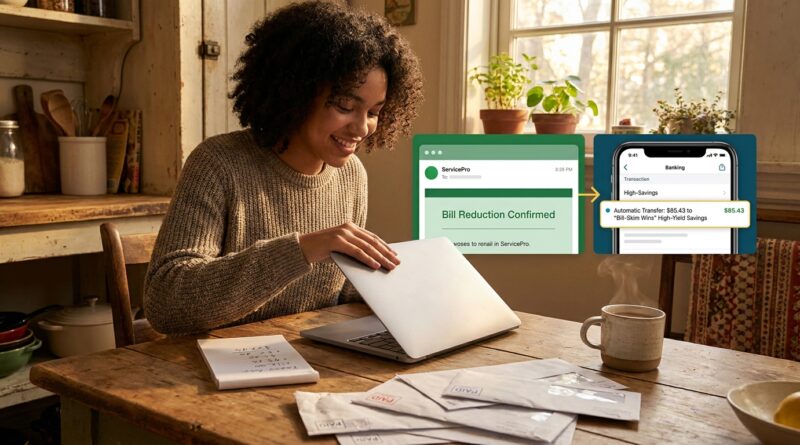
The ‘Bill-Skim’ Habit: Turn Every Autopay Into Invisible High‑Yield Savings
You do the responsible stuff. You cancel a subscription here, compare rates there, maybe even move your cash to a high-yield savings account. Then a few months later, your savings still look sleepy. That is frustrating, especially when it feels like you are trying. The sneaky problem is that your autopay life keeps changing in the background. Internet plans creep up. Insurance renewals reset higher. A streaming bundle adds a few dollars. Meanwhile, your savings transfer often stays stuck at the same old number. The fix is simple and surprisingly painless. Every time you lower a bill, you immediately move that exact difference into high-yield savings. I call it the bill-skim habit. If your phone bill drops by $14, your automatic savings goes up by $14. If insurance falls by $22, savings rises by $22. You never miss the money, because you were already used to spending it. Over time, those tiny trims start acting like a quiet monthly raise.
⚡ In a Hurry? Key Takeaways
- The easiest way to save more is to lower a recurring bill, then increase your automatic high-yield savings transfer by the same amount.
- Check bills every 3 to 6 months, especially phone, insurance, internet, streaming, and utilities, and skim every savings win into one dedicated account.
- This works because it is low-pain and low-risk. You are not cutting into money you still need. You are redirecting money you already stopped spending.
What the bill-skim habit actually is
If you want to know how to save money by lowering bills and moving the difference to high yield savings, this is the whole idea in one sentence.
When a recurring bill goes down, your savings goes up by the same amount.
That is it.
Most people stop at step one. They negotiate the cable bill, switch car insurance, or ditch a premium streaming plan. They feel good for a week, then the savings just disappear into regular checking. It gets mixed in with groceries, takeout, and weekend spending.
The bill-skim habit adds step two. The moment you cut a bill, you update an automatic transfer into your high-yield savings account.
Examples help:
- You cut Spotify + another service combo by $7. Increase savings transfer by $7 a month.
- You switch phone carriers and save $14. Increase savings transfer by $14.
- You shop insurance at renewal and save $22. Increase savings transfer by $22.
Now your monthly savings transfer has gone up by $43, without touching your normal lifestyle.
Why this works better than random budgeting promises
A lot of savings advice asks you to be more disciplined every single day. Spend less. Track every coffee. Resist every impulse buy.
That can help, but it is tiring.
The bill-skim habit is easier because it works with your existing autopay system instead of fighting your habits all month long.
It feels invisible
You were already paying the higher amount before. So when that bill drops and the difference moves to savings, it does not feel like a sacrifice.
It keeps up with the real world
Prices change constantly. Promotions expire. Competitors cut rates. New plans appear. If you only optimize your bills once a year, you miss a lot of small wins.
It compounds over time
The first $8 you save may not feel exciting. But if you keep stacking these savings and park them in a high-yield account, each little bill cut keeps adding to a growing base.
Which bills are best for skimming
Start with recurring charges that are easy to compare and likely to drift over time.
Phone service
This is one of the best places to start. Many people are still on old plans with extras they do not use. A prepaid carrier or a newer plan can cut the bill fast.
Car and renters or homeowners insurance
Insurance rates move a lot. Loyalty is not always rewarded. Ask your current insurer to re-shop the policy, then compare with two or three others.
Internet service
Promotional pricing expires quietly. Call, ask for current offers, and see if a lower tier still works for your household.
Streaming subscriptions
These are classic money leaks. One service goes up by $2. Another adds ads unless you pay more. Another renews annually and you forgot about it. Small cuts here are perfect for skimming.
Utilities and memberships
You may not be able to negotiate electricity, but you can lower usage enough to create a repeatable average savings. Gym memberships, cloud storage, and app subscriptions also deserve a look.
How to set up the system in 15 minutes
You do not need a spreadsheet obsession. You need one rule and one savings destination.
1. Open or choose one high-yield savings account
Use a separate savings account from your main checking if possible. That little bit of distance helps. You want the money to earn interest and stay out of casual spending reach.
2. Find your current monthly automatic transfer
Maybe it is $50. Maybe it is zero. Write it down.
3. Pick one bill to review this week
Do not overhaul your whole financial life in one night. Start with the most annoying bill or the easiest one to compare.
4. When you lower it, update your savings transfer immediately
If your bill drops by $12, increase your monthly transfer by $12 that same day.
5. Keep a tiny running list
Something as simple as this works:
- Phone: saved $14
- Streaming: saved $7
- Insurance: saved $22
- New monthly savings transfer increase: $43
That list is motivating because it shows your progress in one glance.
The one mistake that ruins this habit
Waiting.
If you tell yourself, “I will move that money to savings later,” you probably will not. It will get absorbed into everyday spending.
The trick is to make the transfer change right after the bill change. Same session. Same day. No gap.
Think of it like rerouting a pipe before the water spills onto the floor.
How often to do a bill-skim check
You do not need to make this your new hobby.
A good rhythm is every 3 to 6 months. Put a repeating calendar reminder on your phone called “Skim bills to savings.”
At each check-in, review:
- Phone plan
- Internet bill
- Insurance policies
- Streaming and app subscriptions
- Any new autopay charges
If you find even one small cut each round, your savings transfer keeps growing.
What this can look like after a year
Let us keep the math realistic.
Say over 12 months you make these changes:
- Streaming cleanup: $7 saved monthly
- Phone plan switch: $14 saved monthly
- Insurance adjustment: $22 saved monthly
- Internet retention offer: $10 saved monthly
That is $53 more going into high-yield savings every month.
By itself, that may not sound life-changing. But this is the part people miss. It is automatic. It keeps happening. And it came from spending you already got rid of.
That means it is much easier to stick with than a vague promise to “save more somehow.”
Keep it safe and realistic
A few guardrails matter.
Do not skim money you still need for true variable bills
If your electric bill is lower one mild-weather month, do not assume that exact drop is permanent unless you know your usage changed for good.
Watch for promo traps
If an internet or phone discount lasts only 6 months, set a reminder before it ends. Otherwise your savings transfer could become too aggressive later.
Build a cushion first if cash flow is tight
If your checking account runs close to zero each month, send only part of the bill savings to high-yield at first. Stability comes first.
Why this habit feels so good
It flips the usual money story.
Normally, rising bills quietly steal from you in the background.
With bill-skimming, every little optimization starts paying you back in the background.
That is a much better system.
At a Glance: Comparison
| Feature/Aspect | Details | Verdict |
|---|---|---|
| Effort required | A few quick bill reviews each quarter, plus one transfer update each time you save money | Low effort, high payoff |
| Monthly savings impact | Often starts with small cuts like $7, $14, or $22, then stacks into a bigger automatic contribution | Best for steady, compounding progress |
| Risk of failure | Main risk is forgetting to move the difference or relying on temporary promo pricing | Very workable if you automate and set reminders |
Conclusion
If your savings feel stuck, it may not be because you are bad at saving. It may be because your bills are moving more often than your habits are. That is why the bill-skim habit works so well. Instead of trimming a bill once and letting the win vanish into everyday spending, you turn each reduction into a permanent increase to your high-yield savings. Right now, prices and fees are shifting constantly, but most people only negotiate or trim bills once and then forget about it. This habit turns today’s tiny wins, like a $7 streaming cut, a $14 phone plan drop, or a $22 insurance adjustment, into a growing automatic contribution that compounds every month. It is zero-pain saving, because you are only redirecting money you were already used to spending. Start with one bill this week. Make one change. Then skim the difference straight into savings and let the quiet progress do its job.