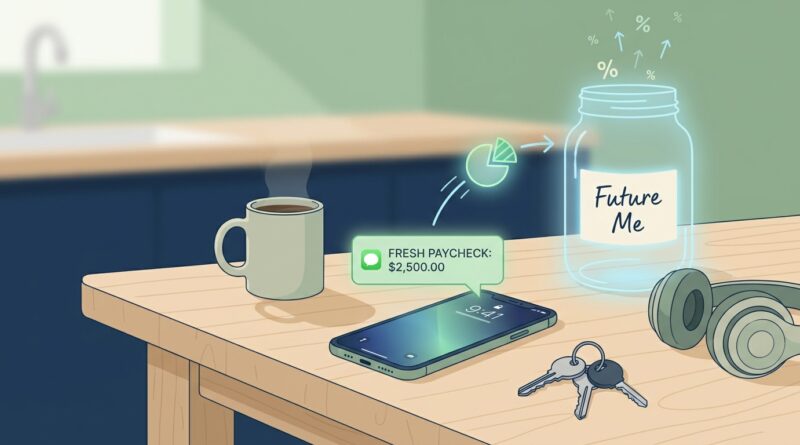
The ‘Payday Split-Second’ Habit: Lock In High-Yield Savings Before You Even See The Money
You work hard, payday arrives, and somehow the money still disappears before your savings ever gets a chance. That is frustrating, and it can make you feel like you are bad with money when the real problem is much smaller and more fixable. For a lot of people, the danger zone is not the whole month. It is the first 24 to 48 hours after the paycheck lands. That is when takeout, quick Target runs, Amazon tabs, and those “I deserve it” little purchases quietly eat the chunk you meant to save. The good news is you do not need better willpower. You need better timing. A simple payday high yield savings habit, done within seconds of being paid, can move money out of reach before your checking account turns into a spending invitation. It takes about five minutes to set up, and once it is running, it can help your money actually earn instead of vanish.
⚡ In a Hurry? Key Takeaways
- The best payday high yield savings habit is to move money into savings the moment your paycheck hits, not later that day or week.
- Set up an automatic split deposit or same-day transfer so your savings happens before spending starts.
- This works because it fixes behavior, not because you need to cut every fun expense. You are simply protecting cash while rates are still strong.
The real problem is not your budget. It is the delay.
Most people already know they should save. That is not the issue.
The issue is the gap between payday and action. When money lands in checking, it feels available. Even if part of it is “meant” for savings, your brain sees one big usable number. Then life happens. Lunch out. A subscription renewal. A pair of shoes on sale. A grocery trip that somehow costs $40 more than expected.
By the time you remember your high-yield savings account, the extra cash is smaller than you planned. Sometimes it is gone.
That is why this habit works. It removes the choice from the most vulnerable moment.
What the split-second habit looks like
The rule is simple. The second your paycheck arrives, a preset amount goes straight into your high-yield savings account.
Not tonight. Not after coffee. Not when you “see what is left.” Right away.
You can do this in one of two easy ways:
Option 1: Split your direct deposit
If your employer allows it, send part of each paycheck directly to your high-yield savings account and the rest to checking.
This is the cleanest setup because you never even see the savings portion in your spending account.
Option 2: Schedule an automatic transfer for payday
If split deposit is not available, set your bank to transfer a fixed amount from checking to savings on every payday.
Try to schedule it for the same day your paycheck usually lands. Early is better.
Why this works better than “saving what is left”
Saving what is left sounds reasonable. In real life, it usually means saving very little.
That is because people spend from what they can see. If your checking account shows a big fresh balance, your spending adjusts upward without you noticing. You say yes more easily. You round up more casually. You assume there is room.
When the savings money is skimmed off first, your checking balance tells a different story. It shows what is actually available for bills and everyday life.
This is not a trick. It is a boundary.
How much should you move on payday?
Start smaller than your best intentions.
That sounds backward, but it works. If you set the transfer too high, you will cancel it the first time things get tight. A habit you keep beats a perfect plan you quit.
Good starter numbers are:
- 5 percent of each paycheck
- $25 to $100 per payday
- Any “raise money” you were not using before
If you get paid twice a month and move $100 each payday, that is $200 a month. Over a year, that is $2,400 saved, plus interest. And because the money starts earning sooner, you keep more of the benefit of today’s strong savings rates.
Use a high-yield savings account the smart way
The whole point of this habit is not just to hide money from yourself. It is to put that money somewhere useful.
A top high-yield savings account can pay far more than a standard savings account at a big traditional bank. But to get the benefit, the money has to get there quickly and stay there.
If you are worried about easy-access mistakes, read The ‘ATM-Proof’ Habit: How To Use A High-Yield Savings Account Without Getting Slapped With Fees. It is a helpful guide if you want the account to feel available for real emergencies, but not so available that it turns into a shopping buffer.
Set it up in five minutes
You do not need a spreadsheet marathon for this. Here is the simple version.
Step 1: Pick your savings amount
Choose a number you can repeat every payday without stress.
Step 2: Link your checking and high-yield savings accounts
If they are at different banks, make sure transfers are already connected and tested.
Step 3: Turn on automation
Use split direct deposit through payroll, or set a recurring transfer through your bank.
Step 4: Rename the savings account
Give it a job title like “Emergency Buffer,” “Car Repairs,” or “No-Stress Savings.” People are less likely to raid money with a clear purpose.
Step 5: Ignore it for a month
Do not keep adjusting the number every few days. Let the system prove itself.
Common mistakes that break the habit
There are a few easy ways to accidentally sabotage this.
Waiting until the evening
If your paycheck arrives in the morning and the transfer happens later, the spending window is already open.
Making the amount too ambitious
If the transfer causes overdrafts or panic, you will stop trusting the system.
Using the same account for spending and saving
Out of sight is helpful. A separate high-yield account creates a little friction, and friction can be your friend.
Checking the balance too often
If you keep “borrowing” from savings because it looks healthy, the habit loses its power.
Who this works especially well for
This payday high yield savings habit is great for people who:
- Get paid on a regular schedule
- Know they should save but never seem to do it fast enough
- Have decent income but low month-end leftovers
- Spend more in the first few days after payday
- Want progress without cutting every small pleasure
It is a behavior fix, not a punishment plan.
At a Glance: Comparison
| Feature/Aspect | Details | Verdict |
|---|---|---|
| Timing of transfer | Immediate payday transfer beats waiting 24 to 48 hours, when spending usually starts. | Best choice for real-world saving |
| Savings method | Split direct deposit is ideal. Automatic bank transfer is the next best option. | Automate whichever one you can start now |
| Impact on daily life | You save first without having to ban coffee, date nights, or occasional treats. | High value, low stress |
Conclusion
If saving always seems to happen “later,” this is your fix. Rates on top high-yield savings accounts are still strong, but plenty of people are missing out because their paycheck sits in checking just long enough to get spent instead of earn. Moving money to savings within seconds of payday closes that gap between knowing and doing. It is simple, quick, and surprisingly powerful. Set it up once, keep the amount realistic, and let the habit do the heavy lifting. You can quietly add hundreds in annual interest and real savings momentum without turning life into a no-fun financial boot camp. That is the sweet spot. Your money starts working sooner, and you still get to enjoy being a person.