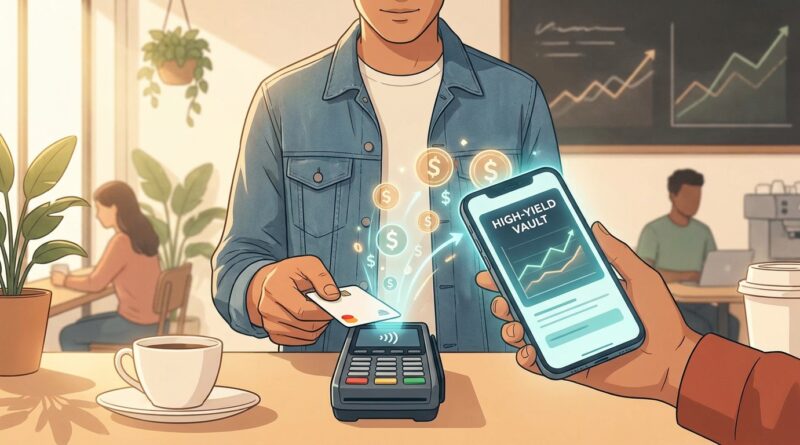
The ‘Tap, Don’t Think’ Habit: Turn Every Card Swipe Into High‑Yield Savings Without Cutting Joy
You can do all the smart money stuff and still feel stuck. That is the maddening part. You opened the high-yield savings account. You told yourself you would be more intentional. Then real life showed up. Coffee on the way to work. Toothpaste, dog food, takeout, birthday gifts, one more grocery run. None of it feels wild in the moment, but by the end of the month your savings balance looks like it barely noticed your effort. If that sounds familiar, the problem is not that you are bad with money. It is that saving often asks you to stop living, and that is not realistic. A better fix is smaller and kinder. Set up automatic savings every time you use your debit card, so each swipe quietly sends $1 or $2 into your high-yield savings account. You keep buying what you need and enjoy. Your savings finally starts moving anyway.
⚡ In a Hurry? Key Takeaways
- Automatic savings every time you use your debit card works because it turns everyday spending into a tiny saving trigger.
- Start with a $1 or $2 “tap tax” per purchase, then send it to a high-yield savings account through an app rule, bank automation, or a weekly transfer.
- Keep the amount small so it stays sustainable. The goal is progress without overdrafts, guilt, or cutting the things you love.
Why this habit works better than another budget lecture
Most people do not fail at saving because they do not care. They fail because saving often depends on perfect behavior.
You are supposed to remember your goals at the exact moment you are paying for lunch, grabbing medicine, or saying yes to a family plan. That is a lot to ask from a tired human with a debit card in hand.
The “tap, don’t think” habit flips that around. Instead of asking you to make a fresh willpower decision every time, it gives your debit card a side job. Every purchase triggers a tiny transfer to savings.
That means your spending is no longer the enemy of your goals. It becomes the reminder.
What the “tap tax” habit actually is
Think of it as a tiny self-imposed fee that benefits you.
Every time you use your debit card, you move a fixed amount into savings. Usually that is $1 or $2. Not 10 percent. Not some painful amount that wrecks your week. Just a small number you can live with.
Example
If you make 35 debit card purchases in a month and send $2 each time into savings, that is $70 saved. Put that in a high-yield savings account and now the habit is not just building balance. It is also earning interest.
It will not make you rich overnight. That is not the point. The point is that it finally makes saving happen in real life, not just in your notes app.
How to set up automatic savings every time you use your debit card
You do not need a special bank to do this, though some banks and fintech apps make it easier.
Option 1: Use your bank’s built-in savings tools
Some banks let you create rules tied to card spending, round-ups, or recurring transfers. If your bank offers “save while you spend” features, start there.
Look in your app for words like:
- Round-up savings
- Debit card savings rule
- Automatic transfer
- Smart savings
If your bank lets you send a set amount after each card purchase, perfect. Turn it on and connect it to your high-yield savings account if possible.
Option 2: Use a money app that tracks card spending and transfers weekly
Some apps cannot move money instantly after every tap, but they can track your debit card activity and total up your “tap tax” for a weekly transfer.
That works just fine. What matters is that the rule is automatic and predictable.
Option 3: Fake it with a weekly transfer
If your bank has no fancy tools, you can still do this manually without much hassle.
Here is the simple version:
- Estimate how many debit card purchases you usually make in a week
- Multiply by your tap tax, like 20 purchases x $2 = $40
- Set an automatic weekly transfer of that amount into your high-yield savings account
It is not as exact, but it creates the same habit. You are linking spending rhythm to savings growth.
Start smaller than you think you need
This is where people mess it up. They get excited, choose $5 per purchase, then get annoyed by week two and turn it off.
Do not do that.
Pick an amount that feels almost boring. For most people, that is $1. If your checking account has a comfortable buffer, try $2.
The best savings habit is not the most aggressive one. It is the one you keep.
A good rule of thumb
- If your account balance often runs tight, start with $1
- If you usually keep a cushion in checking, try $2
- If your spending varies wildly, begin with weekdays only or cap the weekly transfer
Why this feels better than cutting out every treat
There is a big emotional difference between “I am not allowed to buy this” and “When I buy this, I also save a little.”
One feels like punishment. The other feels like balance.
That matters more than people admit. If your plan makes you resent your own life, you will stop following it.
This habit lets you keep your coffee, your convenience, your occasional fun purchase, while still making your future self a small payment each time.
If you like the idea of saving in tiny, nearly invisible ways, you might also enjoy The ‘Round-Up Rewind’ Habit: Turn Every Tiny Purchase Into High-Yield Savings Without Feeling It. It is a close cousin to this strategy, and for some people the two work very well together.
Make sure the money lands in the right place
If you are going to build this habit, give it a decent home.
That means a high-yield savings account, not a low-interest account collecting pocket change for no real reason.
What to look for in the account
- No monthly fee
- No minimum balance you cannot comfortably meet
- Easy transfers from checking
- A competitive APY
- FDIC or NCUA protection, depending on the institution
You are not trying to game the market here. You are trying to make your tiny automatic deposits worth a little more over time.
Watch out for the one thing that can ruin it
The danger is not that the idea is bad. The danger is that you set it too high and create stress in checking.
If you are living close to the line, even small automatic transfers can pile up faster than expected during a heavy spending week.
How to keep it safe
- Start with the smallest amount possible
- Check your first two weeks of transfers
- Use alerts for low checking balances
- Pause the rule during unusually expensive months if needed
- Keep a small checking buffer so this habit does not trigger overdrafts
There is no prize for making saving feel hard. Smooth and boring is better.
What this can look like after a few months
Let’s keep the math simple.
- 25 debit card purchases a month x $1 = $25 saved
- 40 debit card purchases a month x $2 = $80 saved
- 50 debit card purchases a month x $2 = $100 saved
That may not sound dramatic, but over six months or a year it starts to feel very different. Especially when it is happening in the background, on top of any other automatic transfers you already use.
This is why small rules beat big speeches. They fit into your actual life.
Who this habit is best for
This works especially well if:
- You use your debit card often for everyday spending
- You struggle to save “leftover” money at the end of the month
- You want progress without a strict no-fun budget
- You already have a high-yield savings account but rarely add to it
If you mostly use credit cards for rewards, you can still copy the idea by making a matching weekly transfer based on your card activity. The principle matters more than the exact payment method.
At a Glance: Comparison
| Feature/Aspect | Details | Verdict |
|---|---|---|
| Tap tax amount | A fixed $1 or $2 moved to savings with each debit card purchase, or matched via a weekly transfer. | Best when small enough to be painless. |
| Setup difficulty | Easy if your bank has built-in card-linked savings. Still doable with a simple recurring transfer if it does not. | Low barrier for most people. |
| Long-term value | Builds steady savings from normal spending and works even better inside a high-yield savings account. | Strong habit for consistent, realistic progress. |
Conclusion
You do not need another scary warning about lattes, interest rates, or how disciplined everyone else seems to be. What usually helps is a repeatable micro habit you can live with. A simple “tap tax” that sends one or two dollars into a high-yield savings account every time you spend fits neatly into how life already works. It does not ask you to become a different person. It just asks each debit card purchase to do a little extra for you. That is why automatic savings every time you use your debit card can be so effective. It stacks nicely on top of your other money systems, works with almost any bank setup, and starts turning today’s routine spending into tomorrow’s growing balance, without asking you to give up the things that make life enjoyable.